


![Longevity Complete Detox [BETA 21 Caps]: 7 Day Intensive Detox & Digestive Support](http://longevitypremier.com/cdn/shop/files/DetoxBeta-mid_100x100.png?v=1787365739)





1 g/day Lowered BP in a Trial: Rutin 101 for Vascular Support
Rutin, a flavonoid concentrated in citrus peels and buckwheat, shows real but modest promise for blood vessel and circulatory support. A randomized human trial found that 1 gram per day for three months lowered blood pressure and improved quality of life in people with type 2 diabetes, and a PMC review confirms rutin’s antioxidant and anti-inflammatory activity. The catch: poor absorption means results vary, and evidence still comes from small studies.
TL;DR:
- Rutin’s absorption is poor, so supplement formulations like hydroxyethylrutosides may offer more consistent blood vessel support than unmodified rutin.
- Doses of 500 mg to 1 g daily in trials show measurable effects on blood pressure and blood sugar in people with type 2 diabetes, but results depend on formulation and repeated use.
- Rutin can help with mild venous insufficiency symptoms but does not reverse varicose veins or replace medical treatment for advanced conditions.
- Its effects are most likely due to antioxidant and anti-inflammatory actions on the endothelium and capillary walls, not a direct blood pressure-lowering mechanism.
- People on blood thinners, blood pressure, or diabetes medications should consult a healthcare provider before adding rutin, especially at doses used in clinical studies.
Table of Contents
- What Rutin Does for Blood Vessels: the Physiological Benefits
- Human Research and Dosing: Study Summaries You Can Trust
- How Rutin Works and Why Bioavailability Matters
- Safety, Side Effects, and Interactions You Should Know
- Supplements: How to Evaluate Rutin Products and Formulation Flags
- Longevity Premier’s Perspective on Formulation Choices
- A Practical Checklist Before You Try Rutin
- Where Rutin Fits Into a Bigger Cardiovascular Strategy
- Sources
What Rutin Does for Blood Vessels: the Physiological Benefits
Rutin’s reputation rests on one core job: keeping the walls of small blood vessels tight and resilient. Capillaries are fragile by design. They are one cell layer thick, built for exchange rather than strength, which is exactly why they’re prone to leaking, bruising easily, or losing tone over years of standing, sitting, or simple aging. Rutin appears to reinforce the collagen matrix that holds capillary walls together, a property researchers have studied for decades in the context of chronic venous insufficiency (CVI) and varicose vein symptoms.
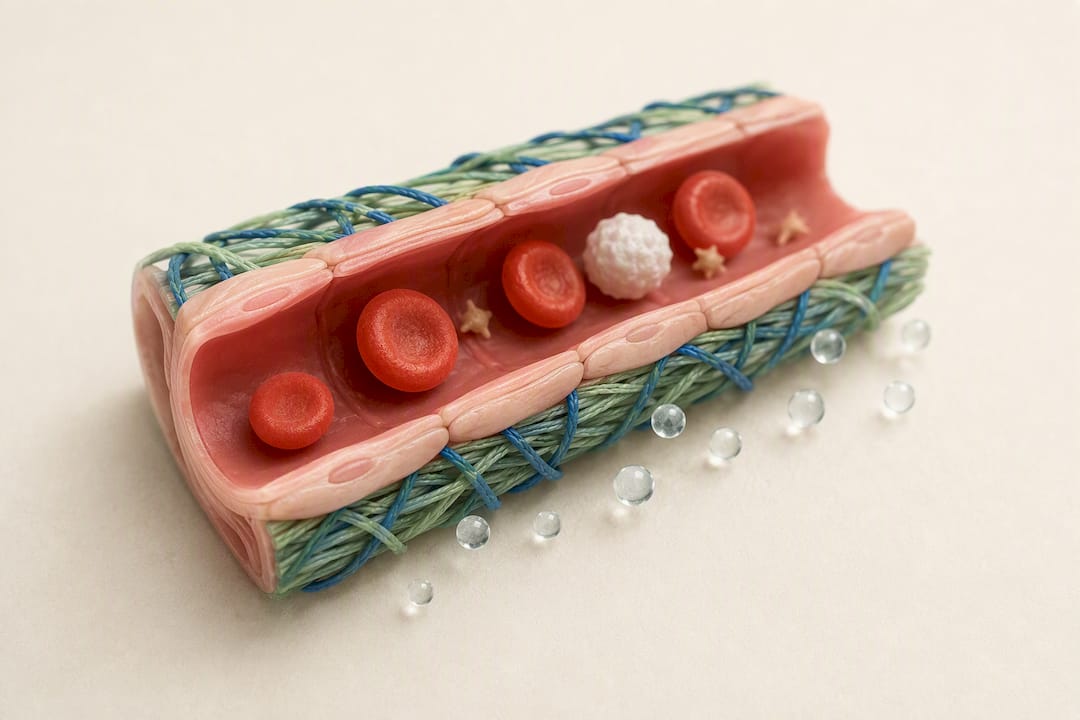
That matters for anyone who deals with the low hum of leg heaviness by the end of the day, unexplained bruising, or visible spider veins that seem to worsen with age or long hours on their feet. Rutin and its derivatives, particularly hydroxyethylrutosides, have shown moderate symptom improvement in some trials on chronic venous insufficiency, though evidence quality varies from study to study. It’s worth being direct: rutin can ease symptoms of mild venous insufficiency, but it will not reverse a varicose vein or replace medical treatment for advanced disease. Persistent swelling, pain, or skin changes in the legs still warrant a clinical evaluation.
The second mechanism worth understanding is oxidative protection at the endothelium, the thin cellular lining of every blood vessel in the body. Endothelial cells take a beating from oxidative stress, especially in people with elevated blood sugar or blood pressure, and that damage is one of the earliest steps toward atherosclerosis. Rutin’s polyphenol structure lets it neutralize free radicals and calm some of the inflammatory signaling that would otherwise irritate that lining over time. A 2019 review of rutin’s pharmacological effects documented reduced oxidative stress markers and improved metabolic readouts in diabetic models, which lines up with the vascular protection story, even though most of that specific data comes from animal research rather than people.
Here’s where the nuance actually lives, and where a lot of supplement marketing glosses over the details:
- Laboratory and animal studies consistently show strong antioxidant and anti-inflammatory activity for rutin.
- Human trials show real, measurable effects, but the effect sizes are smaller and the sample sizes are limited.
- Blood pressure changes observed in trials appear tied to reduced vascular resistance and inflammation, not a direct blood-pressure-lowering drug mechanism.
- Rutin is a support ingredient for vascular tone and antioxidant defense, not a standalone treatment for diagnosed cardiovascular disease.
The blood pressure angle deserves its own callout, because it’s the single most talked-about finding in rutin research right now.
Statistic Callout: In a randomized trial of adults with type 2 diabetes, 1 gram of rutin daily for three months produced a measurable drop in blood pressure and improved quality-of-life scores compared with placebo. That’s a meaningful signal for a natural compound, but it’s one trial, in one population, at one specific dose.
The gap between what happens in a petri dish and what happens in your bloodstream is the entire story of rutin research. Laboratory concentrations of rutin used to demonstrate antioxidant power are often far higher than what the body ever absorbs from a standard supplement dose. That doesn’t make the lab findings meaningless. It means the clinical significance of rutin depends heavily on dose, formulation, and how consistently it’s taken, which is exactly why the human trials matter more than the cell studies when you’re deciding whether to try it.
Human Research and Dosing: Study Summaries You Can Trust
Two human trials anchor most of the current interest in rutin for cardiovascular and metabolic support, and both come out of the same research group, which is worth knowing before you get too excited about either one.
The first, and the one most often cited, tested 1 gram of rutin per day for three months in a 50-person trial involving adults with type 2 diabetes. Participants receiving rutin showed a statistically significant reduction in blood pressure compared with the placebo group, along with improved self-reported quality of life. Three months is long enough to see a real physiological trend, but short enough that we don’t know whether the benefit holds at six months or a year, or whether it plateaus.
A related, smaller study from the same body of work tested a lower dose, 500 milligrams per day for three months, and found meaningful reductions in fasting blood glucose, fasting insulin, and hemoglobin A1c. That’s notable because it suggests rutin’s benefits might not be limited to vascular tone. It may also touch glucose metabolism, which circles back to vascular health anyway, since chronically high blood sugar is one of the fastest ways to damage small vessels and nerve endings over time.
Here’s how those two dosing arms compare at a glance:
| Study detail | Blood pressure trial | Glucose trial |
|---|---|---|
| Dose | 1 g/day | 500 mg/day |
| Duration | 3 months | 3 months |
| Population | Adults with type 2 diabetes | Adults with type 2 diabetes |
| Primary outcome | Blood pressure, quality of life | Fasting glucose, insulin, HbA1c |
| Result direction | Improved vs. placebo | Improved vs. placebo |
Statistic Callout: The two doses tested in human trials, 500 mg and 1 g daily, sit well above what most people get from diet alone and roughly in line with what many rutin supplements provide per serving, though label doses vary widely across brands.
Beyond those two trials, the broader evidence base leans heavily on systematic reviews and preclinical work rather than large randomized controlled trials. The PMC review on rutin’s pharmacological potential is one of the most cited summaries in this space, and it’s candid about the limitation that keeps popping up: rutin’s clinical application is constrained by low solubility and poor oral bioavailability, meaning a good result in a controlled trial doesn’t automatically translate to the same result for every person taking an over-the-counter capsule.
A few things worth keeping in mind before you treat these trials as settled science:
- Both key human trials came from overlapping research teams, so independent replication is still limited.
- Sample sizes in the range of 50 participants are useful signals, not definitive proof, especially for a chronic condition like hypertension.
- Neither trial reported serious adverse events, which is reassuring, but “no major side effects in 50 people” is not the same as “safe for everyone.”
- The 2019 review of rutin’s broader pharmacological effects draws mostly on animal and in vitro data, so it explains mechanism far better than it predicts your personal outcome.
None of that undercuts the promise here. It just means “rutin lowered blood pressure in a clinical trial” is a real, defensible statement, and “rutin will lower your blood pressure” is a different, unproven claim. Trial doses also give you a useful anchor point: if a supplement label lists a dose far below 500 mg without combining rutin with other actives, you’re likely getting a token amount rather than anything close to what was actually tested on people.
How Rutin Works and Why Bioavailability Matters
Rutin’s mechanism starts with its chemical identity: it’s a glycoside, meaning it’s the flavonoid quercetin bonded to a sugar molecule (rutinose). That sugar attachment is what makes rutin water soluble enough to exist in plants at meaningful concentrations, but it’s also the reason your body can’t absorb rutin directly in its intact form.
Before rutin does anything useful in your bloodstream, gut microbiota have to strip off that sugar and convert it into quercetin and related metabolites. This hydrolysis step happens in the colon, and the resulting metabolites, mostly glucuronide and methylated forms of quercetin, are what actually circulate and show up in plasma, typically peaking around four hours after you take it. That delay and that dependency on your personal gut bacteria explain a lot about why rutin’s effects can feel inconsistent from person to person: two people taking the identical dose can end up with meaningfully different blood levels of active metabolite, purely based on their microbiome.
Once those metabolites are circulating, the vascular action follows a few overlapping paths:
- Antioxidant scavenging that reduces oxidative damage to the endothelial lining.
- Modulation of inflammatory signaling pathways linked to vascular stiffness and plaque formation.
- Support for lipid handling that may indirectly ease strain on blood vessel walls over time.
- Reinforcement of capillary wall integrity, the mechanism most tied to bruising and vein-related symptoms.
The bioavailability problem is the single biggest obstacle standing between rutin’s laboratory promise and consistent real-world results. Unmodified rutin has notoriously poor oral bioavailability, a combination of low solubility and limited gut permeability that means a large share of any dose you swallow never makes it into active circulation in a useful form. Researchers investigating better delivery have looked at nano-formulations designed to improve solubility, and at partially synthetic derivatives like hydroxyethylrutosides, which alter the molecule’s structure to improve absorption and have shown more consistent symptomatic benefit in some venous insufficiency trials than unmodified rutin.
That’s a genuinely useful distinction for anyone comparing products. “Rutin” and “hydroxyethylrutosides” are related but not identical, and the research behind them isn’t interchangeable either.
Safety, Side Effects, and Interactions You Should Know
Rutin’s safety record in the trials conducted so far is reassuring, but reassuring isn’t the same as risk-free, especially once you’re combining it with prescription medication.
The mild side effects reported in studies are the kind you’d expect from most plant-based supplements: occasional nausea, headache, and general gastrointestinal upset. None of the human trials on rutin flagged serious adverse events at the doses tested, which is a genuinely good sign. But the population studied was small, and long-term data beyond a few months simply doesn’t exist yet.
Interactions are where you need to pay closer attention, particularly given rutin’s effects on blood vessels and blood sugar:
- Anticoagulants and antiplatelet drugs. Because rutin may influence vascular and clotting-related pathways, researchers flag a need for clinician review before combining it with warfarin, aspirin therapy, or similar medications.
- Blood pressure medication. If rutin genuinely lowers blood pressure as the trial data suggests, stacking it on top of an existing antihypertensive could push readings lower than intended.
- Diabetes medication. The glucose-lowering signal from the 500 mg trial means rutin could compound the effect of metformin or insulin, raising the risk of unexpectedly low blood sugar.
- Surgery. Given the anticoagulant caution above, it’s sensible to stop rutin at least two weeks before any scheduled surgical procedure, the same window typically advised for other blood-thinning supplements.
Pregnancy, lactation, and pediatric use are areas where the honest answer is that the evidence simply isn’t there. None of the current human trials enrolled pregnant or breastfeeding people, or children, so there’s no dosing or safety data to lean on for those groups. The reasonable stance is to avoid supplementation in those cases unless a physician who knows the full medical picture advises otherwise.
Pro Tip: If you take any medication that affects clotting, blood pressure, or blood sugar, bring the actual supplement label to your next appointment instead of just naming the ingredient. Formulations vary widely in dose and combined actives, and your clinician needs to see exactly what you’re proposing to take.
If you start rutin and notice new or worsening symptoms, whether that’s unusual bruising, dizziness, or blood sugar readings trending lower than normal, stop and check in with a healthcare provider rather than pushing through. The FDA’s dietary supplement guidance is a useful reminder here: supplements are regulated differently from drugs, and manufacturers, not the FDA, bear primary responsibility for safety and accurate labeling before a product reaches shelves.
Supplements: How to Evaluate Rutin Products and Formulation Flags
Not all rutin supplements are built the same way, and the differences matter more than most labels let on.
Start with the form itself. Plain rutin, rutoside (another name frequently used interchangeably with rutin), and hydroxyethylrutosides are related but distinct. Hydroxyethylrutosides are semi-synthetic derivatives engineered specifically to improve solubility and absorption, and they’ve shown more consistent results in venous insufficiency trials than unmodified rutin. If a product’s primary goal is circulation and leg comfort rather than general antioxidant support, that distinction is worth reading the label for.
Solubility technology is the next thing to check. Because unmodified rutin suffers from poor oral bioavailability, some formulations pair it with delivery systems, or combine it with other bioflavonoids like vitamin C and hesperidin, which appear together naturally in citrus and may support each other’s absorption and activity.
Before buying anything, run through this list:
- Confirm the label states a standardized rutin content per serving, not a vague “citrus bioflavonoid blend” with no specific milligram figure.
- Look for third-party testing or a certificate of analysis, since supplement quality control varies enormously between brands.
- Check for a GMP (Good Manufacturing Practice) statement on the label or company site.
- Scan the excipient and allergen list, especially if you have known sensitivities to fillers or binders.
- Compare the listed dose against the 500 mg to 1 g range actually used in the human trials, so you know whether you’re getting a clinically relevant amount or a token dose.
Pro Tip: If you’re specifically dealing with leg heaviness or visible spider veins rather than blood pressure concerns, look for products that list hydroxyethylrutosides or a combined bioflavonoid blend, since that’s where the venous-symptom research is strongest.
Starting doses based on the trial data run from 500 milligrams up to 1 gram daily, but this is exactly the kind of decision to make alongside a clinician, particularly if you’re already on blood pressure or diabetes medication. A sensible approach is to start at the lower end, track how you feel and what your numbers show over several weeks, and adjust from there rather than jumping straight to the higher trial dose.
Longevity Premier’s Perspective on Formulation Choices
Formulation decisions are often shaped by extensive healthcare experience, and rutin’s bioavailability problem is exactly the kind of issue that such experience is built to address. A flavonoid that works well in a lab but struggles to survive digestion needs a formulation strategy, not just a milligram count on a label.
That’s why co-ingredients matter as much as the rutin dose itself. Pairing rutin with compounds like hawthorn, garlic, and other vascular-supportive botanicals reflects an approach built around targeted nutritional support rather than a single isolated ingredient hoping to do all the work. A blood pressure formula can be built around that same logic: rutin alongside other cardiovascular-supportive ingredients, rather than rutin standing alone.
This section reflects Longevity Premier’s own formulation philosophy and editorial perspective on the evidence, not a claim to treat or cure any specific condition. Readers evaluating any cardiovascular support product, from this brand or otherwise, should weigh the same bioavailability and quality questions raised throughout this article.
A Practical Checklist Before You Try Rutin
Here’s how I’d think through this if a friend asked me whether rutin was worth trying. First, review your current medications, especially anything related to blood thinning, blood pressure, or blood sugar, and have that conversation with your doctor before adding anything new. Second, record a baseline. Use a home blood pressure checklist or a blood pressure log so you actually have numbers to compare against later, not just a vague sense of “feeling better.”
Try dietary changes first if your goals are general and mild, like occasional bruising or leg heaviness. If you decide to supplement, pick a formula with a clearly stated dose in the 500 milligram to 1 gram range and give it a real trial, roughly eight to twelve weeks, before judging whether it’s doing anything. And if you’re on anticoagulants or managing an existing vascular condition, that clinician conversation isn’t optional. It’s the first step, not the last.
— Charles
Where Rutin Fits Into a Bigger Cardiovascular Strategy
Rutin works best as one piece of a broader approach to vascular support, not a solo act. If the evidence here has you thinking seriously about targeted cardiovascular nutrition, Longevity Premier built its Blood Pressure Formula around exactly this kind of layered formulation, combining rutin with hawthorn, kudzu, garlic, and sage rather than relying on a single ingredient to carry the whole effect.
For readers whose concerns lean more toward cholesterol or glucose metabolism alongside vascular health, the Cholesterol Formula and Gluco-Blend Formula round out a more complete cardiovascular and metabolic support routine, without claiming to treat or cure any diagnosed condition. If you want a deeper breakdown of ingredient science before buying anything, grab the free wellness guide for a closer look at how these formulas are put together. Start by reading the label of whatever you’re considering next to the doses discussed in this article, then decide if it’s actually built for what you need.
This article is general information, not a substitute for advice from a qualified doctor. Consult a qualified healthcare professional about your own circumstances before acting on anything here.
Sources
Food is the most sensible starting point for most people, and it comes with a built in safety margin that supplements don’t offer.
Buckwheat stands out as one of the richest natural sources of rutin, which is part of why buckwheat tea and buckwheat flour show up so often in flavonoid research. Citrus peels and the white pith just under the skin, the parts most people throw away, carry meaningfully more rutin than the juicy segments most of us actually eat. Apples, figs, and both black and green tea round out the list of practical everyday sources.
A few realistic ways to work more of this into your week:
- The effects of rutin supplement on blood pressure markers (Teesside research listing)
- The Pharmacological Potential of Rutin (PMC review)
- FDA — Dietary supplements
Realistically, dietary intake alone won’t get you anywhere close to the 500 milligram to 1 gram doses tested in the human trials discussed earlier. That’s not a reason to skip the food-based approach. It’s simply useful context: whole foods build a baseline of flavonoid intake and general vascular support, while the clinical doses studied for measurable blood pressure or glucose changes sit in supplement territory, not standard-diet territory.