


![Longevity Complete Detox [BETA 21 Caps]: 7 Day Intensive Detox & Digestive Support](http://longevitypremier.com/cdn/shop/files/DetoxBeta-mid_100x100.png?v=1787365739)




Can Garlic Really Lower Blood Pressure?
Garlic can modestly lower blood pressure in people with hypertension, but it works slowly and inconsistently, not as a substitute for prescribed medication. Meta-analyses put the average reduction at roughly 3.75 to 8.4 mmHg systolic and 1.6 to 7.3 mmHg diastolic, with the strongest results showing up in people who already have elevated blood pressure. The effect takes weeks to appear, and the best evidence comes from standardized aged garlic extract, not garlic powder pulled off a grocery shelf.
Quick answer: Garlic supplements, particularly aged garlic extract standardized for S-allylcysteine, can lower systolic blood pressure by several points over 8 to 12 weeks in people with hypertension. It won’t replace your prescription, and roughly half of users see little to no change.
Key Takeaways
Garlic supplementation, particularly standardized aged garlic extract, produces modest but real blood pressure reductions in roughly half of hypertensive users over an 8 to 12 week period.
| Point | Details |
|---|---|
| Expect modest effects | Meta-analyses show average reductions of 3.75 to 8.4 mmHg systolic, not a dramatic drop. |
| Give it 8 to 12 weeks | Benefits build slowly; judging results before then misreads the evidence. |
| Choose standardized extract | Aged garlic extract with disclosed SAC content outperforms unspecified garlic powder. |
| Know you might not respond | Only about 50% to 60% of users see meaningful change. |
| Pair, don’t replace | Never substitute garlic for prescribed medication; Longevitypremier’s Blood Pressure Formula is built as a targeted, disclosed-ingredient support option to use alongside your doctor’s plan. |
Table of Contents
- What Does Garlic Do for Blood Pressure, According to Research?
- How Does Garlic Lower Blood Pressure in the Body?
- Which Garlic Form and Dose Works Best for Blood Pressure?
- Who Is Most Likely to Benefit From Garlic Supplements?
- Are There Side Effects or Risks With Garlic Supplements?
- How Should You Actually Try Garlic for Blood Pressure?
- Why Trust This Guide on Garlic and Blood Pressure?
- The Gap Between Garlic’s Reputation and What It Actually Does
- A Formulation Built Around the Same Evidence This Article Covers
- Frequently Asked Questions
- Sources
What Does Garlic Do for Blood Pressure, According to Research?
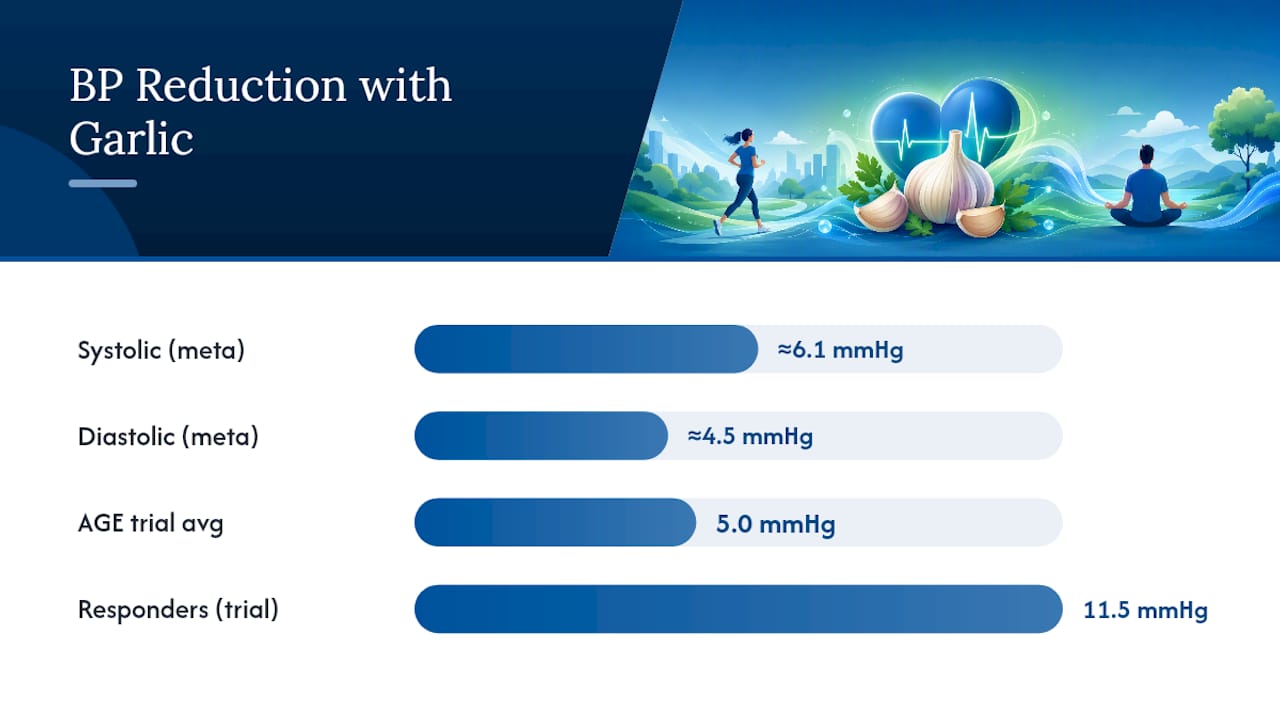
The strongest evidence sits in pooled meta-analyses that combine dozens of smaller trials into one statistical picture. Those analyses consistently find garlic supplementation lowers systolic blood pressure somewhere between 3.75 and 8.4 mmHg, and diastolic pressure between 1.6 and 7.3 mmHg. The wide range isn’t sloppy science. It reflects real differences in who was studied, what form of garlic they took, and for how long.
The trials producing numbers at the higher end of that range almost always involve people who started with elevated blood pressure rather than healthy volunteers. This matters for anyone reading garlic-and-blood-pressure headlines and wondering if the numbers apply to them. If your systolic pressure sits comfortably under 130 mmHg, garlic isn’t likely to move the needle much. If you’re managing stage 1 or stage 2 hypertension, you’re in the population where these studies actually found something.
The best-known single trial here is the AGE at Heart study, a 12-week randomized controlled trial testing aged garlic extract against placebo in adults with uncontrolled hypertension. It found an average systolic reduction of about 5.0 mmHg compared to placebo. That number alone undersells the finding, though, because the trial also identified “responders,” people whose blood pressure dropped by 5 mmHg or more, and among that group, reductions averaged around 11.5 mmHg.
That responder pattern shows up across the broader research base, not just this one study.
- Roughly 50% to 60% of trial participants qualify as responders, meaning garlic does something measurable for them.
- The remaining participants see minimal to no change, which means garlic isn’t a guaranteed fix for every hypertensive person.
- Trials run for 8 to 12 weeks at minimum, because shorter interventions don’t reliably capture the effect.
- Subgroup analyses point to age (often 50 to 60), higher baseline blood pressure, and certain BMI ranges as predictors of a stronger response, according to a 2025 Frontiers meta-analysis.
None of this is grade A, slam-dunk evidence. Sample sizes in individual trials are often modest, the garlic products tested vary widely in formulation and dose, and researchers don’t always measure blood pressure the same way (clinic readings versus home monitoring versus 24 hour ambulatory tracking). What you can say with confidence is that the signal is real and reproducible across multiple independent research teams, even if the exact size of the effect depends on who’s taking the garlic and what kind.
How Does Garlic Lower Blood Pressure in the Body?
Garlic’s blood pressure effect traces back to sulfur compounds released when garlic cloves are crushed, chewed, or processed. Allicin forms almost instantly when raw garlic is cut or crushed, then breaks down into secondary compounds including ajoene and various polysulfides. Aged garlic extract takes a different chemical path, converting those same sulfur precursors into S-allylcysteine (SAC), a more stable compound that survives digestion better than allicin does.
These compounds appear to work through a few overlapping pathways:
- Nitric oxide and hydrogen sulfide signaling. Garlic-derived sulfur compounds seem to boost production of nitric oxide and hydrogen sulfide in blood vessel walls, both of which relax smooth muscle and widen blood vessels.
- ACE-related activity. Some research suggests garlic compounds interfere with angiotensin-converting enzyme activity, echoing (at a much smaller scale) how a class of blood pressure medications works.
- Endothelial and arterial effects. Trial data from AGE at Heart pointed to improvements in central hemodynamics, including pulse-wave velocity, hinting that garlic’s benefit may extend beyond the number your cuff reads in the doctor’s office.
- Antioxidant support. Reduced oxidative stress in vessel walls may help preserve the flexibility arteries lose as blood pressure climbs over time.
Bioavailability is where formulation choice actually matters. Raw allicin degrades quickly and doesn’t survive stomach acid particularly well, while SAC in aged garlic extract is more stable and better absorbed, which is likely why standardized AGE shows up so often in the trials with the clearest results.
Pro Tip: If you’re comparing supplements, look past the words “garlic extract” on the label and check for a specific S-allylcysteine content in milligrams. That number tells you more about likely effectiveness than the total garlic powder weight does.
Which Garlic Form and Dose Works Best for Blood Pressure?
Not all garlic is created equal when it comes to blood pressure. Three forms show up across the research, and they behave differently in the body.
- Fresh, crushed raw garlic. Delivers allicin, but only if you crush or chew it and let it sit before eating, since the enzyme reaction that produces allicin needs a few minutes to run. This is sometimes called the 10 minute rule, and while it maximizes allicin in raw garlic, it has no relevance to processed supplements.
- Garlic powder supplements. These vary enormously in allicin potential depending on manufacturing, and studies using unspecified powder tend to produce less consistent results than trials using standardized extract.
- Aged garlic extract (AGE) standardized for SAC. This is what most of the higher-quality trials used, including AGE at Heart, which tested 1.2 grams of AGE delivering 1.2 mg of SAC daily. Other trials in the dose-response literature have tested ranges from 240 mg up to 960 mg, with some reporting effects tied to a 2.4 mg SAC dose.
The 10-minute rule simply doesn’t apply once garlic has been processed into aged extract. AGE production intentionally converts sulfur compounds into SAC over an extended aging period, so timing tricks that boost allicin in a raw clove are irrelevant to a capsule.
Some dose-response data suggest higher standardized doses over longer durations produce larger reductions, though the evidence here is thinner than the core meta-analyses. Practically speaking, if you’re shopping for a garlic supplement, favor one that discloses milligrams of SAC per serving and ideally carries third-party testing for potency and purity. A label that just says “garlic extract, 500 mg” without a SAC figure tells you very little about what you’re actually getting.
Who Is Most Likely to Benefit From Garlic Supplements?
Garlic’s blood pressure effect isn’t evenly distributed. The clearest pattern in the research: people with higher starting blood pressure see bigger drops than people whose numbers are already close to normal.
- People with systolic blood pressure at or above 140 mmHg tend to show the largest reductions in trials, while normotensive participants often see almost nothing.
- Somewhere between 50% and 60% of participants qualify as responders, generally defined as achieving a 5 mmHg or greater systolic drop.
- Age in the 50 to 60 range and certain BMI categories appear linked to stronger responses in recent subgroup analyses, though this isn’t a hard rule you can apply to any one individual.
- Responders in the AGE at Heart trial averaged an 11.5 mmHg systolic reduction, a change that’s clinically meaningful and, sustained over years, is the kind of shift associated with lower cardiovascular event rates in broader hypertension research.
Garlic is unlikely to help much if your blood pressure is already well controlled on medication or if you’re normotensive to begin with. It’s also not a rescue tool for a hypertensive crisis or severely elevated readings that need immediate medical attention. Where it earns a place is as an adjunct for people with mild to moderate hypertension who want to add a layer of support alongside, not instead of, what their doctor has already prescribed.
Are There Side Effects or Risks With Garlic Supplements?
Garlic is generally well tolerated, but it isn’t risk-free, especially for people already taking blood pressure or blood-thinning medication.
- Common, mild effects: gastrointestinal upset (heartburn, bloating, nausea) and halitosis or body odor show up regularly in trial reports, even with standardized AGE.
- Bleeding risk: garlic has mild antiplatelet properties, and while trial evidence on clinically significant bleeding is limited, caution is warranted if you’re on warfarin, a DOAC, or aspirin. Talk to your prescriber before adding garlic supplements in that situation.
- Medication interactions: combining garlic with prescribed antihypertensives could theoretically compound the blood pressure lowering effect, which sounds good but can occasionally tip someone into symptomatic hypotension. Don’t stop or adjust a prescribed medication because you’ve started a supplement.
- Special populations: anyone pregnant, scheduled for surgery, or managing liver disease should check with a clinician before starting garlic supplementation, since these situations carry their own bleeding, metabolic, or dosing considerations.
Pro Tip: If you’re on any anticoagulant, mention garlic supplementation at your next appointment, even if you consider it “just a supplement.” Prescribers can’t account for interactions they don’t know about.
Cleveland Clinic’s guidance is blunt on this point: enjoy garlic in your cooking, but don’t treat a supplement bottle as a proven replacement for medication your doctor prescribed.
How Should You Actually Try Garlic for Blood Pressure?
Turning the research into a workable plan doesn’t require guesswork, just a bit of structure.
- Choose a standardized aged garlic extract that discloses SAC content per serving, ideally backed by third-party testing for potency.
- Take a baseline blood pressure reading using a validated home monitor before you start, checked twice daily for a few days to get a reliable average. 9 out of 10 people skip this step and then can’t tell whether anything actually changed.
- Commit to 8 to 12 weeks before judging results, since that’s the window used in the trials showing measurable change, including AGE at Heart.
- Recheck at the 8 to 12 week mark. If you’ve seen a meaningful drop, continue and reassess again in a few months. If you’ve had side effects or no change at all, it’s reasonable to stop.
- Pair it with lifestyle changes that already have strong evidence behind them: the DASH diet, sodium reduction, regular aerobic exercise, and nutritional therapy all move blood pressure independently of anything garlic does.
Pro Tip: Keep a simple log of your home readings alongside the date you started your supplement. Two months from now, you’ll want the data, not your memory.
Why Trust This Guide on Garlic and Blood Pressure?
This article was written for Longevitypremier by Charles, drawing on the peer-reviewed meta-analyses and randomized trials cited throughout. Longevitypremier has built its formulation approach around more than 30 years of combined healthcare practice experience, with a specific focus on cardiovascular and blood pressure support products.
A few things worth knowing about how this piece was put together:
- Every effect-size figure traces back to a named meta-analysis or RCT, not a marketing claim.
- The company’s product formulations draw on the same categories of evidence discussed here: standardized extracts, disclosed active compounds, and dosing informed by clinical literature.
- Longevitypremier is a supplement company and sells products in this category, including a blood pressure formula referenced later in this article. That’s disclosed here plainly, not buried in fine print.
- Individual clinical trial citations for specific Longevitypremier products, along with fuller author credentials, are maintained separately and updated as new formulations are studied.
The Gap Between Garlic’s Reputation and What It Actually Does
Garlic gets treated online like either a miracle cure or a kitchen myth, and both framings miss what the data actually shows. It’s a real, modest, inconsistent intervention that helps roughly half the people who try it and does little for the other half. That’s not a failure of garlic. It’s just what an honest reading of 8 to 12 week trials looks like when you don’t round up.
Where I think the conventional advice falls short is the framing around raw garlic. Plenty of wellness content pushes the crushed clove and the 10-minute rule as though it’s interchangeable with clinical-grade aged garlic extract. It isn’t. The trials that produced the clearest results used standardized SAC content, not kitchen-counter chemistry.
If you’re managing hypertension and curious about garlic, the priority order is simple: get your baseline numbers, pick a standardized extract with disclosed SAC, give it the full 8 to 12 weeks, and keep your prescribed medication exactly as your doctor ordered it. Garlic earns a supporting role here. It was never going to be the star.
A Formulation Built Around the Same Evidence This Article Covers
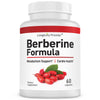
If you’ve read this far, you already know that “garlic supplement” covers a huge range of quality, from unspecified powder to standardized aged extract with disclosed SAC content. That gap is exactly why Longevitypremier built its Longevity Blood Pressure Formula around targeted, disclosed ingredients rather than a vague herbal blend, so you’re not stuck guessing what’s actually in the capsule.

The formula is designed for adults who want a standardized, formulation-focused option to pair with the monitoring plan and lifestyle changes covered above, not to replace anything your doctor has prescribed. For a broader look at how nutrition and daily habits support healthy blood pressure over time, Longevitypremier’s free wellness guide walks through the same DASH-style dietary principles referenced earlier in this piece. If you’re ready to start, the blood pressure formula page has full ingredient disclosure and dosing information so you can decide whether it fits your 8 to 12 week trial plan.
Frequently Asked Questions
Does garlic actually lower blood pressure, or is this overstated? Garlic modestly lowers blood pressure for many people with hypertension, with meta-analyses showing average reductions of a few points on both systolic and diastolic readings. It’s a real effect, just not a large one, and it doesn’t work for everyone.
How long does it take for garlic to lower blood pressure? Most clinical trials showing measurable effects ran for 8 to 12 weeks. Expecting a change within days or even a couple of weeks doesn’t match how these trials were designed or how the effect appears to build.
What’s the best garlic supplement for blood pressure, raw garlic or pills? Standardized aged garlic extract with disclosed S-allylcysteine content has the strongest trial evidence behind it, more consistent than raw garlic or unspecified powder supplements.
Can I take garlic supplements with my blood pressure medication? Many people do, but check with your prescriber first, especially if you’re on a blood thinner, since garlic has mild antiplatelet effects. Never stop or reduce a prescribed medication because you’ve added a supplement.
Is garlic safe for everyone to try for blood pressure support? It’s generally well tolerated, but people who are pregnant, scheduled for surgery, managing liver disease, or taking anticoagulants should talk to a clinician first.
This article is general information, not a substitute for advice from a qualified doctor. Consult a qualified healthcare professional about your own circumstances before acting on anything here.