




![Longevity Complete Detox [BETA 21 Caps]: 7 Day Intensive Detox & Digestive Support](http://longevitypremier.com/cdn/shop/files/DetoxBeta-mid_100x100.png?v=1787365739)






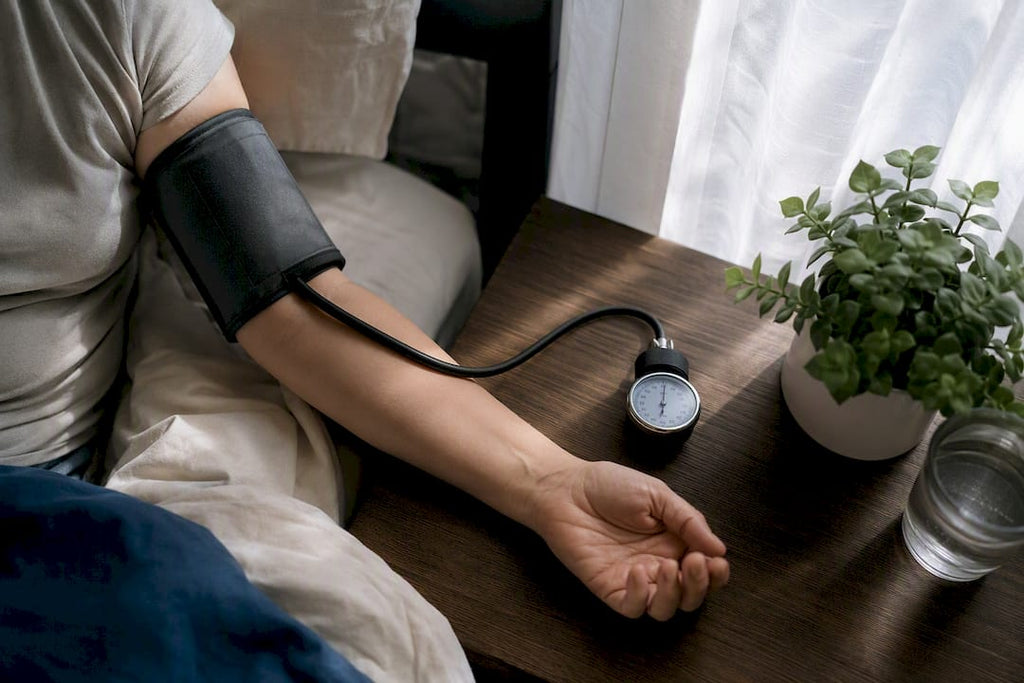
How to Prepare Your Blood Pressure Records for a Telehealth Visit
Bring a validated upper-arm monitor, a week of twice-daily readings (or at least several days if that’s not possible), and a current medication list. Clinicians work off averages, not single numbers, so your log matters more than any one reading.
- Device: validated upper-arm cuff monitor, charged and tested
- Log: 6 to 7 days of readings, morning and evening, with dates and times
- Notes: which arm you used, missed doses, or symptoms
- Sharing method: patient portal upload, a clear screenshot, or screen-share during the video visit
Key Takeaways
Clinicians rely on averaged, multi-day home blood pressure readings, taken with a validated cuff and consistent technique, to guide treatment decisions safely over telehealth.
| Point | Details |
|---|---|
| Collect a full week | Take two readings morning and evening for 7 days, discard day 1, and average the rest. |
| Use proper technique | Sit supported, feet flat, arm at heart level, and stay quiet during measurement. |
| Log six core fields | Record date, time, systolic, diastolic, pulse, and which arm you used. |
| Share before the visit | Upload your log to the patient portal, or screen-share it during telehealth. |
| Validate your device | Bring your monitor to the clinic and compare it against office equipment. |
| Consider adjunct support | Longevitypremier’s Blood Pressure Formula is a supplement adjunct, not a substitute for prescribed care. |
Table of Contents
- How to Prepare Your Blood Pressure Records for a Doctor or Telehealth Visit
- How to Take an Accurate Blood Pressure Reading at Home
- How Many Readings Do Clinicians Actually Want?
- What to Record and How to Organize Your Log
- Sharing Your Readings With Your Clinician
- Common Mistakes That Throw Off a Reading
- Why Clinicians Trust Averaged Home Readings
- A Personal Note on Sticking With It
- Supporting Your Numbers Between Visits
- Sources
How to Prepare Your Blood Pressure Records for a Doctor or Telehealth Visit
Getting your numbers ready isn’t complicated, but it does need to happen in order. Do it the day before and again in the hour before your appointment, and you’ll walk in (or log in) with a record your clinician can actually use.
The day before:
- Charge your monitor and take one test reading to confirm it’s working.
- Check your cuff size. Wrap a tape measure around your bare upper arm at the midpoint. If you’re not sure the cuff fits, most manufacturers list the arm circumference range right on the cuff itself.
- Pull together your log, whether that’s a notebook, spreadsheet, or app export, and add a one-line note about anything unusual: a missed dose, a stressful week, a new cold.
The hour before:
- Skip caffeine, alcohol, tobacco, and exercise for a period before measuring, and use the bathroom first. A full bladder can push readings up.
- For telehealth, test your patient portal login and confirm you can upload a file or photo. If your clinician wants to see the device, set up your camera so the monitor’s screen is visible.
Pro Tip: Keep a spare cuff or battery for your monitor in the same drawer as the device. Dead batteries are the most common reason home readings get skipped the week they matter most.
How to Take an Accurate Blood Pressure Reading at Home
Technique changes the number more than most people realize. Sit in a chair with your back supported, feet flat on the floor, and legs uncrossed for a full 5 minutes before you start. Rest your arm on a table so the cuff sits at roughly heart level. Crossed legs or an unsupported arm can shift a reading by several points, which is enough to change how a clinician reads your trend line.
Fit the cuff on your bare upper arm, not over a sleeve, with the bottom edge about an inch above your elbow crease. The inflatable bladder inside the cuff should wrap around most of your upper arm. Choosing a cuff that’s too small is one of the most common reasons home readings run higher than office readings, according to the American Heart Association.
Take two readings spaced apart by about a minute, and record both. Stay quiet. Talking during the reading is a known source of error.
Protocol clinicians actually follow: measure morning and evening for 7 days, then discard the very first day and average the remaining six, per CDC guidance on measuring blood pressure.
- Measure before you take your morning medication, if your clinician hasn’t told you otherwise.
- Always record which arm you used, and try to stick with the same one throughout the week.
How Many Readings Do Clinicians Actually Want?
The gold standard is multiple readings taken morning and evening for several consecutive days, then discarding the first day and averaging the remaining days of data. That first day tends to run high simply because you’re not yet in a routine, and clinicians know it, which is why the CDC’s self-measured blood pressure protocol builds in that discard step.
If a full week isn’t realistic before your appointment, a few days of consistent morning and evening readings is usually the minimum most practices will accept.
To average, add up every systolic number and divide by the count, then do the same for diastolic. That’s the figure your clinician will actually look at, not any single high or low reading from the batch.
- A steady average in range: reassuring, likely no medication change needed.
- A rising trend over the week: may prompt a dosage review.
- Wildly inconsistent numbers: often points to technique or device issues, not necessarily your heart.
Clinicians may ask for extra days of data after starting a new medication, if you log a reading tied to symptoms like dizziness or chest tightness, or if your numbers swing more than 20 points between measurements taken close together.
What to Record and How to Organize Your Log
A physician-ready log needs six fields, no more: date, time, systolic, diastolic, pulse, and which arm you used. Add a short context note when something’s off, like “missed evening dose” or “felt lightheaded.” That single line can save your clinician a follow-up question.
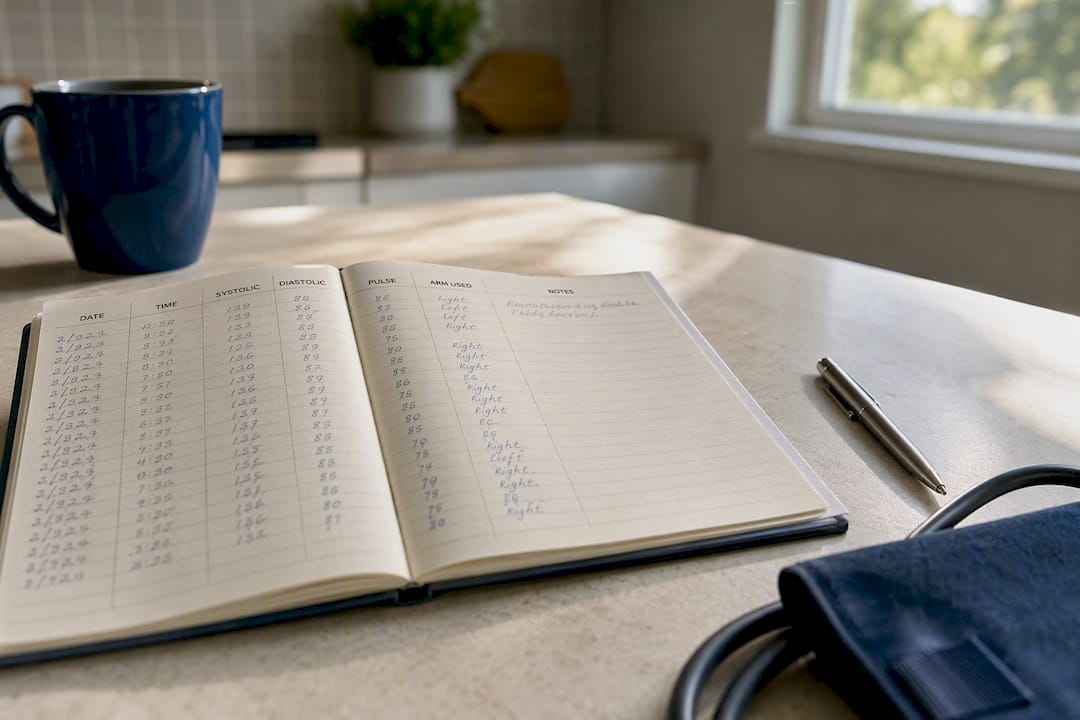
Paper logs work fine. The American Heart Association’s printable blood pressure log uses exactly this column structure and is worth printing even if you eventually move to digital tracking. If you prefer a spreadsheet, use the same six headers plus a notes column.
If your monitor stores readings in memory, photographing the screen works as a backup, but label the image with the date so you’re not guessing later. Name files something specific, like “BP_week_March10.jpg,” rather than “IMG_4021.”
Pro Tip: Flag any reading you don’t trust with a quick asterisk or the word “retake” in your notes. A clinician would rather see an honest gap than a number that got fudged into looking normal.
Sharing Your Readings With Your Clinician
The cleanest option is uploading your log to your patient portal before the appointment, giving your clinician time to review it instead of reading numbers off a screen live.
- Log into your patient portal and upload a spreadsheet, photo, or scanned log a day or two ahead of the visit.
- If you didn’t get to that, screen-share your spreadsheet or hold your written log up to the camera during the telehealth call.
- At minimum, read your morning and evening averages aloud, along with the date range they cover.
- For in-person visits, bring the monitor itself. Staff can check it against office equipment on the spot.
Once your clinician has the data, expect them to check your averages against your target range, ask about your device’s accuracy, and decide whether labs or a medication adjustment make sense. If your home and office numbers differ by more than about 10 mm Hg, some clinics will recommend a side-by-side comparison of the two devices.
Common Mistakes That Throw Off a Reading
Most bad readings trace back to one of a handful of habits: a cuff that’s too small, a cuff placed over a sleeve, talking mid-measurement, an unsupported arm, or measuring right after coffee or a workout.
- Cuff too small or worn over clothing: re-measure your arm and switch to bare skin.
- Reading taken right after activity: wait 5 minutes, sit quietly, then retake it.
- Numbers that seem consistently off: bring the monitor to your clinic and ask them to check it against office equipment.
Call your clinician right away if a reading is very high (especially with a headache, chest pain, or vision changes) rather than waiting for your next scheduled visit.
Why Clinicians Trust Averaged Home Readings
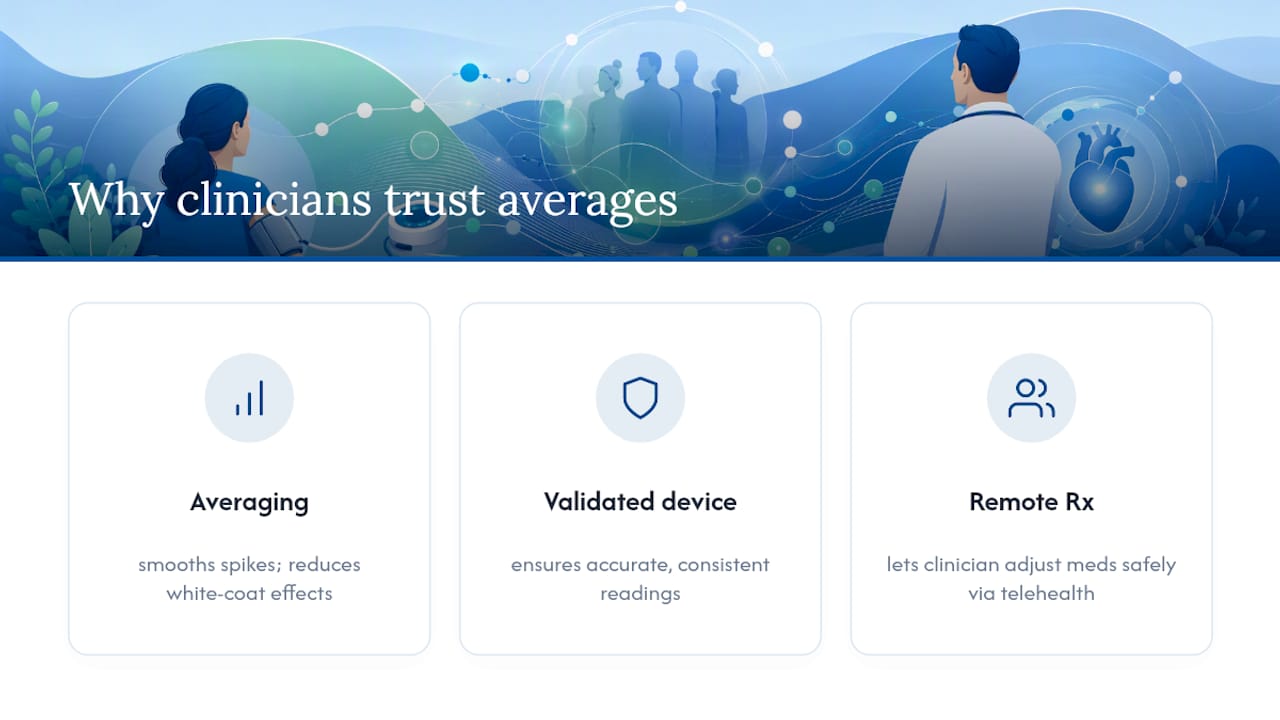
A single reading is a snapshot, not a diagnosis. Averaged home data smooths out the spikes caused by nerves, weather, or a bad night’s sleep, and helps rule out white-coat effects that inflate office numbers.
That’s also why validated devices and proper technique matter so much. Clean, consistent data is what lets a clinician safely adjust your prescription over telehealth instead of asking you to come in first.
A Personal Note on Sticking With It
Consistency beats perfection here. Missed a dose? Write it down instead of hiding it. Skipped a day of readings? Note that too. Bring your monitor to your next visit so your clinic can confirm it’s reading correctly, and ask directly whether your cuff size is right. Your clinician wants your honest numbers, not your best ones.
Supporting Your Numbers Between Visits
Nothing here replaces your prescribed treatment or your clinician’s judgment. But between appointments, some patients look for additional support alongside their monitoring routine and medication plan. Longevitypremier’s Longevity Blood Pressure Formula is formulated as an adjunct, using natural ingredients selected to support healthy circulation, not to replace anything your doctor has prescribed.

If you’re managing blood pressure long term, it’s worth talking to your clinician about whether a supplement fits into your broader plan. And if you want a broader look at cardiovascular wellness strategies before that conversation, Longevitypremier’s free guide walks through the basics in plain language. Either way, check with your clinician before adding anything new to your routine, and browse the Blood Pressure Formula page to see whether it fits your goals.
Sources
- Measuring your blood pressure — CDC
- Get the most out of home blood pressure monitoring — Mayo Clinic