


![Longevity Complete Detox [BETA 21 Caps]: 7 Day Intensive Detox & Digestive Support](http://longevitypremier.com/cdn/shop/files/DetoxBeta-mid_100x100.png?v=1787365739)




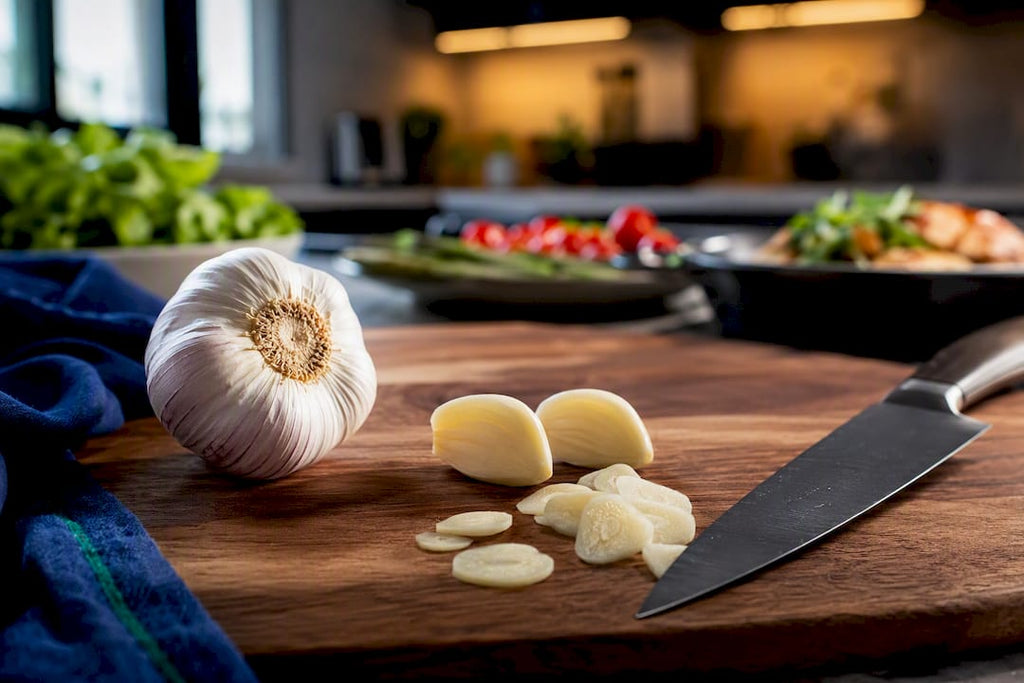
One to Two Cloves: Garlic's Heart Effect for Health Minded Adults
High-quality meta-analyses show daily garlic produces small but measurable reductions in blood pressure and LDL cholesterol, on the order of a few points, not a cure. The benefit is real but modest, larger in people who start with high blood pressure or elevated cholesterol, and it works best alongside diet and medication, not instead of them. Anyone on blood thinners should talk to a doctor before adding concentrated garlic supplements.
TL;DR:
- Garlic’s blood pressure and cholesterol reductions are small but consistent, with greater effects in individuals with higher baseline levels.
- Preparation method influences active compounds, with aged garlic extract offering more dosage consistency than fresh or cooked varieties.
- People taking blood thinners or facing surgery should consult a doctor before using concentrated garlic supplements due to bleeding risks.
- Typical effective doses in studies equate to one to two garlic cloves daily or standardized supplements, with blood pressure effects appearing in two to four weeks.
- Garlic should complement a healthy diet and medication, not replace prescribed treatments, especially for managing hypertension or cholesterol.
Table of Contents
- Garlic Every Day: What Research Says About the Ancient Bulb and Your Heart
- How Garlic Affects Blood Pressure, Cholesterol, and Inflammation Markers
- Why Garlic Preparation Changes What You Actually Get
- Garlic Safety Rules: Bleeding Risk, Surgery, and Who Should Be Cautious
- How to Actually Eat Garlic Every Day for Heart Health
- Where a Standardized Formula Fits Alongside Everyday Garlic
- Balancing Enthusiasm With Evidence
- A Standardized Option if You Want Consistent Dosing
- Sources
Garlic Every Day: What Research Says About the Ancient Bulb and Your Heart
Garlic has been used as a folk heart remedy for thousands of years, from ancient Egyptian medical texts to Ayurvedic practice. What separates 2026’s understanding from centuries of tradition is the sheer volume of controlled data now available. A 2025 systematic review and meta-analysis pooled 108 randomized controlled trials covering 7,137 participants and found daily garlic intake lowered systolic blood pressure by an average of 3.71 mmHg and diastolic blood pressure by 1.97 mmHg, along with a 10.21 mg/dL drop in total cholesterol and a 5.90 mg/dL drop in LDL.
Those numbers sound small in isolation. On a population level, a few points off systolic pressure shifts risk for millions of people, which is why cardiologists take modest average effects seriously even when no single patient notices a dramatic change on their home cuff.
The trial data lines up with what large observational cohorts have found in real populations eating garlic as part of daily meals rather than swallowing a measured capsule. Three major cohort studies, including the Chinese Longitudinal Healthy Longevity Survey (CLHLS), the Xinjiang Multiethnic Cohort, and the UK Biobank, tracked garlic consumption habits against long-term health outcomes. In the CLHLS data, people who ate garlic near daily had a cardiovascular disease odds ratio of 0.69 compared to infrequent consumers, a 31% lower relative odds, with a 95% confidence interval of 0.59 to 0.80.
Cohort data cannot prove garlic caused that difference. People who eat garlic every day may also cook more from scratch, eat less processed food, or simply live in regions with different baseline cardiovascular risk. Researchers call this confounding, and it is the single biggest reason nutrition observational studies get treated with more caution than randomized trials.
Here is what pulls the two data types together and what keeps them from fully agreeing:
- Randomized trials isolate garlic’s effect from diet and lifestyle noise, but many are small, short in duration, and vary wildly in the garlic form tested.
- Cohort studies capture real-world, long-term eating patterns but cannot separate garlic from the broader dietary pattern of people who eat it often.
- Heterogeneity across the 108 pooled RCTs was substantial, driven largely by differences in preparation (raw, aged extract, powder), dose, and trial length.
- Trials enrolling participants with elevated baseline blood pressure or cholesterol consistently showed larger effect sizes than trials in healthy volunteers, according to the same 2025 meta-analysis.
- The NCCIH describes the overall evidence as inconsistent enough that garlic should be viewed as a supportive habit within a broader healthy diet, not a standalone treatment.
The honest summary: garlic is one of the more evidence-backed food-based interventions for cardiovascular risk factors, but it is a supporting player, not a leading one. If your blood pressure is borderline and your diet is already decent, garlic might nudge things in the right direction. It will not replace a statin or an ACE inhibitor. No legitimate researcher claims otherwise.
How Garlic Affects Blood Pressure, Cholesterol, and Inflammation Markers
Averages hide a lot of nuance, so it helps to look at each cardiovascular marker on its own rather than treating “garlic helps your heart” as one undifferentiated claim.
Blood pressure. The pooled data shows a mean systolic reduction of 3.71 mmHg and a diastolic reduction of 1.97 mmHg. For context, a 3 to 4 mmHg drop in systolic pressure at the population level has historically been enough to move the needle on stroke and heart attack rates in large public health studies, even though a single person watching their own home readings might see the change come and go within normal daily fluctuation. If you already have a formal hypertension diagnosis, garlic will not replace medication, but the effect size sits in a similar range to some early-stage lifestyle interventions doctors already recommend.
Cholesterol and triglycerides. Total cholesterol fell by 10.21 mg/dL and LDL by 5.90 mg/dL in the meta-analysis, while HDL rose modestly by 2.18 mg/dL. Triglyceride changes were less consistent across trials, and several studies included in the pooled analysis found no significant movement at all. That inconsistency is worth sitting with: garlic’s cholesterol effect is closer to what you would expect from a modest dietary swap than a return you would get from a bulk pharmaceutical dose.
Inflammation and glycemic markers. Some individual trials measured C-reactive protein (CRP) and fasting glucose, with mixed results. A subset of studies found small reductions in inflammatory markers among participants with existing metabolic issues, but the pattern was not uniform enough across the pooled trials to generate a reliable summary number the way blood pressure and lipids did. Treat any claim of a dramatic anti-inflammatory garlic effect with real skepticism until larger, more consistent trials confirm it.
| Marker | Average change (meta-analysis) | Clinical read |
|---|---|---|
| Systolic blood pressure | −3.71 mmHg | Meaningful at the population level; modest for one individual |
| Diastolic blood pressure | −1.97 mmHg | Consistent but small |
| Total cholesterol | −10.21 mg/dL | Comparable to a moderate dietary adjustment |
| LDL cholesterol | −5.90 mg/dL | Modest, more pronounced in people with high baseline LDL |
| HDL cholesterol | +2.18 mg/dL | Small favorable shift |
The single number worth remembering: across 108 randomized trials and over 7,000 participants, garlic never produced a dramatic transformation in any cardiovascular marker. It produced a consistent small one. That consistency, more than the magnitude, is what makes the pooled data credible.
The people who see the biggest change tend to already have something to correct. A 2025 analysis noted that trials recruiting participants with hypertension or elevated LDL at baseline consistently produced larger effect sizes than trials in generally healthy volunteers. If your numbers are already normal, garlic is unlikely to move them much further. If your numbers run high, it has more room to work.
Why Garlic Preparation Changes What You Actually Get
Not all garlic delivers the same chemistry, and this explains a good chunk of the inconsistency across trials. Fresh garlic contains a compound called alliin that stays inert until the clove’s cell walls are broken. Crushing or chopping releases an enzyme that converts alliin into allicin, the pungent compound most associated with garlic’s cardiovascular effects. Allicin is unstable and degrades quickly with heat, which means the way you prepare garlic largely determines what you are actually consuming.
Aged garlic extract takes a different route. Rather than relying on allicin, it’s processed over months to generate stable sulfur compounds, primarily S-allylcysteine, that survive digestion and standardized dosing better than raw allicin does. According to the Merck Manual, this is part of why aged garlic extract shows up so often in clinical trials: it gives researchers a consistent, measurable active ingredient instead of a compound that changes potency depending on how the clove was cut and cooked.
Here is how the major research forms compare:
- Fresh raw garlic: Highest allicin potential immediately after crushing, but the compound degrades within roughly 10 minutes and drops sharply with heat exposure.
- Cooked garlic: Retains flavor and some sulfur compounds but loses most of its allicin content, which is one reason cooked-garlic trials tend to show weaker effects than raw-garlic ones.
- Garlic powder: Standardizes dose better than fresh cloves but allicin yield varies by manufacturer and processing method.
- Aged garlic extract (AGE): Trades peak allicin potency for consistency, using S-allylcysteine as its primary active compound, and tends to produce fewer digestive side effects than raw garlic.
- Standardized supplements: Often labeled by “allicin yield” or clove equivalent, letting researchers approximate how many fresh cloves a capsule represents.
Trial doses typically ranged from the equivalent of one to four fresh cloves daily, or 300 to 1,200 mg of standardized extract, sustained for anywhere from eight to twelve weeks before researchers reassessed blood pressure or lipid panels. Shorter trials rarely captured meaningful lipid changes, since cholesterol shifts take longer to show up in blood work than blood pressure does.
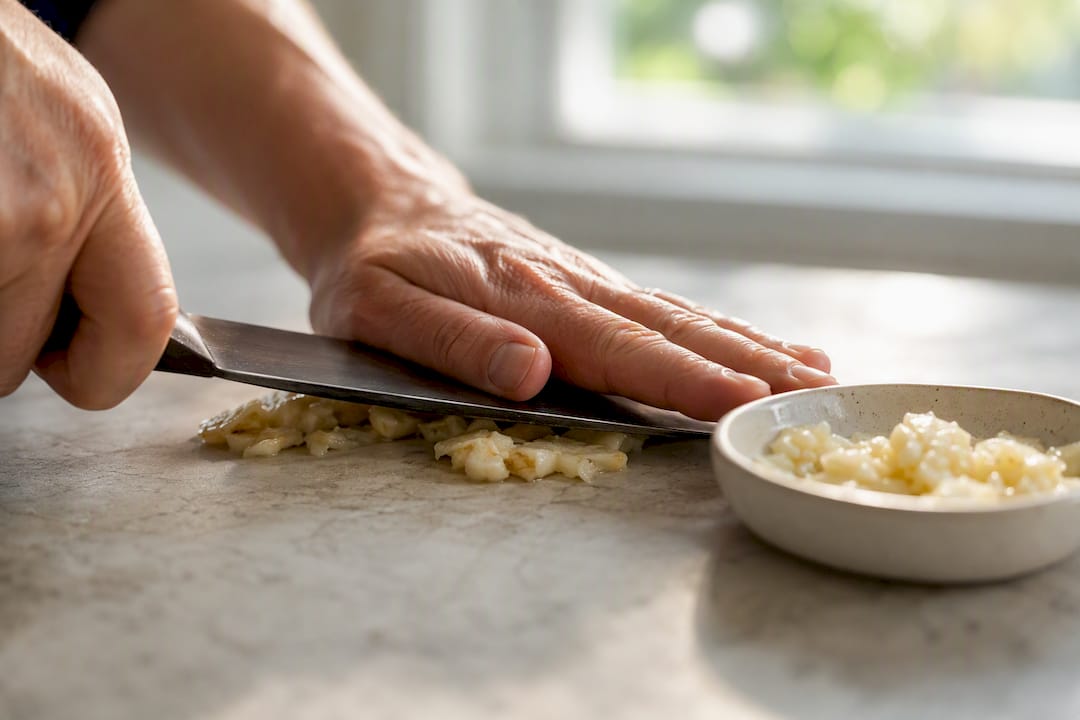
Pro Tip: If you’re using fresh garlic for its cardiovascular compounds rather than just flavor, crush or mince it and let it sit for about 10 minutes before you add heat. That resting window is when allicin formation peaks, according to the British Heart Foundation, and tossing crushed garlic straight into a hot pan skips most of the benefit you’re cooking for in the first place.
Garlic Safety Rules: Bleeding Risk, Surgery, and Who Should Be Cautious
Garlic’s cardiovascular benefit and its main safety risk come from the same mechanism. Sulfur compounds that help modestly lower blood pressure also inhibit platelet aggregation, which is a clinical way of saying garlic can thin the blood slightly. For most people eating garlic in food, that effect is trivial. For specific groups, it is not.
- If you take anticoagulants or antiplatelet medication (warfarin, clopidogrel, aspirin therapy, or similar), talk to your doctor before adding concentrated garlic supplements. Clinical reviews have flagged garlic’s platelet-inhibiting effect as a real interaction risk with these drugs, not a theoretical one, based on documented herb-drug interaction cases.
- If you have upcoming surgery, stop high-dose garlic supplements at least seven days beforehand. Clinical guidance on perioperative herb use points to garlic’s effect on platelet function as a bleeding risk during procedures, based on case reports and in vitro data.
- If you are pregnant or breastfeeding, stick to culinary amounts of garlic in food and avoid high-dose supplements until you have discussed it with your obstetrician, since supplement-level dosing has not been well studied in this group.
- If you experience gastrointestinal upset, including heartburn, bloating, or nausea after starting garlic supplements, scale back the dose first. Mild GI symptoms and breath or body odor remain the most commonly reported side effects across trials reviewed by the NIH.
- Stop and call a clinician if you notice unusual bruising, rash, prolonged bleeding from small cuts, or severe stomach pain after starting a garlic supplement. These are not typical reactions, and they warrant a real conversation rather than waiting it out.
None of this means garlic is dangerous for the average healthy adult eating it in normal food quantities. The risk profile changes specifically around concentrated supplement doses and specific medical situations, which is exactly why the guidance above is organized by circumstance rather than as a blanket warning.
How to Actually Eat Garlic Every Day for Heart Health
Translating meta-analysis numbers into a Tuesday dinner is the part most articles skip. Here is what it actually looks like in practice.
Most trials that showed measurable cardiovascular benefit used the equivalent of one to two medium fresh cloves daily, or a standardized supplement delivering a comparable allicin yield. That is a realistic amount to work into ordinary cooking. A clove minced into a vinaigrette, stirred into sautéed vegetables, or crushed into hummus gets you there without turning every meal into a garlic showcase.
- Swap garlic and other aromatics for a portion of the salt in soups, stir-fries, and roasted vegetables. Salt reduction has its own well-documented blood pressure benefit, and dietitians note that leaning on garlic’s flavor is a practical way to cut sodium without food tasting flat, according to British Heart Foundation guidance.
- Add raw or lightly cooked garlic to dressings, dips, and finishing sauces where it will not sit over high heat for long.
- If you dislike the taste or the smell, a standardized aged garlic extract supplement gets you closer to trial-tested doses without the culinary commitment.
- Check supplement labels for “allicin yield” or milligram dose of standardized extract, and look for third-party testing where available, since potency varies more between garlic products than most supplement categories.
- Give it time. Blood pressure changes can show up within two to four weeks of consistent intake, but cholesterol shifts typically take eight to twelve weeks to appear on a lipid panel.
If you want to see whether garlic is doing anything for you personally, track it the way researchers do: log your intake, check home blood pressure readings twice daily for the first few weeks, and plan a follow-up lipid panel with your doctor around the two to three month mark rather than expecting bloodwork to shift after a week or two. For more on interpreting your own readings as you experiment, our guide on blood pressure numbers and next steps walks through what different ranges actually mean.
Pro Tip: Crush your garlic and let it rest for about 10 minutes at room temperature before it hits the pan. That short window is when allicin formation peaks, and it is the single easiest habit to add if you actually want the cardiovascular compound, not just the flavor.
Where a Standardized Formula Fits Alongside Everyday Garlic
The formulations grow out of more than 30 years of clinical practice experience focused on cardiovascular and metabolic support, which shapes thinking about ingredients like garlic. Readers who want a deeper look at how garlic stacks up against other evidence-backed herbal approaches to blood pressure can check our breakdown of blood pressure herbs with clinical evidence, and our free educational guide covers more of the research behind these ingredient choices.
A standardized formula differs from home cooking in one key way: dose consistency. When you eat garlic in food, the active compound content shifts with clove size, freshness, and how you cook it. A formulated product uses a set amount per serving, which is part of why researchers lean on standardized extract in trials rather than asking participants to eat a fixed number of cloves. That consistency is a manufacturing advantage, not a claim that any formula outperforms whole food garlic on its own.
Balancing Enthusiasm With Evidence
The research on garlic is genuinely good, better than most kitchen-cabinet remedies ever get. But good is not the same as dramatic. A 3 to 4 mmHg drop in blood pressure and a modest LDL improvement will not undo a diet built on processed food and added sugar, and no serious researcher claims it will.
What I find most useful about the garlic data is what it says about food in general: small, consistent habits compound. Garlic earns its reputation not because it is a miracle bulb, but because it is an easy, tasty way to displace salt and add real nutritional value to food you were already going to eat. That is a genuinely different pitch than most supplement marketing makes, and it is worth appreciating on its own terms.
If you are on blood thinners, pregnant, or facing surgery, have the garlic conversation with your doctor before you have the garlic. For everyone else, cook with it generously and treat any supplement decision as a conversation with a clinician who knows your full medication list, not a solo call based on one article.
— Charles
A Standardized Option if You Want Consistent Dosing
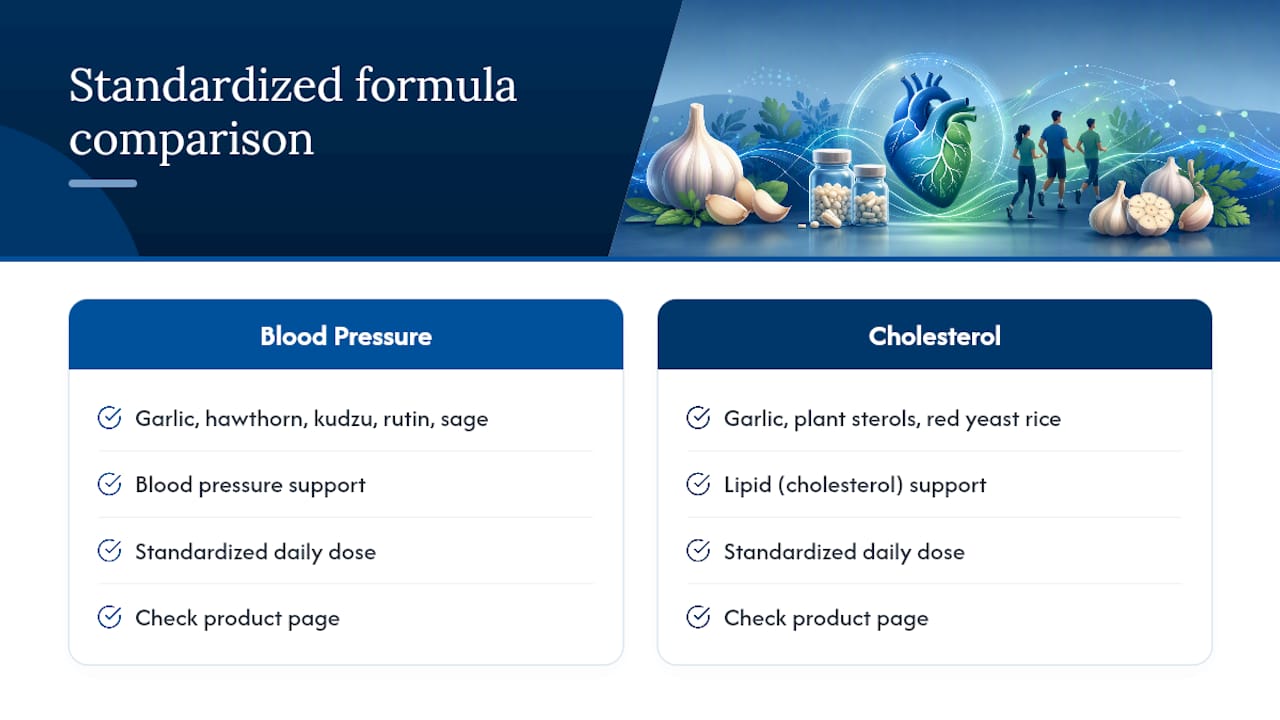
Cooking with garlic gets you real cardiovascular benefit, but dose varies with every clove you crush. If you want the same standardized approach researchers use in trials, without measuring allicin yield yourself, Longevity Premier builds that consistency into its formulas. The Longevity Blood Pressure Formula pairs garlic with hawthorn, kudzu, rutin, and sage in a fixed daily dose, and the Longevity Cholesterol Formula combines garlic with plant sterols and red yeast rice for lipid support.
Neither formula replaces a prescription, and if you take blood thinners or other heart medication, talk to your doctor before starting either one. If your labs already show elevated blood pressure or LDL, ask your doctor whether a standardized formula makes sense alongside the dietary changes covered above, and check the Longevity Blood Pressure Formula product page for full ingredient details before you decide.
This article is general information, not a substitute for advice from a qualified doctor. Consult a qualified healthcare professional about your own circumstances before acting on anything here.
Sources
- Effects of Garlic Supplementation on Cardiovascular Risk Factors in Adults: A Comprehensive Updated Systematic Review and Meta-Analysis of Randomized Controlled Trials
- Dietary Pattern of Garlic and Risk of Chronic Diseases: Evidence From Three Large‐Scale Cohorts
- Garlic: Usefulness and Safety | NCCIH
- Effect of garlic on cardiovascular disorders: a review - PMC - NIH
Recommended
- Can Garlic Really Lower Blood Pressure?
- Top 8 Blood Pressure Herbs Backed by Clinical Evidence
- Magnesium and Blood Pressure: What the Evidence Shows
- (3 bottle value pack) Longevity Cholesterol Formula: Natural supplement for cholesterol, triglycerides and heart health with plant sterols, red yeast rice, garlic and more