




![Longevity Complete Detox [BETA 21 Caps]: 7 Day Intensive Detox & Digestive Support](http://longevitypremier.com/cdn/shop/files/DetoxBeta-mid_100x100.png?v=1787365739)





Blood Pressure Levels: What Your Numbers Mean & Next Steps
A blood pressure reading under 120/80 mm Hg is normal. From there, 130/80 mm Hg or higher counts as Stage 1 hypertension most of the time, 140/90 or higher is Stage 2, and anything over 180/120 is a hypertensive crisis that needs immediate medical attention. Elevated blood pressure sits between normal and Stage 1: a systolic number of 120 to 129 with a diastolic under 80.
Here’s the action version. Normal reading? Keep doing what you’re doing. Elevated or Stage 1? Recheck at home, tighten up diet and activity, and get it confirmed by a primary care provider. Stage 2? Call your doctor’s office this week, not next month. A reading above 180 systolic or 120 diastolic, especially with chest pain, shortness of breath, vision changes, or trouble speaking, means calling 911 instead of waiting for an appointment.
One wrinkle trips up a lot of people: your systolic (top) and diastolic (bottom) numbers don’t always land in the same category. A reading of 145/78 has a normal-range diastolic number but a systolic number that’s solidly Stage 2. The higher category always wins, so that reading gets treated as Stage 2, not as an in-between case. And no clinician diagnoses hypertension off one high number in one visit. Diagnosis typically requires averaging multiple readings taken on separate days.
Quick reference: Normal is under 120/80. Elevated is 120 to 129 systolic with diastolic under 80. Stage 1 is 130 to 139 systolic or 80 to 89 diastolic. Stage 2 is 140+ systolic or 90+ diastolic. A hypertensive crisis is above 180 systolic and/or above 120 diastolic.
Key Takeaways
Blood pressure categories run from normal (under 120/80) through elevated, Stage 1, Stage 2, and hypertensive crisis (above 180/120), and the higher of your two numbers always determines which category applies.
| Point | Details |
|---|---|
| Know your category | Normal is under 120/80; Stage 1 starts at 130/80; Stage 2 starts at 140/90; crisis is above 180/120. |
| Higher number wins | If systolic and diastolic fall into different categories, the higher category is used for classification. |
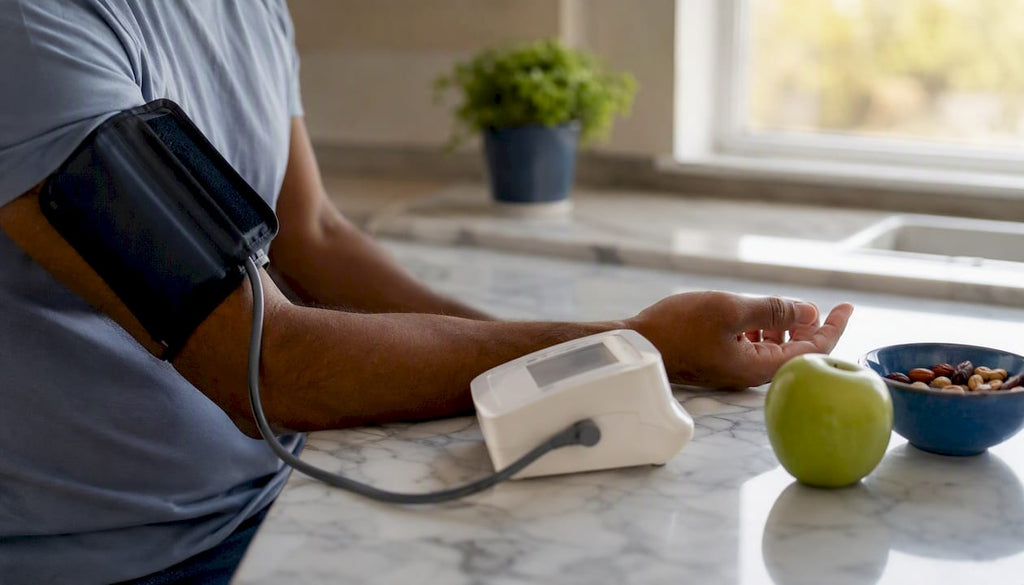
| Measure it right | Use a properly sized cuff, rest five minutes, keep feet flat and arm at heart level for accurate readings. |
| One reading isn’t a diagnosis | Clinicians average multiple readings across separate visits before confirming hypertension. |
| Know the emergency signs | Chest pain, severe headache, or vision changes with a reading above 180/120 means calling 911. |
| Support lifestyle efforts | Longevitypremier’s Blood Pressure Formula offers targeted nutritional support alongside diet, exercise, and monitoring. |
Table of Contents
- How Is Blood Pressure Measured?
- What Are the Blood Pressure Categories and Stages?
- Does Systolic or Diastolic Matter More?
- What Do Common Readings Like 140/70 or 150/80 Mean?
- How Do Doctors Diagnose High Blood Pressure?
- What Treatment Options Exist for High Blood Pressure?
- What Causes High Blood Pressure and What Are the Risks?
- When Is High Blood Pressure a Medical Emergency?
- Why Understanding Your Exact Numbers Changes Your Outcome
- Longevitypremier’s Approach to Blood Pressure Support
- Frequently Asked Questions
- Sources
How Is Blood Pressure Measured?
The top number, systolic pressure, measures the force in your arteries when your heart beats. The bottom number, diastolic pressure, measures the force between beats when the heart rests. A reading of 120/80 mm Hg means a systolic pressure of 120 and a diastolic pressure of 80, and clinicians always write it in that order, top over bottom.
Getting an accurate number at home is trickier than it looks, and small mistakes routinely inflate readings by 5 to 10 points. That’s often enough to bump someone from “elevated” into “Stage 1” on paper without their blood pressure actually having changed.
Run through this before you take a reading:
- Use a cuff sized correctly for your arm. A too-small cuff is one of the most common causes of falsely high readings.
- Sit quietly for five minutes before measuring. Don’t talk during the reading.
- Rest your arm at heart level, supported on a table, not hanging at your side.
- Keep your feet flat on the floor. Crossed legs can raise systolic pressure by several points.
- Skip caffeine, nicotine, and exercise for at least 30 minutes beforehand.
There’s also a well-documented phenomenon called “white-coat effect,” where blood pressure spikes in a medical office simply because the setting is stressful, even for people whose home readings run normal. This is exactly why clinicians average two or more readings rather than diagnosing off a single number, and why many providers check both arms at a patient’s first visit to rule out an inter-arm discrepancy.
Pro Tip: If your first blood pressure check ever shows a meaningful difference between your left and right arm, ask your provider to note which arm read higher. Use that arm for every future measurement, at home and at appointments, so you’re not underestimating your numbers.
What Are the Blood Pressure Categories and Stages?
The five categories used across American clinical guidance run from normal to hypertensive crisis, and each one carries a different recommended response.
| Category | Systolic (mm Hg) | Diastolic (mm Hg) | Typical action |
|---|---|---|---|
| Normal | Below 120 | Below 80 | Maintain current habits; recheck annually |
| Elevated | 120 to 129 | Below 80 | Adopt lifestyle changes; recheck within months |
| Stage 1 hypertension | 130 to 139 | 80 to 89 | See a primary care provider; lifestyle changes, medication if risk is high |
| Stage 2 hypertension | 140 or higher | 90 or higher | Contact your provider promptly; medication usually recommended |
| Hypertensive crisis | Higher than 180 | Higher than 120 | Seek emergency care immediately |
Two numbers, different categories: the higher one determines the classification. A reading of 128/92 looks borderline on the systolic side, but a diastolic pressure of 92 puts it in Stage 2. This “and/or” logic surprises people who assume both numbers have to cross a threshold together.
Once someone’s blood pressure runs at 130/80 or higher on a consistent basis, that meets the definition of Stage 1 hypertension, though whether a doctor starts medication right away depends heavily on other risk factors: existing heart disease, diabetes, chronic kidney disease, or a calculated 10-year cardiovascular risk score. Stage 2 almost always means medication plus lifestyle changes together, not one or the other. Stage 1 sits in a gray zone where a lower-risk patient might get three to six months to try diet and exercise before any prescription enters the conversation.
Does Systolic or Diastolic Matter More?
For most adults over 50, systolic pressure is the number that matters more, and the reason comes down to basic arterial mechanics. Arteries stiffen with age, which drives systolic pressure up even as diastolic pressure holds steady or drifts down. The American Heart Association notes that systolic pressure becomes the dominant cardiovascular risk marker in this age group precisely because of that stiffening process.

That doesn’t mean diastolic pressure is irrelevant. In younger adults, particularly those under 50, an elevated diastolic number can be the earlier warning sign, sometimes showing up before systolic pressure climbs at all. It also matters more in specific clinical contexts, like certain kidney conditions, where diastolic elevation reflects a different underlying process than the age-related stiffening seen in older patients.
A reading of 138/92 in a 35-year-old and a reading of 148/78 in a 68-year-old represent two very different physiological stories, even though both would technically land in Stage 2 territory once the higher number is applied. A clinician reading these charts pays attention to which number is driving the classification, not just the label itself.
What Do Common Readings Like 140/70 or 150/80 Mean?
Real-world readings rarely arrive as clean textbook numbers, so working through a few actual examples clears up more confusion than another paragraph of definitions.
-
140/70 mm Hg. The systolic number of 140 alone meets the Stage 2 threshold, even though the diastolic reading of 70 falls in completely normal territory. Because the higher category prevails, this reading is classified as Stage 2 hypertension. It’s not an emergency, but it warrants a call to your primary care provider within days, plus a repeat home reading to confirm the pattern rather than reacting to a single number.
-
150/80 mm Hg. Same logic applies. A systolic reading at or above 140 puts this in Stage 2 regardless of the diastolic number sitting comfortably at 80. This pattern, sometimes called isolated systolic hypertension, is common in older adults and usually prompts a clinician to discuss both lifestyle changes and medication, especially if it shows up consistently across several home checks.
-
140/100 mm Hg. Here both numbers land in Stage 2, and the diastolic reading of 100 is well above the 90 threshold on its own. This combination generally signals a more urgent conversation with your provider than an isolated systolic elevation, since both the pumping and resting pressures are elevated together. It’s still not a 911 situation unless it’s paired with symptoms like chest pain or severe headache, but it shouldn’t wait for a routine annual physical either.
The common thread: don’t let a normal-looking bottom number talk you out of taking a high top number seriously, or vice versa.
How Do Doctors Diagnose High Blood Pressure?
A single elevated reading in a doctor’s office isn’t a diagnosis. It’s a data point. Providers typically average two or more readings taken on separate days before applying a hypertension label, precisely because one reading can be thrown off by stress, a full bladder, recent caffeine, or simple measurement error.
At a first visit, many clinicians measure both arms. A persistent gap between left and right, more than about 10 points, is common enough that it’s worth documenting, and once it’s identified, the higher-reading arm becomes the standard for every future check.
For home monitoring, a workable plan looks like this:
- Measure blood pressure twice a day, morning and evening, for seven consecutive days.
- Take two readings one minute apart at each session and record both.
- Skip the very first day’s numbers when calculating your average. First-day readings often run high simply because of unfamiliarity with the process.
- Average the remaining 24 readings (12 sessions, two readings each) to get a representative weekly number.
- Bring that log, not just your highest or most recent number, to your next appointment.
Pro Tip: A blood pressure log with dates, times, and both readings tells your doctor far more than a single “it was 150 over 95 last Tuesday” story. Trends drive treatment decisions; isolated spikes rarely do.
What Treatment Options Exist for High Blood Pressure?
Lifestyle changes come first for elevated and Stage 1 readings in most lower-risk patients, and the CDC frames early intervention through diet and activity as the most effective way to prevent progression into more severe, medication-dependent hypertension.
The core lifestyle levers, in order of evidence strength:
- Following a DASH-style eating pattern, built around vegetables, fruit, whole grains, and low-fat dairy.
- Cutting sodium intake, generally toward 1,500 to 2,300 milligrams a day depending on individual risk.
- Getting regular physical activity, roughly 150 minutes a week of moderate exercise.
- Losing excess weight, since even a modest 5 to 10 percent reduction can lower blood pressure meaningfully.
- Moderating alcohol intake and quitting smoking, both of which independently raise blood pressure over time.
Medication enters the picture differently depending on the stage. Stage 2 hypertension almost always calls for medication alongside lifestyle changes; the numbers are high enough that diet and exercise alone rarely bring them down fast enough to matter. Stage 1 is more situational: a patient with no other risk factors might get months to try lifestyle changes first, while someone with existing heart disease, kidney disease, or diabetes may start medication immediately, even at Stage 1 levels, because their overall risk profile is already elevated. Treatment targets aren’t one-size-fits-all either. People with diabetes or a history of stroke often work toward lower targets than someone with no other cardiovascular risk factors.
What Causes High Blood Pressure and What Are the Risks?
Genetics load the gun for a lot of people. If a parent or sibling has hypertension, your own risk rises regardless of how carefully you eat. Age plays a similar role, since blood vessels naturally stiffen over the decades. But several major contributing factors are within a person’s control or at least identifiable: a high-sodium diet, carrying excess weight, physical inactivity, drinking more than moderate amounts of alcohol, and certain medications, including some decongestants and NSAIDs used regularly.
Secondary causes matter too, and they’re easy to miss. Sleep apnea is one of the most underdiagnosed drivers of resistant hypertension, meaning blood pressure that stays high despite multiple medications. Chronic kidney disease works both ways here: it can cause high blood pressure, and high blood pressure can worsen kidney function, creating a feedback loop that’s harder to break the longer it runs unchecked.
Left unmanaged, chronically high blood pressure damages blood vessels throughout the body, not just in the heart. The major complications include heart attack, stroke, heart failure, chronic kidney disease, vision loss from damaged retinal blood vessels, and peripheral artery disease affecting circulation in the legs. None of these show up overnight. That’s part of what makes hypertension dangerous: it does its damage quietly, which is exactly why routine screening matters for anyone with a family history, obesity, or a sedentary lifestyle, even when they feel completely fine.
When Is High Blood Pressure a Medical Emergency?
A hypertensive crisis is defined as systolic pressure above 180 and/or diastolic pressure above 120 mm Hg, and this is the one category where waiting for a routine appointment isn’t the right move.
There’s an important distinction inside that crisis category. Hypertensive urgency means those very high numbers show up without symptoms of organ damage. It still needs prompt medical attention, typically within hours, but it’s not necessarily a 911 situation on its own. Hypertensive emergency means those same high numbers arrive alongside signs that organs are actively being harmed, and that combination is always a call-911 situation.
Watch for these symptoms alongside a very high reading:
- Chest pain or pressure
- Shortness of breath
- Sudden weakness, numbness, or drooping on one side of the body
- Difficulty speaking or slurred speech
- A severe, sudden headache unlike any before
- Sudden vision changes or loss
Any one of these symptoms combined with a reading above 180/120 means calling 911 immediately, not driving yourself to urgent care. Roughly 1 in 3 American adults has high blood pressure, and most of them will never hit crisis-level numbers, but knowing the threshold and the symptom list removes the guesswork if it ever happens to you or someone nearby.
Why Understanding Your Exact Numbers Changes Your Outcome
Most people glance at a blood pressure reading, register a vague sense of “high” or “fine,” and move on. That’s a mistake, and it’s the gap I keep coming back to when I look at how this condition actually gets managed well versus poorly. The difference between 128/82 and 142/88 isn’t cosmetic. One sits in Stage 1 territory where lifestyle changes alone might turn things around within months. The other is Stage 2, where waiting three months to “see how diet goes” lets measurable arterial damage accumulate in the meantime.
The reassuring part, and it doesn’t get said enough, is that elevated and Stage 1 blood pressure respond well to changes most people can actually sustain: less sodium, more walking, better sleep, less alcohol. This isn’t a category where you’re stuck choosing between ignoring the problem and going on medication for life. Plenty of people move their numbers back into normal range with nothing but consistent habit change and follow-up monitoring.
What actually moves the needle is accuracy paired with follow-through. A correctly sized cuff, a quiet five minutes before measuring, an honest log of real numbers instead of your best reading of the week. That data is what lets a clinician make a good call on whether you need medication now, in three months, or not at all. Guess at your numbers, and you’re asking your doctor to make treatment decisions blind.
Longevitypremier’s Approach to Blood Pressure Support
Lifestyle change is the foundation for managing elevated and Stage 1 blood pressure, but sticking with sodium reduction, weight management, and consistent monitoring is genuinely hard without support built for the job. Longevitypremier’s Longevity Blood Pressure Formula was developed as targeted nutritional support for people already working on the lifestyle side of the equation, not as a replacement for medical care or a prescribed medication.

The formula draws on more than three decades of healthcare formulation experience, built specifically for cardiovascular wellness goals rather than general multivitamin coverage. It’s designed for health-conscious adults who’ve already had the “your numbers are creeping up” conversation with a provider and want a supplement aligned with that specific goal, sold as a single bottle or in better-value multi-bottle packs for people committing to it long term.
If you’re building a full monitoring and lifestyle plan around your own numbers, Longevitypremier’s free blood pressure tracking guide is a practical starting point, and the full supplement lineup covers related goals like cholesterol and glucose support for anyone managing more than one risk factor at once. Check the blood pressure formula’s product page for current bottle counts and bundle pricing before you order.
Frequently Asked Questions
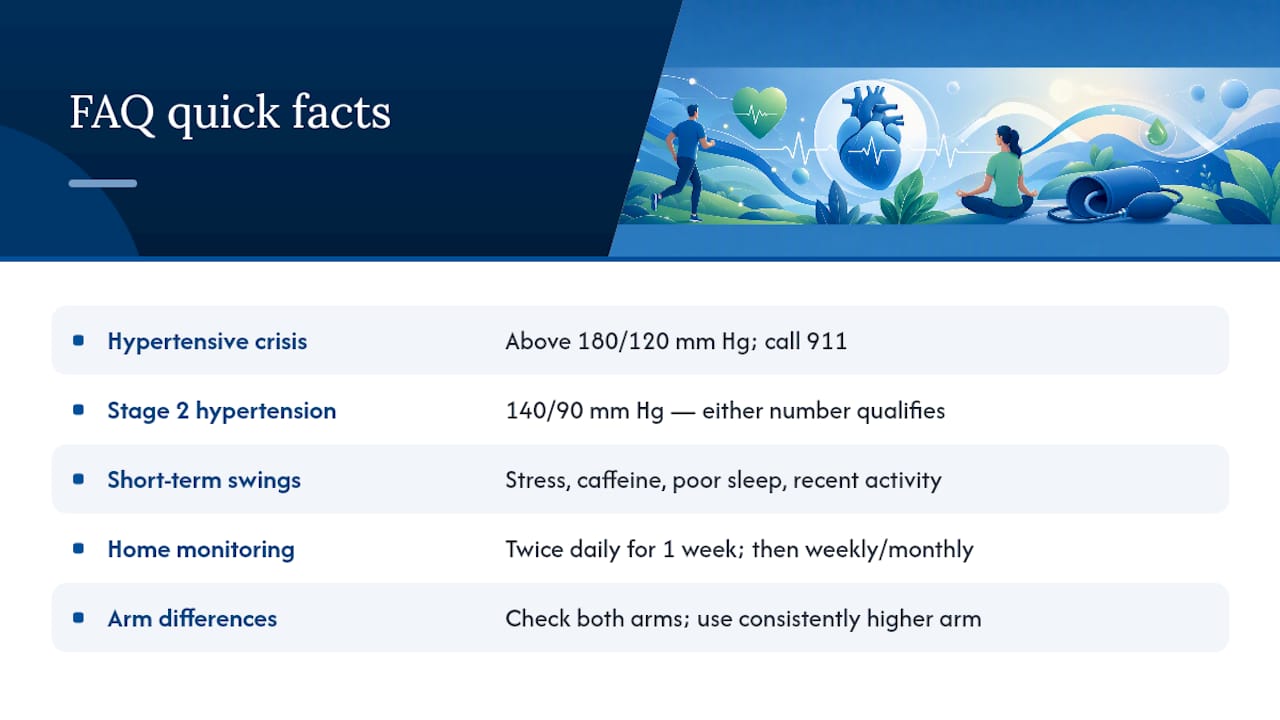
What blood pressure level is considered dangerously high? A reading above 180 systolic and/or above 120 diastolic is a hypertensive crisis. Paired with symptoms like chest pain, severe headache, or vision changes, it requires calling 911 immediately.
Is 140/90 considered high blood pressure? Yes. A reading of 140/90 mm Hg falls into Stage 2 hypertension, since either number at or above that threshold meets the Stage 2 criteria on its own.
Can blood pressure be high one day and normal the next? Yes. Stress, caffeine, poor sleep, and recent activity all cause short-term swings. That’s exactly why clinicians average multiple readings over separate days rather than diagnosing off one number.
How often should I check my blood pressure at home? For most people monitoring a known elevated reading, twice daily for a week, morning and evening, gives a reliable average to share with your provider. After that, weekly or monthly checks are often enough unless your doctor recommends otherwise.
Does one arm always give a different reading than the other? Not always, but a meaningful difference between arms is common enough that many clinicians check both at a first visit. If one arm consistently reads higher, that arm becomes the standard for future measurements.
This article provides general health information and isn’t a substitute for professional medical advice. Talk to your doctor about your specific blood pressure readings and treatment plan.
This article is general information, not a substitute for advice from a qualified doctor. Consult a qualified healthcare professional about your own circumstances before acting on anything here.
Sources
The numeric thresholds and action steps throughout this article are drawn from the clinical authorities that set American guidance on blood pressure. The American Heart Association publishes the category charts and explains how systolic risk changes with age. The CDC offers population-level context on prevalence and lifestyle-first prevention strategies. MedlinePlus, maintained by the National Library of Medicine under NIH, details diagnosis criteria and individualized treatment targets for people with diabetes, heart disease, or prior stroke. Mayo Clinic and Cleveland Clinic both provide patient-facing charts and measurement guidance worth bringing up at your next appointment.
- Understanding blood pressure readings | American Heart Association
- Blood pressure chart: What your reading means - Mayo Clinic
- About High Blood Pressure | CDC