


![Longevity Complete Detox [BETA 21 Caps]: 7 Day Intensive Detox & Digestive Support](http://longevitypremier.com/cdn/shop/files/DetoxBeta-mid_100x100.png?v=1787365739)





Your Daily Detox Routine Doesn't Need Juice Cleanses to Work
A daily detox routine works when it leans on four things your body already does for free: staying hydrated, eating enough fiber, sleeping seven to nine hours, and moving regularly. Your liver and kidneys filter your blood around the clock, and giving them consistent support beats any three-day juice fast. That support shows up fast, too, often within a few days of steady habits.
Why does this actually matter? Because your liver, kidneys, gut, and even your brain during sleep are running clearance systems every hour of every day, whether you help them or not. A short fast or an expensive tea doesn’t switch those systems “on.” Feeding them consistently does.
You can check whether you’re on track today with two free markers:
- Urine color: pale yellow suggests solid hydration; dark yellow means drink more water.
- Bowel regularity: a daily or near-daily pattern, without straining, points to adequate fiber and fluid intake.
The CDC recommends 150 to 300 minutes of moderate exercise weekly, 7 to 9 hours of sleep nightly, and at least 25 grams of fiber a day as the backbone of this kind of routine. None of that requires a special product. It requires repetition.
Key Takeaways
A daily detox routine works best when it supports the liver, kidneys, and gut through hydration, fiber, sleep, and movement rather than trying to replace what those organs already do.
| Point | Details |
|---|---|
| Hydrate consistently | Aim for 1.5 to 1.8 liters of fluid daily and check urine color as a real-time marker. |
| Prioritize fiber | Target at least 25 grams a day from whole foods to support regular, comfortable bowel movements. |
| Protect sleep | Get 7 to 9 hours nightly since your brain does active waste clearance during that window. |
| Avoid risky cleanses | Skip laxative-based cleanses and unsupervised colonics, and consult a clinician before any restrictive regimen. |
| Consider targeted support | Longevitypremier’s Liver Formula and Complete Detox line offer adjunct support once daily habits are established and a clinician has weighed in. |
Pick one habit to start today, an extra glass of water or five more grams of fiber at lunch, and build from there.
Table of Contents
- What Does “Detox” Actually Mean, and Which Claims Are Myths?
- What Daily Habits Actually Support Natural Detoxification?
- What Does a Sample Daily Detox Routine Look Like?
- When Do Supplements Actually Help With Detox?
- What Are the Real Risks of Detox Cleanses?
- How Do You Know If Your Routine Is Working?
- Why Stress Management Belongs in Your Detox Routine
- Why Consistency Beats Intensity in Detox Routines
- Where Longevitypremier Fits Into a Daily Detox Routine
- Frequently Asked Questions
- Sources
What Does “Detox” Actually Mean, and Which Claims Are Myths?
Your body has a detox system already built in, and it runs without your permission. The liver processes toxins and metabolic waste, converting them into forms your kidneys can filter out through urine. Your gut clears the rest through regular bowel movements, your lungs exhale carbon dioxide and some volatile compounds, and your skin sheds a small amount of waste through sweat. Sleep adds another layer: your brain uses that downtime to clear metabolic byproducts that build up during waking hours.
None of that is up for debate among physicians. What’s up for debate is whether you can meaningfully speed it up with a product, and the honest answer is almost always no.
Sweating in a sauna or an infrared wrap feels like it’s “releasing toxins,” but the liver and kidneys remain the primary clearance routes, no matter how much you sweat. Public reporting on detox physiology backs this up directly.
Here’s how popular claims stack up against what clinicians and public health researchers actually find:
| Popular Claim | Evidence-Based Reality |
|---|---|
| Juice cleanses “flush out toxins” | No credible evidence supports accelerated toxin removal; benefits people feel usually come from cutting processed food and alcohol during the cleanse |
| Sweating in saunas removes toxins | Sweat is mostly water and salt; the liver and kidneys do the actual filtering |
| Colonics improve gut health | Not supported by evidence and can carry real risk of injury or infection, according to the NCCIH |
| Laxative teas “cleanse” the body | Can cause dehydration, cramping, and electrolyte loss with no lasting detox benefit |
| You need a special product to detox | Your organs detoxify continuously; the job is supporting them, not replacing them |
The NCCIH is blunt about this: most commercial detox and cleanse programs lack solid evidence, and some, especially those built around laxatives, colonics, or prolonged fasting, carry real risk. That’s not a reason to skip a daily detox routine. It’s a reason to build one around habits that are actually proven, instead of products that are mostly marketing.
What Daily Habits Actually Support Natural Detoxification?
Five habits do almost all of the real work here, and none of them involve a supplement stack or a fasting window.
Hydration comes first because your kidneys need adequate fluid to filter blood efficiently. Most adults need roughly 1.5 to 1.8 liters, or about 6 to 7.5 glasses, of fluid daily from all sources, according to Harvard Health. That count includes water, tea, coffee, and lower-fat milk, not just plain water from a bottle, per Harvard’s Nutrition Source. Keep a glass at your desk and refill it every time it’s empty. Pale yellow urine is your real-time confirmation you’re getting enough.
Fiber-rich whole foods matter more than most people realize. Fiber binds certain toxic compounds in the gut and helps carry them out through regular bowel movements, and BBC Future’s review of the research notes that fiber-rich diets protect both liver and kidney function over time. Aim for a sufficient amount of fiber daily, split across meals: oats or berries at breakfast, a bean-based lunch, a vegetable-heavy dinner.

Sleep isn’t downtime for your detox systems, it’s active maintenance. Chronic sleep loss impairs your brain’s waste-clearance mechanisms and raises broader health risks, according to the NHLBI. Getting adequate hours of sleep nightly is the target, not just the aspiration.
Regular movement rounds this out. Consistent activity reduces liver fat and improves circulation, both of which support your organs’ long-term clearance capacity, per a review published on PMC. You don’t need a gym membership. A brisk 20 minute walk most days gets you toward the CDC’s weekly target.

Finally, limiting alcohol and ultra-processed foods reduces the workload on your liver and kidneys directly, one of the highest-impact changes you can make, according to Healthline’s detox guide.
| Habit | Daily Target | Practical Cue |
|---|---|---|
| Hydration | 1.5 to 1.8 liters of fluid | Pale yellow urine |
| Fiber | 25+ grams | Vegetable or legume at every meal |
| Sleep | 7 to 9 hours | Consistent wake time, even on weekends |
| Movement | 150 to 300 minutes/week | 20 to 30 minute daily walk |
| Alcohol/processed food | Minimize | Swap one processed snack for whole food daily |
Watch for signs your routine needs adjusting: a sudden change in bowel frequency, persistent fatigue despite adequate sleep, or dehydration signs like dizziness or dry mouth. Those warrant a call to your clinician, not a more aggressive cleanse.
What Does a Sample Daily Detox Routine Look Like?
Mornings set the tone. Drink a full glass of water before coffee, since you wake up mildly dehydrated after a night without fluids. Follow with a breakfast that pairs protein and fiber, think oatmeal with nuts and berries, or eggs with sautéed greens, rather than a sugary pastry that spikes blood sugar and leaves you hungry an hour later.
Midday is when most people get their largest meal and their best window for movement. A 20 to 30 minute walk after lunch aids digestion and circulation. Keep a water bottle visible on your desk; refilling it becomes a habit, not a chore, within about a week.
Afternoons often bring an energy dip that people fill with sugar or caffeine. Swap that for fruit and a handful of nuts, and keep sipping water rather than reaching for a soda.
Evenings matter more than people give them credit for. Dim the lights an hour before bed, stop eating two to three hours before you sleep, and keep your bedroom cool and dark. That routine protects the sleep window your brain uses for its own overnight clearance work.
If you work a rotating shift, don’t try to force a 9 to 5 template onto your schedule. Anchor hydration and fiber to your first and last meals of your “day,” whatever hours those fall on, and protect a consistent sleep block even if it happens at 10 AM instead of 10 PM. For a compressed schedule, batch-prep fiber-rich meals on your day off so a fast lunch doesn’t default to something processed.
Pro Tip: If you drink one sugary beverage a day, that single swap, water with a slice of citrus or a piece of whole fruit on the side, does more for your daily detox routine than almost any supplement on the shelf.
When Do Supplements Actually Help With Detox?
Supplements have a real but narrow role here. They help when they fill a specific, identified nutrient gap or when a clinician recommends a targeted formula based on your labs or symptoms. They don’t help when they’re marketed as a standalone “cleanse” meant to substitute for the habits above, especially without any diagnosis behind them.
Before adding anything to your routine, run it through this checklist:
- Check for third-party testing. Look for verification from an independent lab, not just a claim on the label.
- Read the full ingredient list. Transparent labeling means no vague “proprietary blend” hiding the actual dosages.
- Skip laxative-heavy “cleanse” formulas. Senna, cascara, and similar ingredients cause fluid loss, not detoxification, and can lead to dependency with regular use.
- Check for drug interactions. Herbal ingredients like milk thistle or berberine can interact with blood thinners, diabetes medications, and other prescriptions.
- Talk to your clinician first, especially if you take any regular medication or have an existing health condition.
Clinical perspective backs the case for restraint: many detox methods that people credit with results are really just improvements in sleep, hydration, and diet, not some novel toxin-removal mechanism, according to the American Medical Association. A supplement can support that foundation. It can’t replace it.
If bloodwork shows something specific, low vitamin D, elevated liver enzymes, or a nutrient deficiency, that’s the situation where a targeted supplement, chosen with your clinician, actually makes sense.
What Are the Real Risks of Detox Cleanses?
Some detox practices carry genuine risk, and they deserve a direct warning rather than a soft caveat.
Avoid prolonged fasting beyond a day or two without medical supervision, unsupervised colonics, laxative-based cleanses, and large herbal “cocktails” that combine several strong ingredients at once. The NCCIH specifically flags these as the practices most likely to cause harm, including dehydration, malabsorption, and dangerous electrolyte imbalances.
Restrictive detox programs built around laxatives or multi-day fasts can trigger diarrhea, severe dehydration, and electrolyte disruptions serious enough to require emergency care. That risk rises sharply without medical supervision.
Certain people should avoid aggressive detox regimens entirely: pregnant women, anyone with kidney disease, people with heart rhythm disorders, anyone with a history of an eating disorder, and patients on medications where fasting or herbal interactions could cause harm. If any of that describes you, a conversation with your clinician should come before any dietary change more aggressive than “eat more vegetables.”
Seek immediate medical evaluation if you experience severe dizziness, fainting, prolonged severe diarrhea, or signs of dehydration and electrolyte imbalance, including confusion, a racing heartbeat, or muscle cramps that won’t resolve. These aren’t symptoms to push through in the name of “detoxing harder.”
How Do You Know If Your Routine Is Working?
You don’t need a lab test to notice the first signs of progress. Pay attention to four everyday markers: urine color staying consistently pale yellow, bowel movements becoming regular without straining, energy levels holding steady through the afternoon instead of crashing, and sleep that leaves you actually rested rather than groggy.
| Marker | What to Watch For | Timeframe |
|---|---|---|
| Urine color | Pale yellow most of the day | 3 to 5 days |
| Bowel regularity | Daily, comfortable movements | 1 to 2 weeks |
| Energy levels | Fewer afternoon crashes | 2 to 3 weeks |
| Sleep quality | Waking rested, consistent schedule | 2 to 4 weeks |
If you want objective confirmation, or if something feels off despite consistent habits, lab testing can help. A basic metabolic panel checks kidney function and electrolytes, liver function tests flag any strain on that organ, an HbA1c test is worth asking about if you have metabolic concerns like insulin resistance, and targeted nutrient panels can catch specific deficiencies driving fatigue or other symptoms.
Give a new routine two to four weeks before expecting noticeable change, and longer for deeper markers like liver enzymes. If nothing has shifted after a month of consistent effort, that’s the point to bring your routine to a clinician rather than escalating to something more extreme on your own.
Why Stress Management Belongs in Your Detox Routine
Chronic stress doesn’t just make you feel worn down, it interferes with digestion, disrupts sleep, and can drive the kind of eating patterns, more processed food, more alcohol, that add to the workload your liver and kidneys already carry. A daily detox routine that ignores stress is missing a piece that touches almost every other habit on this list.
You don’t need an hour of meditation to get a benefit. Ten minutes of focused breathing, a short walk without your phone, or a consistent wind-down ritual before bed all lower the physiological stress response enough to support better sleep and steadier digestion. Mindfulness practices in particular tend to improve sleep quality, which loops back directly to your brain’s overnight clearance work.
Think of stress management as the habit that makes the other four easier to keep—this approach is a key part of many holistic beauty routines. It’s hard to eat well, sleep enough, or stay consistent with movement when you’re running on cortisol and four hours of sleep. Fix the stress response, even partially, and the rest of the routine gets easier to sustain.
Why Consistency Beats Intensity in Detox Routines
The biggest gap I see between what people expect from detoxing and what actually helps is intensity. People want the three-day reset, the dramatic before-and-after, the sense that they’ve “purged” something. What actually moves the needle is smaller and less exciting: fifteen minutes of walking most days, an extra five grams of fiber at lunch, a consistent bedtime. Clinicians describe this as “consistency over intensity,” and the American Medical Association’s own guidance backs that framing directly.
That doesn’t mean every regimen deserves equal skepticism. If you’re managing a diagnosed condition, high blood pressure, kidney concerns, a metabolic disorder, medical oversight isn’t optional. A supportive daily routine is not a substitute for that oversight; it’s the thing you build around it, with your clinician’s input on anything more targeted than “drink more water and eat more vegetables.”
What I’d push back on is the idea that a routine has to feel dramatic to count. It doesn’t. The habits that actually support your liver, kidneys, and gut are almost boring in how simple they are. Boring, in this case, is the point.
Where Longevitypremier Fits Into a Daily Detox Routine
This article is published by Longevitypremier, and the habits above, hydration, fiber, sleep, and movement, remain the foundation no product can replace. Once those are in place, some readers look for extra, targeted support, and that’s where a formulated supplement can play a supporting role rather than a starring one.

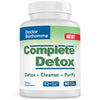
Longevitypremier’s Complete Detox and Liver Formula combines milk thistle, dandelion, and artichoke to support liver function alongside a solid daily routine, not instead of one. For readers focused on gut health specifically, the Complete Detox PM and Probiotic bundle pairs gentle digestive support with probiotic maintenance. Every formula lists its full ingredient panel, so you can check it against any medication you’re taking before you start.
Talk to your clinician before adding any new supplement, particularly if you take prescription medication or manage a chronic condition. If you want a deeper walkthrough of building sustainable daily habits, Longevitypremier’s free wellness ebook is a solid next step, no purchase required to grab it.
Frequently Asked Questions
Does a daily detox routine actually remove toxins from your body? Your liver and kidneys already filter toxins continuously. A daily detox routine supports that process through hydration, fiber, sleep, and movement rather than adding a new removal mechanism.
What’s the simplest way to start a detox routine today? Add one glass of water and one extra serving of vegetables or fiber to your day. Small, repeatable changes outperform dramatic short-term cleanses.
Are juice cleanses or fasting detoxes worth trying? Most lack strong evidence, and multi-day fasts or laxative-based cleanses can cause dehydration and electrolyte imbalances. Any benefit usually comes from cutting alcohol and processed food, which you can do without fasting.
How much water do I actually need for a detox routine? Most adults need about 1.5 to 1.8 liters of fluid daily from water, tea, coffee, and food combined. Pale yellow urine is a reliable sign you’re hydrated enough.
When should I see a doctor about a detox plan? Talk to a clinician before starting any restrictive regimen, and seek immediate care for severe dizziness, fainting, prolonged diarrhea, or signs of dehydration and electrolyte imbalance.