




![Longevity Complete Detox [BETA 21 Caps]: 7 Day Intensive Detox & Digestive Support](http://longevitypremier.com/cdn/shop/files/DetoxBeta-mid_100x100.png?v=1787365739)






Foods That Contain Glucose: What Raises Blood Sugar Fastest
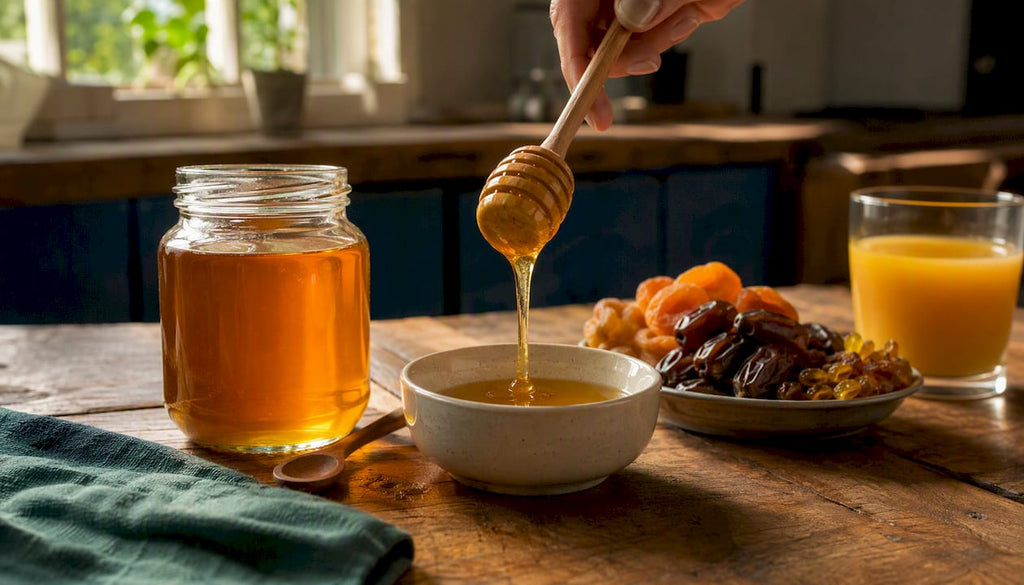
Honey, Medjool dates, dried apricots and raisins, fruit juice, sugary soda, white bread, white rice, potatoes, and sweet corn all deliver measurable free glucose. The liquid sugars (juice, soda) plus honey and dried fruit tend to raise blood sugar faster because they hit your bloodstream with almost nothing to slow them down. If you want fewer spikes today, swap fruit juice for a piece of whole fruit and pair any starchy or sweet food with a source of protein or fat.
Normal fasting blood glucose sits between 70 and 99 mg/dL, according to guidance from the National Institute of Diabetes and Digestive and Kidney Diseases, and what you eat in the two hours before a test matters as much as what you ate that morning. USDA FoodData Central tracks free glucose content food by food, and the American Diabetes Association uses that same kind of data to build its dietary guidance. The rest of this piece walks through exactly which foods carry the most glucose, why some hit harder than others, and what to eat instead.
Key Takeaways
Liquid sugars and dried fruit raise blood glucose fastest because they lack the fiber matrix that slows digestion in whole, intact foods.
| Point | Details |
|---|---|
| Limit liquid sugar | Fruit juice and soda spike blood sugar faster than whole fruit because they contain little to no fiber. |
| Watch dense sweets | Honey, Medjool dates, and dried apricots carry about 33 g of glucose per 100 g, so portion size matters. |
| Pair carbs with protein or fat | Adding protein or fat to any glucose-containing food slows absorption and blunts the spike. |
| Choose whole grains over refined | White bread, bagels, and white rice digest faster than whole-grain or mixed-grain alternatives. |
| Consider a targeted supplement | Longevity Premier’s Gluco Formula is designed as an adjunct to, not a replacement for, these dietary habits. |
For a shopping-friendly breakdown of grams of glucose per food, revisit the quick reference table above before your next grocery run.
Table of Contents
- What Has Glucose? A Category-By-Category Breakdown
- Glucose Content Isn’t the Same Thing as Glycemic Impact
- Why Liquids Spike Blood Sugar Faster Than Solid Food
- Practical Swaps That Actually Smooth Out Blood Sugar
- Free Glucose Content by Food: A Quick Reference
- Signs Your Blood Sugar Is Running High
- Managing Glucose Intake With Diabetes or Insulin Resistance
- Common Myths About Glucose in Food
- Sources
What Has Glucose? A Category-By-Category Breakdown
Free glucose shows up in far more foods than most people assume, and it clusters into a handful of predictable categories. Here’s where it hides in real quantities:
- Dried fruit: Medjool dates run around 33.7 g glucose per 100 g, and dried apricots come in near 33.1 g per 100 g. Drying doesn’t add sugar. It removes water, which concentrates the natural sugars that were already there into a much smaller, denser package.
- Fruit juice: Grape juice carries roughly 6.8 g glucose per 100 g, and apple juice sits in a similar range. Juicing strips away the fiber and pulp that would normally slow digestion.
- Sugary soft drinks: Cola and similar sodas are almost pure liquid sugar, mostly in the form of high fructose corn syrup, with zero fiber or protein to buffer absorption.
- Refined grains: White bread, bagels, and other products made from stripped wheat flour digest fast because the bran and germ, where most of the fiber lives, have been milled away.
- White rice: Polished white rice loses its fiber-rich outer layer during processing, leaving behind mostly rapidly digestible starch.
- Starchy vegetables: Potatoes and sweet corn contain natural starches that convert quickly to glucose during digestion, especially when the potato is peeled, boiled, or mashed.
- Processed foods with added sugar: Sauces, flavored yogurts, and packaged snacks often list glucose, dextrose, or high fructose corn syrup on the ingredient panel, meaning the sugar was added rather than naturally occurring.
There’s a meaningful health distinction between natural and added glucose sources, even when the glucose molecule itself is identical. Honey and dates arrive with trace minerals, antioxidants, and at least some fiber (in the case of whole dates). Candy and soda deliver the same glucose with nothing else riding along, which is part of why nutrition guidance treats them differently even at equal sugar content.
Glucose Content Isn’t the Same Thing as Glycemic Impact
A food’s glucose content tells you how much sugar it contains. Its glycemic index (GI) tells you how fast that sugar hits your bloodstream, and those two numbers frequently disagree. The glycemic index ranks foods from 0 to 100 based on how much they raise blood glucose relative to pure glucose itself, while glycemic load (GL) adjusts that ranking for a realistic portion size, since GI alone can mislead when a food is naturally eaten in small amounts.
Watermelon is the classic example: it has a high GI (around 72 to 80) because the sugar it contains digests fast, but a typical serving has so little total carbohydrate that its glycemic load stays low. Digestion speed depends on what nutritionists call the food matrix, meaning the fiber, fat, and protein woven through a food’s physical structure. Research summarized by Stanford Medicine shows that identical grams of sugar produce very different blood-sugar curves depending on whether that sugar arrives intact, pureed, or stripped of its surrounding fiber. A whole apple and a cup of apple juice can carry similar sugar totals, yet the apple’s fiber and cellular structure slow digestion enough to blunt the spike substantially.
Glucose is the body’s primary cellular fuel, and insulin is the hormone responsible for shuttling it out of the bloodstream and into cells. When that system works well, blood sugar rises modestly after a meal and returns to baseline within a couple of hours.
Most people see blood glucose peak roughly one to two hours after eating, based on physiology outlined by NCBI’s overview of carbohydrate metabolism. How high that peak climbs, and how fast it falls back down, depends far more on the meal’s overall composition than on the glucose content of any single ingredient.
| Measure | What it tells you | Example |
|---|---|---|
| Free glucose content | Grams of glucose per 100 g of food | Honey: ~35.8 g/100 g |
| Glycemic index (GI) | How fast a food raises blood sugar relative to pure glucose | White bread: high GI |
| Glycemic load (GL) | GI adjusted for a typical serving size | Watermelon: high GI, low GL |
Why Liquids Spike Blood Sugar Faster Than Solid Food
Liquid sugar is the fastest route to a blood-sugar spike, full stop. When you drink juice or soda, there’s no chewing, no fiber matrix, and almost no digestive breakdown required before that sugar reaches your small intestine and gets absorbed. Solid food has to be broken down mechanically and enzymatically first, which naturally paces how fast glucose enters your bloodstream.
- Grape juice contains roughly 6.8 g of glucose per 100 g, and because it’s consumed as a liquid stripped of fiber, that sugar reaches your bloodstream far faster than the same sugar eaten inside whole grapes.
- Sugary soft drinks skip the fiber question entirely, since they never contained any to begin with, delivering close to pure, rapidly absorbed sugar in every serving.
- A 12-ounce sugary drink can deliver a meaningful jolt of glucose in a single sitting, often within 15 to 30 minutes of drinking it.
Elevated blood glucose over time is associated with oxidative stress and tissue damage, a pattern documented in metabolic research using high-glucose models to study how sustained hyperglycemia affects cells. That’s part of why frequent liquid-sugar spikes matter more than the occasional dessert eaten alongside a full meal.
Pro Tip: If you’re going to drink juice, don’t drink it alone on an empty stomach. Have it with breakfast, alongside eggs or Greek yogurt, so the protein slows the sugar’s entry into your bloodstream.
Practical Swaps That Actually Smooth Out Blood Sugar
Fixing this doesn’t mean cutting carbs entirely. It means choosing forms of glucose that come attached to fiber, protein, or fat, and being deliberate about portions when they don’t.
Start with the easiest swap on the list: whole fruit instead of fruit juice. One small apple has meaningfully less impact on blood sugar than a cup of apple or grape juice, even when the sugar totals look comparable on paper, because the apple’s fiber slows absorption and the smaller effective sugar load per bite matters. Swap white rice for brown rice or a mixed-grain bowl, and white bread for a whole-grain or legume-based loaf, since both changes retain more of the fiber that refining strips away.
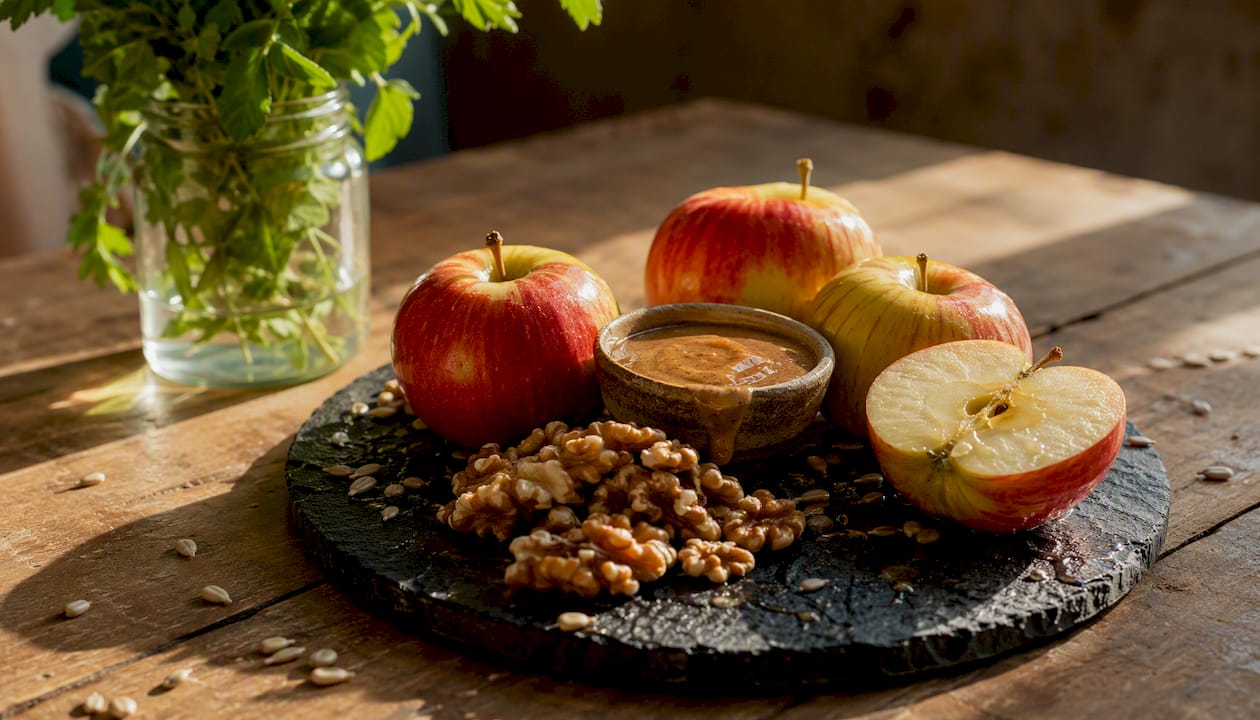
Honey and dried fruit don’t need to disappear from your kitchen. Treat them as accents rather than staples: a teaspoon of honey in tea, a small handful of raisins mixed into oatmeal that also contains nuts and seeds. Clinical guidance from the NIDDK consistently points toward pairing carbohydrates with protein or fat rather than eliminating them, which is the single most useful habit in this entire article. Add a fried egg to your toast. Add almond butter to your apple slices. Add chicken to your rice bowl.
Timing shifts the calculus somewhat. A fast-digesting carbohydrate before a workout can be useful fuel rather than a liability, since exercising muscle pulls glucose out of the bloodstream quickly. The same food eaten right before bed, with no activity to burn it off, behaves differently and is worth eating in a smaller portion or paired more deliberately with protein.
Free Glucose Content by Food: A Quick Reference
These figures represent free glucose per 100 grams of edible portion, drawn primarily from USDA FoodData Central food composition entries. Use them for relative comparison, not exact prediction, since actual values shift with variety, ripeness, and preparation.
| Food | Approx. glucose (g/100g) | Blood-sugar impact | Smart swap |
|---|---|---|---|
| Honey | ~35.8 | Fast | Small amount with protein-rich food |
| Medjool dates | ~33.7 | Fast | One date with nut butter, not a handful alone |
| Dried apricots | ~33.1 | Fast | Small portion mixed into a protein-rich snack |
| Grape juice | ~6.8 | Fast | Whole grapes instead |
| Sugary soda/cola | Varies by brand | Fast | Sparkling water with fruit slices |
| White bread/bagels | Starch-derived | Moderate to fast | Whole-grain or legume-based bread |
| White rice | Starch-derived | Moderate to fast | Brown rice or mixed-grain bowl |
| Potatoes | Starch-derived | Moderate | Smaller portion with the skin on, paired with protein |
| Sweet corn | Starch-derived | Moderate | Same portion, paired with beans or chicken |
Brand, ripeness, cooking method, and recipe all shift these numbers meaningfully, so treat this table as a directional guide for shopping and meal planning rather than a lab-grade reference.
Signs Your Blood Sugar Is Running High
Some symptoms show up consistently when blood glucose stays elevated for a stretch of time, and they’re worth knowing regardless of whether you’ve been formally diagnosed with a blood-sugar condition.
- Increased thirst that doesn’t resolve with normal water intake
- Frequent urination, especially at night
- Blurred vision that comes and goes
- Unexplained fatigue, particularly after meals
- Cuts or sores that heal more slowly than usual
Most of these symptoms warrant a conversation with your primary care provider rather than a trip to the emergency room. That said, certain signs cross a different threshold entirely.
Seek urgent or emergency care if you experience confusion, vomiting, rapid breathing, or a blood glucose reading well above your normal range accompanied by ketones. These can signal diabetic ketoacidosis or another acute complication that needs immediate medical attention, according to guidance summarized by MedlinePlus.
This article is educational and isn’t a substitute for personalized medical advice. If you’re concerned about your blood sugar patterns, talk to a clinician who can order the right testing and interpret it in the context of your health history.
How We Compiled These Glucose Figures
The numeric backbone of this piece comes from USDA FoodData Central, which reports free sugar content, including glucose, for thousands of foods on a standardized per-100-gram basis. That standardization is what makes honey, dates, and juice directly comparable despite being wildly different foods in every other respect.
- Nutrient figures: USDA FoodData Central food-composition entries
- Physiology and timing claims: NIDDK diabetes guidance and NCBI Bookshelf reviews of carbohydrate metabolism
- Clinical thresholds and symptom guidance: MedlinePlus and American Diabetes Association resources
Real food varies. A homegrown tomato and a supermarket one don’t taste the same, and they don’t carry identical sugar content either. Treat every figure here as a solid estimate rather than a guarantee, and if you’re managing a specific condition like diabetes or insulin resistance, a registered dietitian can build a plan around your actual lab results and eating patterns rather than population averages.
Managing Glucose Intake With Diabetes or Insulin Resistance
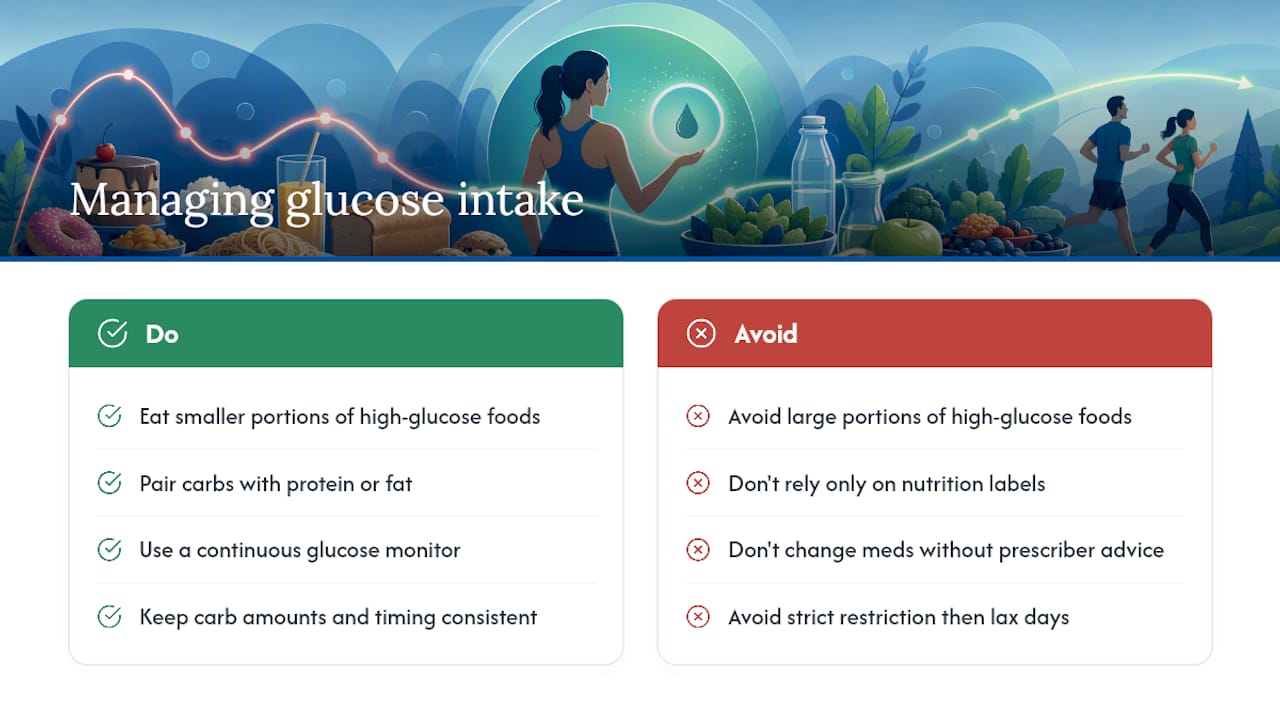
If you’re managing diabetes or insulin resistance, the categories above apply with less room for error. Honey, dates, and fruit juice aren’t off-limits by default, but the portions that work for someone with normal insulin sensitivity are often too large for someone whose cells respond sluggishly to insulin signals.
The practical adjustment is usually smaller portions eaten less often, always alongside protein or fat, and closer attention to how your own body responds. Continuous glucose monitors have made this dramatically easier over the past several years. Where a nutrition label gives you a population average, a monitor shows you your own postprandial curve after a specific meal, which can reveal that a food behaves very differently for you than the general guidance predicts. People taking glucose-lowering medications should also be mindful that some medications interact with meal timing and carbohydrate intake in ways worth discussing directly with a prescriber. If you’re evaluating a weight-loss medication alongside dietary changes, safety information on GLP-1 medications is worth reviewing with your care team before making changes.
Consistency matters more than perfection here. Eating roughly similar carbohydrate amounts at roughly similar times each day tends to produce steadier readings than an approach built around occasional strict restriction followed by less careful days.
Common Myths About Glucose in Food
“Natural sugar doesn’t count.” Your bloodstream doesn’t distinguish between a glucose molecule from honey and one from a candy bar. The surrounding nutrients differ, and that matters for overall health, but the direct blood-sugar effect of the sugar itself is the same.
“Fruit is bad for blood sugar.” Whole fruit, eaten with its fiber intact, produces a far gentler blood-sugar response than the same fruit turned into juice. Painting all fruit with the same brush as soda ignores the fiber that makes whole fruit fundamentally different.
“If it’s labeled sugar-free, it won’t affect blood sugar.” Many sugar-free products still contain other rapidly digestible carbohydrates, like refined starches, that raise blood glucose almost as fast as sugar does. Reading past the “sugar-free” label to the actual carbohydrate count matters more than the marketing claim.
“Complex carbs never spike blood sugar.” Complex carbohydrate just describes the sugar’s chemical structure before digestion. White rice and white bread are technically complex carbohydrates, yet both digest fast once the fiber has been milled away, producing blood-sugar curves that look a lot like simple sugar.
Why Meal Composition Beats Nutrient Demonization
Treating individual nutrients as villains misses what actually drives blood-sugar outcomes over time. A slice of white bread eaten alone behaves very differently from the same slice eaten with eggs and avocado, and that difference has far more practical value than memorizing which single foods to avoid entirely.
Longevity Premier has spent more than 30 years working at the intersection of nutrition science and everyday eating habits, and one pattern holds up consistently: people who focus on food pairing and overall meal structure see steadier results than people fixated on eliminating single ingredients. Glucose itself isn’t the enemy. It’s the primary fuel your cells run on. The real leverage point is how you package it, meaning what fiber, fat, and protein it travels with, and how consistently you apply that thinking meal after meal rather than just on the days you’re paying close attention.
A Practical Adjunct to Diet-Based Glucose Management
Food choices and meal pairing do most of the heavy lifting when it comes to steady blood sugar, and no supplement replaces that groundwork. For readers looking for additional support alongside those habits, Longevity Premier’s Gluco Formula is formulated with ingredients like bitter melon and berberine, chosen to complement, not substitute for, the dietary strategies covered in this article.

If you’re already tightening up how you pair carbohydrates with protein and fat, browsing the full supplements lineup is a reasonable next step to see whether a formulated blend fits your routine. If you take medication or have been diagnosed with diabetes, consult your clinician before starting any new supplement, since certain ingredients can interact with glucose-lowering drugs.
Sources
- NCBI Bookshelf — Glucose and carbohydrate metabolism (NBK459280)
- NIDDK — Diet, eating, and physical activity (diabetes overview)
- Stanford Medicine News — Carb and sugar spikes: the role of food matrix (2025)
The full source list behind the figures and claims in this article appears in the methodology section above. For questions about how a formulated supplement might fit your routine, visit Longevity Premier’s product pages directly.
This article is general information, not a substitute for advice from a qualified doctor. Consult a qualified healthcare professional about your own circumstances before acting on anything here.