


Key takeaways
- Detox capsules, detox teas and juice cleanses share a name, but they bring very different things to your day. Each one suits a different kind of routine.
- Capsules give you a measured serving with nothing to prepare, and they can include fiber such as psyllium. Take them with a full glass of water.
- Tea is a warm ritual that also adds fluid. Its strength depends on how long you steep it, and some detox blends include senna, a laxative herb, so read the ingredient list.
- Fresh juice brings bright flavor and vitamin C. Juicing leaves most of the fiber behind, and juice carries little protein, so enjoy it alongside meals.
- No format replaces food, water, movement and sleep. Choose the one that fits your day, and read its label first.
Same word, very different things
Squeeze three oranges and you'll fill about one 8-ounce glass. Those three oranges held roughly 9 grams of fiber. The glass of juice holds about half a gram.[1][2] Most of the fiber stays behind in the juicer with the pulp.
That small detail shows how much the format matters. A bottle of capsules, a box of tea bags and a row of cold-pressed juices can all carry the word "detox." Yet each one asks something different of you and brings something different to your day.
This guide compares the three side by side: how you prepare each one, what it brings, and what to check on the label. The three differ in how much preparation they take, how easily they travel and what a serving costs. The right one for you also depends on how you like to live.
What the three have in common
All three are sold to go along with work your body already does. Every day, your liver, kidneys and gut process and move out what your body no longer needs. That work runs around the clock, and each format is meant to fit alongside it.
Our guide to how your body's natural detoxification processes work every day walks through that daily work. The sections below look at each format in turn, starting with the one that asks the least of your morning.
Detox capsules: measured and ready to go
A capsule routine asks very little of you. There's nothing to brew, press or chill. You open the bottle, take the serving on the label with a glass of water, and get on with your morning.
You also know exactly what a serving is. Federal rules require a Supplement Facts panel that lists the serving size. When ingredients come in a proprietary blend, the label gives the blend's total weight and lists its ingredients from most to least by weight.[3] Our guide to reading a supplement label shows how to read that panel.
Capsules can also carry ingredients you wouldn't steep, such as psyllium husk. This plant fiber absorbs liquid and swells,[4] which is why plenty of water goes with it. MedlinePlus advises at least 8 ounces of liquid with psyllium.[4] Pouring the glass before you open the bottle makes that step easy to remember.
Capsules travel well, too. A week of servings fits in a pill organizer, and the bottle doesn't need a refrigerator. Our pill organizer guide shows a simple setup.
What capsules don't bring is warmth or flavor. They also add no fluid on their own, which is one more reason that full glass of water matters. Price per serving varies widely across brands and formats, and our guide to cost per serving shows how to compare them fairly.
Detox tea: a warm ritual in a cup
Tea gives you a few quiet minutes. You heat the water, watch the color deepen, and hold a warm mug while it cools. For many people, that pause is the main appeal.
Tea also counts toward the fluid you drink. In a study of 72 men, hot tea led to about the same urine output over four hours as the same amount of still water.[5] That suggests the body held on to a similar amount of fluid. Our guide on whether coffee and tea count toward fluid has more on this.
The strength of a cup can vary. In a lab study of 20 commercial teas, white, green and black teas held 14 to 61 milligrams of caffeine per serving.[6] Steeping time changed how much ended up in the cup, so the same tea bag can brew a gentle cup or a strong one. The herbal teas in that study had no caffeine the researchers could detect.[6]
Detox blends vary widely. Many use familiar herbs, roots and spices such as ginger, peppermint or dandelion root. Reading the ingredient list tells you what you're steeping.
Read the label for senna
One ingredient deserves a closer look. Some detox teas include senna, a plant that is also sold over the counter as a stimulant laxative. It works by making the intestines more active, and MedlinePlus advises talking with a doctor before using it for more than a week.[7]
If senna is on the label, follow the directions closely and keep that tea to short stretches. If you're unsure what a blend contains, a pharmacist can read the label with you in a minute or two.
Juice cleanses: fresh flavor, with two gaps to fill
A juice plan is usually a set of bottled fruit and vegetable juices, sometimes used in place of meals for a few days. Fresh juice is cold and bright, and it tastes like the produce it came from. It also carries vitamins. A cup of fresh orange juice has about 124 milligrams of vitamin C,[1] more than the 75 to 90 milligrams most adults need daily.[8]
Juicing does change the food. The press keeps the liquid and leaves most of the fiber behind. Gram for gram, USDA data show fresh orange juice has less than a tenth of the fiber of a whole orange.[1][2]
The same numbers explain the sugar. A cup of fresh orange juice holds about 21 grams of sugar, compared with about 12 grams in a medium orange.[1][2] The difference comes from volume, since the cup holds the juice of nearly three oranges. These are the fruit's own sugars, the kind FDA keeps separate from added sugars on a Nutrition Facts label.[9]
Juice is also light on protein. A cup of orange juice has under 2 grams.[1] The 2025 to 2030 Dietary Guidelines for Americans set a protein goal of 1.2 to 1.6 grams per kilogram of body weight a day.[10] For a 150-pound adult, that's roughly 80 to 110 grams, so a day of juice alone falls well short.
Pairing fills both gaps. Enjoy juice with a meal that includes protein and fiber, or blend whole fruit into a smoothie so the fiber stays in the glass. The same guidelines suggest limited portions of 100% juice, or diluting it with water.[10] They also encourage eating fruits and vegetables whole.
Also ask how the juice was made. Fresh juice from a juice bar or farm stand may not be pasteurized.
Packaged juice that hasn't been pasteurized or processed to a similar standard must carry a warning label.[11] Juice sold by the glass doesn't need one.[12] FDA points young children, older adults, pregnant women and people with weakened immune systems toward pasteurized juice.[12]
Side by side
Here is how the three formats compare on effort and on what each one brings.
| Format | Preparation | What you get |
|---|---|---|
| Capsules | None. Take with a full glass of water. | A measured serving listed on the label. Can include fiber such as psyllium. Easy to carry. |
| Tea | Heat water and steep for a few minutes. | A warm ritual and a cup of fluid. Strength changes with steeping time. |
| Juice | Press at home or pick up fresh. Keep cold. | Fresh flavor, fluid and vitamin C. Little fiber or protein. |
And here is what to watch with each one, plus a habit that covers it.
| Format | What to watch | A simple habit |
|---|---|---|
| Capsules | Fiber needs liquid. Some ingredients contain caffeine. | Take each serving with a full glass of water and read the label. |
| Tea | Some blends include senna, a laxative herb. | Read the ingredient list and follow the directions. |
| Juice | Fresh juice may be unpasteurized. Fiber and protein are low. | Ask how it was made and pair it with a meal. |
How to choose the format that fits you
There's no single right answer, so start with your own habits. A few questions can point the way.
- Do you want something quick that travels? Capsules take seconds and fit in a bag.
- Do you enjoy a slow, warm moment? Tea turns a routine into a small ritual.
- Do you love fresh produce flavors? Juice with lunch or breakfast adds flavor, vitamins and fluid.
- Do you take prescription medicine? Ask a pharmacist before adding any new tea, juice plan or supplement.
You can also mix and match. Capsules in the morning, tea in the afternoon and fresh juice with a weekend brunch can all fit in the same week. If you combine them, check the labels for overlap, such as green tea in both a capsule and your cup.
Fitting your chosen format into the week
Each format settles into a different part of the day. Picture where yours would live.
- Capsules ride along with a habit you already have. Picture the bottle beside the breakfast plates, or on the nightstand next to a glass of water. Some routines are labeled for a set number of days, so they have a clear start and finish.
- Tea fits a pause. A pot brewed after lunch or a mug in the late afternoon gives the day a quiet marker, and the cup counts toward your fluid.
- Juice fits a meal. A glass beside eggs and whole-grain toast brings back the protein and fiber that juice is light on, and a smoothie keeps the whole fruit in the glass.
For capsules, the label tells you how the routine is meant to run. You'll see the serving size, the directions and the ingredient list, and some labels also say how many days the routine runs. Our guide to reading a detox supplement label walks through each part. For tea, the ingredient list and the steeping time tell you what's in the cup. For juice, the question is how it was made.
Whichever format you choose, it goes with meals that include fiber and protein, enough water, regular movement and steady sleep.
Before you start
- Read the full label and follow the directions. If a routine is labeled for a set number of days, keep to that limit.
- Check with your doctor or pharmacist first if you take prescription medicine, are pregnant or nursing, or have a health condition. If you take a blood thinner or a water pill, ask your pharmacist about dandelion, which is found in some teas and capsules.[13]
- Psyllium absorbs liquid. If a formula contains it, take each serving with a full glass of water and ask a pharmacist how far apart to space it from other medicines.[4] When you raise fiber from food, add it gradually.
- Green tea extract is a natural source of caffeine. FDA cites 400 milligrams of caffeine a day from all sources as an amount not generally linked to negative effects in healthy adults.[14] Count your tea and coffee toward that total too.
- If you have a food or plant allergy, check the full ingredient list and any allergen statement on every product.
- Start one new routine at a time, so you can notice how each one suits you.
When to see a clinician
Check in with a health care professional promptly if you notice:
- loose stools or cramping that doesn't settle
- dizziness, a very dry mouth or other signs you're low on fluid
- trouble swallowing or breathing after taking a fiber product
- a lasting change in bowel habits
- any new symptom that started after a new tea, juice plan, medicine or supplement
Frequently asked questions
Is one format better than the others?
It depends on what you want from it. On convenience and preparation, capsules come out ahead. There's nothing to brew, press or keep cold, and a week of servings fits in a pill organizer. Tea gives you a warm pause and a cup of fluid. Juice brings fresh flavor and vitamin C, and it shines beside a meal. Choose the one that fits your day and that you'll enjoy keeping up.
Can I combine capsules, tea and juice?
Yes. Read each label for overlapping ingredients and total caffeine, and keep drinking water through the day. If you take prescription medicine, run the combination past your pharmacist.
Does detox tea count toward my daily fluid?
Yes. In a study of 72 men comparing drinks, hot tea kept them about as hydrated as water.[5] Most herbal blends have no caffeine unless they include tea leaves or another caffeine source. Green, white and black teas carry some.
Do I have to stop eating to enjoy a juice plan?
No. Juice brings flavor, fluid and vitamins whether you drink it on its own or with a meal. Pairing it with protein and fiber fills the two gaps juicing leaves.
Why do capsule labels say to take them with water?
Water helps you swallow them comfortably. It matters most for fiber such as psyllium, which absorbs liquid and swells.[4] A full glass also adds to the fluid you drink in a day.
The short version
Capsules, teas and juices can all carry the word detox, but they bring different things to your day. Capsules give you a measured serving with nothing to prepare, and fiber like psyllium needs a full glass of water. Tea is a warm ritual that adds fluid, its strength changes with steeping time, and some blends contain senna, so read the label. Fresh juice brings flavor and vitamin C but little fiber or protein, so pair it with meals and ask whether it's pasteurized. Pick the format you'll enjoy, read the label, and keep food, water, movement and sleep at the center of your routine.
This article is for general education. It is not medical advice, and nothing here is intended to diagnose, treat, cure or prevent any disease. If you take prescription medicines, are pregnant or breastfeeding, or have a medical condition, talk with your doctor or pharmacist before starting any supplement, and never stop or change a prescribed medicine on the basis of general information.
Sources
- U.S. Department of Agriculture, Agricultural Research Service. FoodData Central: Orange juice, raw (FDC ID 169098). https://fdc.nal.usda.gov/food-details/169098/nutrients
- U.S. Department of Agriculture, Agricultural Research Service. FoodData Central: Oranges, raw, all commercial varieties (FDC ID 169097). https://fdc.nal.usda.gov/food-details/169097/nutrients
- Code of Federal Regulations. 21 CFR 101.36, Nutrition labeling of dietary supplements. https://www.ecfr.gov/current/title-21/chapter-I/subchapter-B/part-101/subpart-C/section-101.36
- MedlinePlus. Psyllium. U.S. National Library of Medicine. https://medlineplus.gov/druginfo/meds/a601104.html
- Maughan RJ, Watson P, Cordery PA, et al. A randomized trial to assess the potential of different beverages to affect hydration status: development of a beverage hydration index. Am J Clin Nutr. 2016;103(3):717-723. https://pubmed.ncbi.nlm.nih.gov/26702122/
- Chin JM, Merves ML, Goldberger BA, Sampson-Cone A, Cone EJ. Caffeine content of brewed teas. J Anal Toxicol. 2008;32(8):702-704. https://pubmed.ncbi.nlm.nih.gov/19007524/
- MedlinePlus. Senna. U.S. National Library of Medicine. https://medlineplus.gov/druginfo/meds/a601112.html
- NIH Office of Dietary Supplements. Vitamin C: Fact Sheet for Consumers. https://ods.od.nih.gov/factsheets/VitaminC-Consumer/
- U.S. Food and Drug Administration. Added Sugars on the Nutrition Facts Label. https://www.fda.gov/food/nutrition-facts-label/added-sugars-nutrition-facts-label
- U.S. Department of Agriculture and U.S. Department of Health and Human Services. Dietary Guidelines for Americans, 2025-2030. January 2026. https://cdn.realfood.gov/DGA.pdf
- Code of Federal Regulations. 21 CFR 101.17, Food labeling warning, notice, and safe handling statements, paragraph (g). https://www.ecfr.gov/current/title-21/chapter-I/subchapter-B/part-101/subpart-A/section-101.17
- U.S. Food and Drug Administration. Talking About Juice Safety: What You Need to Know. https://www.fda.gov/food/buy-store-serve-safe-food/talking-about-juice-safety-what-you-need-know
- National Center for Complementary and Integrative Health. Dandelion. https://www.nccih.nih.gov/health/dandelion
- U.S. Food and Drug Administration. Spilling the Beans: How Much Caffeine Is Too Much? https://www.fda.gov/consumers/consumer-updates/spilling-beans-how-much-caffeine-too-much
Product information
Facts from the product pages. Before using any supplement, read the full label, directions and cautions on the product page, and check with your doctor or pharmacist if you take medicines, are pregnant or nursing, or have a health condition.
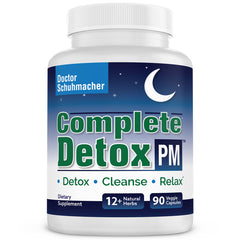
Longevity Complete Detox PM
- Size
- 90 capsules · 30 night supply
- Directions
- 3 capsules once daily, preferably about 30 minutes before sleep
- Ingredients
- Contains botanical extracts together with GABA and 5-HTP.
- Routine
- Designed as an evening supplement routine.
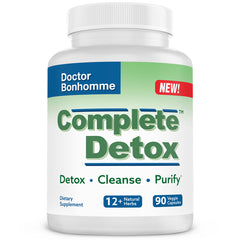
Longevity Complete Detox (Day Formula)
- Size
- 90 capsules · 30 servings
- Directions
- 3 capsules once daily
- Ingredients
- A botanical and fiber based formula containing ingredients including psyllium husk, green tea extract, dandelion extract and acai.
- Routine
- Designed for a simple daytime wellness routine.


