


Key takeaways
- Your body handles what it no longer needs with a team of organs: the liver, kidneys, gut, lungs, lymphatic system and, in a small way, the skin.
- The liver does most of the chemical work. It changes compounds in two steps so they dissolve in water and can leave in urine or bile.
- Your kidneys filter about 150 quarts of blood a day. Only 1 to 2 quarts become urine.
- These systems run on everyday inputs like protein, vitamins and minerals, fiber, water, movement and sleep. Most American adults fall short on fiber.
- Because your body does this work every day, steady daily habits suit it better than an occasional extreme cleanse.
The work you never notice
Right now, as you read this, nearly a quarter of the blood your heart pumps each minute is flowing through your liver.[1] Your kidneys are filtering about half a cup of blood every minute.[2] Your lungs are breathing out carbon dioxide. A network of thin vessels is collecting fluid from around your cells and carrying it back toward your heart.
None of it needs your attention, and none of it stops for weekends, holidays or a hectic week at work.
"Detox" is a word you see on many wellness labels, and it starts with something real and specific inside the body: changing, packaging and moving out substances the body doesn't need. Some come from food, air, medicines and household products. Many come from the body's own normal chemistry, like the yellow pigment left over when old red blood cells are recycled.[3]
This guide walks through the team that does this work, what a typical day looks like for them, and the everyday inputs they rely on.
Meet the team
| Organ | Everyday job | A number worth knowing |
|---|---|---|
| Liver | Changes compounds so they dissolve in water, and makes bile | About 2.5% of body weight, yet it receives nearly 25% of the blood the heart pumps [1] |
| Kidneys | Filter blood, send wastes and extra water out as urine, and balance salts and minerals | About 150 quarts filtered a day, with only 1 to 2 quarts becoming urine [2] |
| Gut | Carries bile and waste out of the body, and acts as a barrier | Receives about 600 milliliters (roughly 2.5 cups) of bile a day [3] |
| Lungs | Breathe out carbon dioxide and other gases | 12 to 20 breaths a minute at rest |
| Lymphatic system | Returns extra fluid to the blood and carries immune cells | Has no central pump and relies partly on movement [4] |
| Skin | Sweat mostly cools you, so it is a minor exit route | A small role next to the liver and kidneys |
The liver: your body's processing plant
The liver is the heavy lifter. Almost everything absorbed from your gut travels to the liver first, through a large vessel called the portal vein. That gives the liver the first look at nearly everything you eat and drink.
Its main challenge is a simple one. Many compounds dissolve in fat, not water. But the body's main exits, urine and bile, are water-based. So the liver remodels these compounds into forms that dissolve in water.
It does this in two broad steps. In the first step, called Phase I, a large family of enzymes called cytochrome P450 adds or uncovers a small chemical "handle" on a compound. Picture punching a hole in a package so a tag can be tied on.
In the second step, called Phase II, the liver attaches a water-friendly tag to that handle. Common tags include glucuronic acid (a sugar-based molecule), sulfate, amino acids such as glycine, methyl groups and glutathione.[5] Once tagged, the compound dissolves in water and can leave.
The in-between moment can briefly create a more reactive form of a compound, which is why the second step matters so much. The two steps work like a relay, and the handoff needs to go smoothly.
Nutrition comes in here. Several of those Phase II tags are built from things you eat. Glutathione, for example, is made from three amino acids: glutamate, cysteine and glycine. The liver holds the body's highest concentration of it. How much the body can make depends largely on its supply of cysteine,[6] a building block that comes from the protein in your diet.
The liver also makes bile, about 600 milliliters a day.[3] Bile helps you digest fat, and it is also a way out. The liver packs certain processed compounds into bile, along with bilirubin, the yellow pigment from recycled red blood cells. Bile flows into the small intestine, and from there the gut takes over.
The kidneys: your body's filtration system
Your two kidneys are each about the size of a fist. Together they filter about 150 quarts of blood a day.[2] Nearly all of that fluid is reclaimed, and only 1 to 2 quarts leave as urine.
Each kidney has about a million tiny filtering units, and each unit works in two steps. First, a filter lets water, small molecules and wastes pass through. Then a tiny tube returns what the body needs to the blood and pulls out more waste.[2] The kidneys also keep sodium, potassium, calcium and acid in balance.
Many of the water-soluble compounds the liver has tagged leave through the kidneys, and the kidneys need enough fluid to do that job. Our guide on how much fluid you need has the numbers.
The gut: the exit lane, with a twist
Bile empties into the small intestine. What the body doesn't reabsorb keeps moving and leaves in stool, so regular bowel movements belong in the everyday picture.
Here is the twist. Bacteria in the intestine make enzymes that can snip off some of the liver's tags. When that happens, a compound can be reabsorbed and sent back to the liver for another pass. Scientists call this loop enterohepatic circulation.[7]
Fiber matters here. It adds bulk and holds water, which helps keep things moving. Most of us don't get enough of it. Adults are advised to get 21 to 38 grams a day, depending on age and sex, but Americans average only about 16 grams.[8] Our guide to your daily fiber number shows how big that gap is.
The lungs and skin: smaller but real roles
Every breath out carries carbon dioxide, the main waste gas from the energy your cells make. Your lungs also release small amounts of other gases, which is why a breath test can detect alcohol. The lungs even contain some of the same kinds of processing enzymes found in the liver.[9]
Your skin plays a smaller part. Sweat's main job is to cool you down. It carries tiny amounts of other substances, but the liver and kidneys do far more of the daily work. Our guide to sweat, saunas and the skin explains why.
The lymphatic system: the quiet drainage network
Every day, fluid seeps out of your smallest blood vessels into the spaces around your cells. Most of it soaks right back in. The leftover fluid, a few liters a day, is collected by lymphatic vessels and returned to your bloodstream. Along the way it passes through lymph nodes, where immune cells check it.
Unlike blood, lymph has no heart to pump it. It moves partly through gentle contractions in the vessel walls. Outside forces help too, like muscles squeezing as you move and pressure changes as you breathe.[4] That gives you one more reason to keep regular movement in your day.
A day in the life of your inner cleanup crew
Your organs keep time. The liver has its own internal clock. Many of the enzymes and transporters it uses to process compounds rise and fall over a 24-hour cycle.[10] Meal timing, light and sleep all help set that clock. Much of this research comes from animal studies. Even so, it fits a simple idea: regular meals and sleep suit a body that runs on a daily clock.
In the morning, you wake after an overnight fast. Your liver kept your blood sugar steady while you slept. Water and breakfast restart the day's flow of fluid and nutrients. Many people find their gut is most active in the morning, and our guide on why mornings are different covers what is known.
At midday, after you eat, more blood flows to your gut and liver. The liver sorts incoming nutrients, and the gallbladder squeezes out bile to help digest fat.
Through the afternoon, your kidneys keep filtering and movement keeps lymph flowing. This is often the time of day when people forget to drink water.
In the evening, dinner keeps your digestive system busy for hours. As you wind down, your body shifts toward rest.
Overnight, between meals, a wave of muscle activity sweeps through the stomach and small intestine at regular intervals to clear out what's left. Our guide to the wave of movement that only runs when you stop eating explains how it works.
The brain during sleep is still an open question. For about a decade, a popular idea held that the brain clears waste faster during sleep, based largely on a 2013 study in mice.[11] A 2024 study, also in mice, found the opposite: clearance of a test dye was about 30% slower during sleep than when the mice were awake.[12] Scientists are still sorting this out, and neither study involved people. Either way, regular sleep remains one of the basics of a healthy routine.
What your inner cleanup crew runs on
You don't control these organs directly. What you do control is the daily supply of what they use.
- Protein supplies amino acids, including the cysteine, glycine and glutamate your body uses to make glutathione.[6]
- Vitamins and minerals act as helpers for many of the enzymes involved. Selenium, for example, is needed to help protect cells.[13]
- Fiber adds bulk and holds water on the last stretch out.
- Water gives your kidneys the fluid they need to carry wastes out in urine.
- Vegetables in the cabbage family deserve a spot on your plate. In human studies, broccoli, Brussels sprouts, cabbage and their relatives shifted the activity of some of these enzymes.[14] Researchers are still working out what that means for long-term health.
- Movement helps lymph keep flowing.
- Steady sleep and regular mealtimes help keep your body's daily clock on schedule.
It also helps to go easy on alcohol, which the liver processes too. The liver also handles most medicines, and some foods and herbs can change how fast that happens. Grapefruit juice and St. John's wort are well-known examples.[15][16] If you take prescription medicine, a pharmacist can check any supplement or food you're curious about in a minute or two.
Where a daily supplement routine fits
Food comes first. The NIH Office of Dietary Supplements, citing federal dietary guidance, says people should get most of their nutrients from food and drinks. It adds that supplements can be useful when it isn't possible to meet needs from food alone.[13] For many adults, fiber is the clearest example of that gap.
The law defines a dietary supplement as a product meant to add to the diet.[17] That is a helpful way to think about one: a steady daily input that works alongside the basics.
Your body's systems work every single day, so a routine that fits ordinary days suits them well. Picture the moments you already have. A glass of water and a few capsules beside the coffee maker. A quiet minute at the bathroom sink before bed. A week on the calendar after a trip, set aside to get meals, water and sleep back on track.
People who build a supplement into their day usually settle on one of three rhythms:
- A morning step, taken before or after breakfast as the label directs. Formulas built around fiber or tea-based botanicals often land here, alongside the first glass of water of the day.
- An evening step, folded into winding down for the night.
- A short routine with a clear start and finish, often used after travel or a busy season as a marker for getting back to the basics.
Whichever rhythm appeals to you, start with the label: the directions, the ingredient list and any cautions. Our guide to reading a detox supplement label walks through each part. Whatever you choose sits alongside meals with fiber and protein, enough water, regular movement and steady sleep.
Before you start
- Read the full label and follow the directions.
- Check with your doctor or pharmacist first if you take prescription medicine, are pregnant or nursing, or have a health condition.
- 5-HTP, found in some evening formulas, affects serotonin, and formulas with it are for adults only. Ask your doctor first if you take an antidepressant, a sedative or a sleep aid. Take an evening formula at bedtime as the label directs, and don't drive if you feel drowsy.
- Some formulas include oyster or other shellfish extracts. Check the allergen information if you are allergic to shellfish.
- Green tea extract and guarana can both contain caffeine. If you're sensitive to caffeine, count them along with your coffee and tea, and keep them to the morning.
- Drink plenty of water with each dose of a fiber supplement, and raise fiber from food gradually. Fiber supplements like psyllium shouldn't be taken at the same time as some medicines, so ask your pharmacist how to space them.[18]
When to see a clinician
Some changes deserve a professional's eyes. Talk with a health care professional promptly if you notice:
- yellowing of the skin or the whites of the eyes
- dark urine or pale stools that don't go away
- blood in your stool
- a lasting change in bowel habits, especially one that is new in later adulthood
- belly pain that won't go away, vomiting or unexplained weight loss
- any new symptom that started after a new medicine or supplement
Frequently asked questions
Do I need a big reset to support these systems?
No. Your body does this work every day, so what helps most is a steady daily supply of protein, fiber, water, vitamins and minerals, movement and sleep. A defined 7-day routine can give you a clear starting point after travel or the holidays, and your daily habits carry it forward from there.
Do I need to fast or do a juice cleanse?
No. Your liver and kidneys don't need you to fast to do their work. If you enjoy fresh juice, pair it with meals that include protein and fiber, since many juice plans are light on both.
Can I sweat toxins out?
Sweat is mostly water and salt, and its main job is cooling you down. The liver and kidneys handle most of the daily work.
Is there a best time of day to support these processes?
Start with the timing on the label. Many formulas are written for the morning or for bedtime, and taking yours at the same point in your day makes it easy to remember. Our guide to anchor habits shows how to make a new step stick.
Can a supplement replace healthy habits?
No. A supplement is meant to add to your diet and routine. It works best as part of the everyday habits that already keep these systems supplied.
The short version
Your body handles what it doesn't need with a whole team. The liver remodels compounds in two steps, and the kidneys filter about 150 quarts of blood a day. The gut carries bile and waste out, the lungs breathe out carbon dioxide, and the lymphatic network moves when you move. This work runs every day on a daily rhythm. You can match that rhythm with protein, fiber, water, vegetables, movement and sleep. A simple supplement routine can help you fill the gaps.
This article is for general education. It is not medical advice, and nothing here is intended to diagnose, treat, cure or prevent any disease. If you take prescription medicines, are pregnant or breastfeeding, or have a medical condition, talk with your doctor or pharmacist before starting any supplement, and never stop or change a prescribed medicine on the basis of general information.
Sources
- Eipel C, Abshagen K, Vollmar B. Regulation of hepatic blood flow: the hepatic arterial buffer response revisited. World J Gastroenterol. 2010;16(48):6046-6057. https://pmc.ncbi.nlm.nih.gov/articles/PMC3012579/
- National Institute of Diabetes and Digestive and Kidney Diseases. Your Kidneys & How They Work. https://www.niddk.nih.gov/health-information/kidney-disease/kidneys-how-they-work
- StatPearls. Physiology, Bile Secretion. NCBI Bookshelf. https://www.ncbi.nlm.nih.gov/books/NBK470209/
- Solari E, Marcozzi C, Negrini D, Moriondo A. Lymphatic vessels and their surroundings: how local physical factors affect lymph flow. Biology (Basel). 2020;9(12):463. https://pmc.ncbi.nlm.nih.gov/articles/PMC7763507/
- Jančová P, Šiller M. Phase II drug metabolism. In: Topics on Drug Metabolism. InTech; 2012. http://www.intechopen.com/books/topics-on-drug-metabolism/phase-ii-drug-metabolism
- Lu SC. Glutathione synthesis. Biochim Biophys Acta. 2013;1830(5):3143-3153. https://pmc.ncbi.nlm.nih.gov/articles/PMC3549305/
- Roberts MS, Magnusson BM, Burczynski FJ, Weiss M. Enterohepatic circulation: physiological, pharmacokinetic and clinical implications. Clin Pharmacokinet. 2002;41(10):751-790. https://pubmed.ncbi.nlm.nih.gov/12162761/
- MedlinePlus Medical Encyclopedia. Fiber. U.S. National Library of Medicine. https://medlineplus.gov/ency/article/002470.htm
- Castell JV, Donato MT, Gómez-Lechón MJ. Metabolism and bioactivation of toxicants in the lung: the in vitro cellular approach. Exp Toxicol Pathol. 2005;57 Suppl 1:189-204. https://pubmed.ncbi.nlm.nih.gov/16092727/
- Prosenc Zmrzljak U, Rozman D. Circadian regulation of the hepatic endobiotic and xenobiotic detoxification pathways: the time matters. Chem Res Toxicol. 2012;25(4):811-824. https://pubmed.ncbi.nlm.nih.gov/22303888/
- Xie L, Kang H, Xu Q, et al. Sleep drives metabolite clearance from the adult brain. Science. 2013;342(6156):373-377. https://doi.org/10.1126/science.1241224
- Miao A, Luo T, Hsieh B, et al. Brain clearance is reduced during sleep and anesthesia. Nat Neurosci. 2024;27(6):1046-1050. https://pmc.ncbi.nlm.nih.gov/articles/PMC11156584/
- NIH Office of Dietary Supplements. Selenium: Fact Sheet for Consumers. https://ods.od.nih.gov/factsheets/Selenium-Consumer/
- Eagles SK, Gross AS, McLachlan AJ. The effects of cruciferous vegetable-enriched diets on drug metabolism: a systematic review and meta-analysis of dietary intervention trials in humans. Clin Pharmacol Ther. 2020;108(2):212-227. https://pubmed.ncbi.nlm.nih.gov/32086800/
- Kane GC, Lipsky JJ. Drug-grapefruit juice interactions. Mayo Clin Proc. 2000;75(9):933-942. https://pubmed.ncbi.nlm.nih.gov/10994829/
- Moore LB, Goodwin B, Jones SA, et al. St. John's wort induces hepatic drug metabolism through activation of the pregnane X receptor. Proc Natl Acad Sci USA. 2000;97(13):7500-7502. https://pubmed.ncbi.nlm.nih.gov/10852961/
- Federal Food, Drug, and Cosmetic Act, section 201(ff), 21 U.S.C. 321(ff) (definition of "dietary supplement").
- MedlinePlus. Psyllium. U.S. National Library of Medicine. https://medlineplus.gov/druginfo/meds/a601104.html
Product information
Facts from the product pages. Before using any supplement, read the full label, directions and cautions on the product page, and check with your doctor or pharmacist if you take medicines, are pregnant or nursing, or have a health condition.
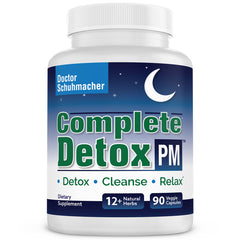
Longevity Complete Detox PM
- Size
- 90 capsules · 30 night supply
- Directions
- 3 capsules once daily, preferably about 30 minutes before sleep
- Ingredients
- Contains botanical extracts together with GABA and 5-HTP.
- Routine
- Designed as an evening supplement routine.
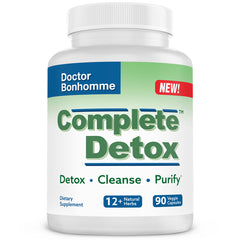
Longevity Complete Detox (Day Formula)
- Size
- 90 capsules · 30 servings
- Directions
- 3 capsules once daily
- Ingredients
- A botanical and fiber based formula containing ingredients including psyllium husk, green tea extract, dandelion extract and acai.
- Routine
- Designed for a simple daytime wellness routine.


