


Key takeaways
- "Regular" covers a wide normal range. Nearly all U.S. adults with normal bowel habits go somewhere between three times a day and three times a week.
- The shape and softness of stool tell you more about how fast things are moving than how often you go.
- Fiber adds bulk and holds water. Adults need about 21 to 38 grams a day, and the average American gets about 16.
- Fluid is fiber's partner. Your colon reclaims most of the water that reaches it, so fiber works best with steady drinking through the day.
- Movement has the most mixed research of the three. Small studies point in different directions, yet regular activity and a walk after meals fit easily into the same routine.
Your colon keeps a schedule
Your colon wakes up when you do. One study recorded colon activity around the clock in 25 healthy adults. Muscle activity in the colon roughly tripled after waking and doubled after meals.[1] The strongest pushing waves came about 10 times a day, mostly after waking, after a meal or with a bowel movement.
That rhythm is why so many people feel the urge after breakfast. It also suggests that regularity responds to routine, and that routine is built from ordinary things you already do.
This guide explains what "regular" means, and how fiber, fluid and movement each do their part. At the end you'll find a simple two-week plan for building all three.
What "regular" really means
There is no single right number. In a national health survey, researchers looked at 4,775 U.S. adults who said their bowel habits were normal. Almost 96% of them went between three times a week and three times a day.[2] The authors noted that this fits a long-used rule of thumb sometimes called "three and three."
So going every other day with ease is just as normal as going twice a day. What counts most is your own usual pattern, and whether it feels comfortable.
Stool form adds useful detail. The Bristol Stool Form Scale sorts stool into seven types, from separate hard lumps (type 1) to entirely liquid (type 7). In a study of 66 volunteers, stool form tracked the time food took to travel through the whole gut better than how often people went.[3] Harder, lumpier stools went with slower transit.
In the national survey, 90% of men with normal habits reported types 3 to 5. For women the usual range was a little wider, types 2 to 6.[2] A soft, formed stool that passes without straining is a good everyday sign.
The full trip takes a while. In three small studies of healthy adults, described later in this guide, the average trip from mouth to exit took about 41 to 55 hours.[4][5][6] Those were the numbers measured without added exercise. Our guide to where your lunch actually is, hour by hour walks through each stage.
Foundation one: fiber
Fiber is the part of plant food your body can't digest. Because it reaches the colon mostly intact, it shapes what happens there.
Soluble fiber absorbs water and forms a gel during digestion. Oat bran, beans, lentils and some fruits and vegetables are good sources. Insoluble fiber doesn't dissolve. It adds bulk to stool and helps material move through the intestines. You'll find it in wheat bran, whole grains and many vegetables.[7]
A 2017 review of how fibers behave in the gut adds a helpful detail. For stool, what matters most is whether a fiber stays intact through the colon and holds on to water there. Coarse wheat bran does this by nudging the gut lining to release water and mucus. Gel-forming psyllium does it by holding water in its gel.[8] Both lead to softer, bulkier stools that pass more easily.
Other fibers, such as inulin, play a different role. Gut bacteria ferment them, so they mostly feed the microbes living in your colon. Our guide to fermentable fiber covers that side of the story.
That variety is one reason a mix of foods works well. Our guide to soluble and insoluble fiber, and why a mix beats either one alone goes deeper. For a close look at psyllium itself, see Psyllium and digestive regularity.
How much fiber you need, and the gap
Adults need about 21 to 38 grams of fiber a day. The average American gets about 16.[7] For many people, closing that gap means roughly doubling what they eat now, step by step. Our guide to your daily fiber number shows how to find your target and the size of your gap.
Easy places to add fiber include oatmeal at breakfast, beans or lentils in soup or salad, and berries or a pear as a snack. Filling half your dinner plate with vegetables helps too.
Go slowly. Adding fiber over a few weeks gives your gut time to adjust, while a sudden jump can bring gas and stomach discomfort.[7] Our guide to the fiber ramp shows how to pace it.
Foundation two: fluid
Your gut handles a surprising amount of water. Every day, about 1.5 to 2 liters of watery material (roughly 6 to 8 cups) passes from your small intestine into your colon. The colon reclaims about 90% of that water.[9]
That reclaiming is normal and useful. It also explains why pace matters. The longer stool sits in the colon, the more water is drawn out. That's why slower transit tends to go with harder stools.[3]
Here fiber and fluid work as a pair. Water helps fiber move through your system.[7] Gel-forming fiber holds on to water so well that it resists the colon's pull, which keeps stool soft.[8]
More water doesn't automatically mean more regularity, though. In a small study of 15 healthy adults, drinking an extra 1 to 2 liters a day raised urine output. Stool output didn't change.[10] For most people, the goal is steady, adequate fluid through the day, especially while adding fiber.
How much is enough depends on your size, activity and the weather. Our guide to how much fluid you need has the numbers, and yes, coffee and tea count. If you're adding fiber or taking psyllium, our guide to hydration when increasing fiber covers the details.
Foundation three: movement
Movement has the most mixed research of the three, so here is what the studies found.
In one small trial, 10 healthy adults spent a week each jogging, cycling or resting for an hour a day. Whole-gut transit time dropped from about 51 hours at rest to about 34 to 37 hours with exercise. Stool weight and how often people went did not change significantly.[5]
In another, 7 healthy, previously inactive men around age 60 did 13 weeks of strength training. Their whole-bowel transit time fell from about 41 hours to 20.[4]
A third study points the other way. Fourteen healthy, inactive adults trained until they could jog 45 to 60 minutes a day. On average, their transit time and stool weight did not change. Transit sped up for some people and slowed for others.[6]
Walking after a meal has been studied too. In 10 healthy men, a slow walk on a treadmill after eating helped the stomach empty faster than on days without the walk.[11] That study looked at the stomach, not the colon.
Taken together, these studies are small and don't all agree. Regular activity may help some people keep things moving, while others notice little change. Movement is still worth building in. Adults are advised to get 150 to 300 minutes of moderate activity a week, such as brisk walking. Muscle strengthening on two or more days rounds it out. Any amount of activity has some health benefit.[12]
Supporting habits that help all three
A few small habits make the foundations easier to keep.
- Eat at roughly the same times each day. Meals raise colon activity,[1] so a steady meal schedule gives your body predictable moments to go.
- Leave room after breakfast. Waking and eating both raise colon activity, and for many people they line up in the morning.[1] A few unhurried minutes after breakfast give that natural urge space. Our guide on why mornings are different covers what is known.
- Answer the urge when you can. Waiting gives the colon more time to draw water out of stool.
- Keep a water glass or bottle where you'll see it, and refill it at the same times each day.
A two-week plan to build all three
Change one or two things at a time. This plan adds fiber slowly and builds fluid and movement alongside it.
| Days | Fiber step | Fluid and movement step |
|---|---|---|
| 1 to 3 | Notice your usual pattern. Add one fiber food at breakfast | A glass of water on waking and with each meal |
| 4 to 7 | Add a fiber food at lunch, such as beans or a pear | A 10-minute walk after one meal a day |
| 8 to 11 | Add a fiber food at dinner or as a snack | Refill your bottle midafternoon. Walk after two meals |
| 12 to 14 | Hold steady at your new level | Add a longer walk or a strength session on two days |
If any step brings gas or discomfort, stay at that level a few extra days before moving on.
Where a fiber supplement fits in the plan
Food is the foundation of a fiber-rich day. Some people also like a fiber supplement as one steady input at the same time each day. Picture a tall glass of water poured at breakfast and set beside the coffee maker before the coffee is ready.
Fiber products like psyllium come as powders, granules, capsules, tablets and wafers.[13] The form mostly decides how the serving fits into your morning.
- Powders and granules are stirred into at least 8 ounces of water or another drink.[13] Some people like having the fiber and the fluid in one glass.
- Capsules have no taste, need no mixing and travel well in a bag or a pill organizer. Federal labeling rules for drugstore psyllium call for every form, capsules included, to be taken with at least 8 ounces of water or other fluid.[13]
Whichever form you choose, follow the directions on your label for how much to take and when. Keep raising fiber from food gradually, as described above, so your gut has time to adjust.[7]
Pick a time you'll keep, such as breakfast, and plan it around any medicines you take, as the label directs. Then count the supplement as one steady piece of your fiber day, next to the oatmeal, the beans and the pear.
Before you start
- Read the full label and follow the directions.
- Check with your doctor or pharmacist first if you take prescription medicine, are pregnant or nursing, or have a health condition. Fiber can change how some medicines are absorbed, so ask how far apart to take them.[14]
- Take psyllium with a full glass of water or other liquid. With too little fluid, psyllium can swell and cause choking.[13] Skip it if you have trouble swallowing, and get medical help right away for chest pain, vomiting, or trouble swallowing or breathing after a dose.[13]
- If a product combines fiber with other ingredients, read the cautions for each one on the label.
- Add fiber from food gradually and keep fluids steady through the day.
When to see a clinician
A change from your own normal deserves attention. Talk with a health care professional promptly if you notice:
- blood in your stool, or black, tarry stools
- a lasting change in your usual pattern, especially one that is new in later adulthood
- hard stools or straining most of the time for more than a few weeks
- loose, watery stools that last more than a couple of days
- belly pain that won't go away, vomiting or unexplained weight loss
- any new symptom that started after a new medicine or supplement
Frequently asked questions
How often should I have a bowel movement?
Anywhere from three times a day to three times a week is common for adults with normal habits.[2] Your own steady, comfortable pattern matters more than matching anyone else's.
Is there a best time of day to go?
There's no single right time. Many people find mornings easiest, since colon activity rises after waking and again after meals.[1] A regular breakfast and a few calm minutes afterward can help you find your rhythm.
Is it better to get fiber from food or from a supplement?
Start with food. Fiber-rich foods also bring vitamins, minerals and other plant compounds. A supplement can add a steady amount on top of a fiber-rich diet, which helps on busy days.
Will exercise make me more regular?
It might. Small studies in healthy adults found faster transit with daily jogging, cycling or strength training, while another found no consistent change.[4][5][6] A walk after meals is an easy place to start.
Do I need to drink a lot more water?
Usually you just need enough, spread through the day. Extra fluid beyond your needs mostly ends up in urine.[10] Keep fluids steady as you add fiber, because water helps fiber move through your system.[7]
The short version
Regular means your own comfortable pattern, and for most adults that falls somewhere between three times a day and three times a week. Three everyday foundations support it. Fiber adds bulk and holds water, and most of us eat well below the daily target. Fluid keeps that fiber working, since the colon reclaims most of the water that reaches it. The research on movement is mixed, but it has plenty of other reasons behind it. Build all three slowly around regular meals, give yourself unhurried time after breakfast, and let a simple daily routine of fiber-rich meals help fill the fiber gap.
This article is for general education. It is not medical advice, and nothing here is intended to diagnose, treat, cure or prevent any disease. If you take prescription medicines, are pregnant or breastfeeding, or have a medical condition, talk with your doctor or pharmacist before starting any supplement, and never stop or change a prescribed medicine on the basis of general information.
Sources
- Rao SS, Sadeghi P, Beaty J, Kavlock R, Ackerson K. Ambulatory 24-h colonic manometry in healthy humans. Am J Physiol Gastrointest Liver Physiol. 2001;280(4):G629-G639. https://pubmed.ncbi.nlm.nih.gov/11254489/
- Mitsuhashi S, Ballou S, Jiang ZG, et al. Characterizing normal bowel frequency and consistency in a representative sample of adults in the United States (NHANES). Am J Gastroenterol. 2018;113(1):115-123. https://pubmed.ncbi.nlm.nih.gov/28762379/
- Lewis SJ, Heaton KW. Stool form scale as a useful guide to intestinal transit time. Scand J Gastroenterol. 1997;32(9):920-924. https://pubmed.ncbi.nlm.nih.gov/9299672/
- Koffler KH, Menkes A, Redmond RA, Whitehead WE, Pratley RE, Hurley BF. Strength training accelerates gastrointestinal transit in middle-aged and older men. Med Sci Sports Exerc. 1992;24(4):415-419. https://pubmed.ncbi.nlm.nih.gov/1560736/
- Oettlé GJ. Effect of moderate exercise on bowel habit. Gut. 1991;32(8):941-944. https://pubmed.ncbi.nlm.nih.gov/1885077/
- Bingham SA, Cummings JH. Effect of exercise and physical fitness on large intestinal function. Gastroenterology. 1989;97(6):1389-1399. https://pubmed.ncbi.nlm.nih.gov/2583406/
- MedlinePlus Medical Encyclopedia. Fiber. U.S. National Library of Medicine. https://medlineplus.gov/ency/article/002470.htm
- McRorie JW, McKeown NM. Understanding the physics of functional fibers in the gastrointestinal tract: an evidence-based approach to resolving enduring misconceptions about insoluble and soluble fiber. J Acad Nutr Diet. 2017;117(2):251-264. https://pubmed.ncbi.nlm.nih.gov/27863994/
- Sandle GI. Salt and water absorption in the human colon: a modern appraisal. Gut. 1998;43(2):294-299. https://pubmed.ncbi.nlm.nih.gov/10189861/
- Chung BD, Parekh U, Sellin JH. Effect of increased fluid intake on stool output in normal healthy volunteers. J Clin Gastroenterol. 1999;28(1):29-32. https://pubmed.ncbi.nlm.nih.gov/9916661/
- Franke A, Harder H, Orth AK, Zitzmann S, Singer MV. Postprandial walking but not consumption of alcoholic digestifs or espresso accelerates gastric emptying in healthy volunteers. J Gastrointestin Liver Dis. 2008;17(1):27-31. https://pubmed.ncbi.nlm.nih.gov/18392240/
- Office of Disease Prevention and Health Promotion, U.S. Department of Health and Human Services. Top 10 Things to Know About the Second Edition of the Physical Activity Guidelines for Americans. https://odphp.health.gov/our-work/nutrition-physical-activity/physical-activity-guidelines/current-guidelines/top-10-things-know
- Code of Federal Regulations, 21 CFR 201.319. Specific labeling requirements for water-soluble gums, hydrophilic gums, and hydrophilic mucilloids. https://www.ecfr.gov/current/title-21/chapter-I/subchapter-C/part-201/subpart-G/section-201.319
- González Canga A, Fernández Martínez N, Sahagún Prieto AM, et al. Dietary fiber and its interaction with drugs. Nutr Hosp. 2010;25(4):535-539. https://pubmed.ncbi.nlm.nih.gov/20694287/
Product information
Facts from the product pages. Before using any supplement, read the full label, directions and cautions on the product page, and check with your doctor or pharmacist if you take medicines, are pregnant or nursing, or have a health condition.

Longevity Complete Detox (Day Formula)
- Size
- 90 capsules · 30 servings
- Directions
- 3 capsules once daily
- Ingredients
- A botanical and fiber based formula containing ingredients including psyllium husk, green tea extract, dandelion extract and acai.
- Routine
- Designed for a simple daytime wellness routine.
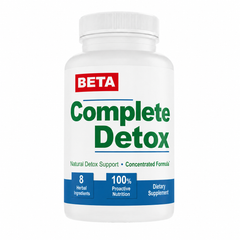
Longevity Complete Detox [BETA]
- Size
- 21 capsules · 7 servings
- Directions
- 3 capsules once daily
- Ingredients
- Contains botanical ingredients including milk thistle, psyllium, ginger, turmeric, acai and aloe vera.
- Routine
- Designed as a defined 7 day wellness routine.


