


Key takeaways
- Your gut handles 8 to 10 liters of fluid a day and sends only about 100 milliliters out in stool. Fiber that holds water helps keep more of it in stool.
- Gel-forming fibers like psyllium need water to form their gel, and that gel holds water as it moves through your colon.
- In a small study of healthy adults, extra fluid raised urine output but did not change stool output. Fiber is what holds water in the gut, so the two work as a pair.
- Healthy adults take in about 2.7 to 3.7 liters of total water a day from food and drinks. Most can let thirst guide them.
- Take every psyllium dose, capsules included, with at least 8 ounces of water, and ask your pharmacist how far apart to take it from prescription medicines.
More than two gallons through, less than half a cup out
Every day, about 8 to 10 liters of fluid pass through your digestive tract. That is more than two gallons. It includes what you drink and the juices your own gut makes. By the time the leftovers leave your body, only about 100 milliliters of water goes with them. That is less than half a cup.[1]
Your gut is a very good water recycler. Fiber changes the math a little. Some fibers hold on to water, so more of it stays in stool and stool stays soft and easy to pass.
This is why psyllium labels and fiber guides repeat the same advice: drink with it. This article explains what happens when fiber meets fluid, how much fluid adults need, and how to pair the two on an ordinary day. For psyllium itself, see our companion guide to psyllium and digestive regularity.
What happens when fiber meets fluid
Water moves through your gut in two main stages.
The first is the small intestine. Food mixes with digestive juices there, and the body takes in most nutrients and most of the water. Gel-forming fibers thicken this mix and trap some of its water. In a small MRI study of healthy volunteers, the small intestine held more water after doses of psyllium and other fibers.[2]
The second stage is the colon, the main part of the large intestine. About 1.5 liters of watery leftovers reach it each day. As they move along, the colon reclaims more than 90% of that water.[1] The longer stool stays there, the drier it gets.
This is where fiber type matters most. Gel-forming fibers that resist fermentation, such as psyllium, keep their gel and hold water all the way through. Fibers that gut bacteria ferment, such as inulin, play a different role. They are mostly used along the way as food for your gut microbes. Coarse insoluble fibers like wheat bran work differently again. Their rough pieces prompt the gut lining to release water and mucus.[3][4]
You can see the result in stool. In a study of 15 healthy adults on controlled diets, a week with psyllium made stools heavier and more moist than a week without it.[5]
The gel needs water to form in the first place. That is one reason psyllium directions call for a full glass of liquid with every dose, as the timing section below explains.
Fluid and fiber work as a pair
Many people assume that drinking more water always means more or softer stool. One study in healthy adults put that idea to the test.
At the University of Texas, 15 healthy adults drank an extra 1 liter a day, then an extra 2 liters, for two days each. Some drank water and some drank a sports drink. Their urine output went up, but the amount of stool did not change.[6] When you already drink enough, your body passes the extra water as urine.
Fiber gives water a reason to stay. In an Italian trial, 117 adults aged 18 to 50 ate about 25 grams of fiber a day for two months. Half were asked to drink 2 liters of mineral water a day, and they averaged 2.1 liters. The other half drank as usual and averaged 1.1 liters. Both groups had more frequent bowel movements by the end, and the gain was larger in the group that drank more.[7]
That trial enrolled adults who were already under a doctor's care for long-standing bowel concerns. A 2025 British Dietetic Association guideline for this group made recommendations only where at least two trials existed. It made none on drinking extra water.[8] A 2023 review by the same research team counted just one trial of extra water and called for more studies.[9]
Taken together, the two studies point the same way. Extra water on its own does little for stool when you are already well hydrated. Fiber and fluid seem to do their best work as a team.
How much fluid adults need
The National Academies set daily Adequate Intakes for total water. Total water counts what you drink and the water in your food.[10]
| Adults | Total water a day | From drinks (about 80%) |
|---|---|---|
| Women | About 2.7 liters (about 11 cups) | About 2.2 liters (about 9 cups) |
| Men | About 3.7 liters (about 16 cups) | About 3 liters (about 12 to 13 cups) |
These numbers describe what healthy, well-hydrated adults typically take in. They are not strict targets. About 20% of the total comes from food, and coffee and tea count too. The panel found that caffeinated drinks add to daily hydration. It also said most healthy people meet their needs by letting thirst guide them.[10]
You need more in hot weather, when you are more active, and when you have a fever, vomiting or loose stools.[11] Thirst can also fade with age, so older adults may need to drink on a schedule.[12] Our guides to how much fluid you need and whether coffee and tea count go deeper.
Does fiber change these numbers? No official formula says how much extra fluid each gram of fiber needs. The clearest rule is specific to psyllium: at least 8 ounces of water or other fluid with every dose.[13]
Signs you may need more fluid
Your body sends fairly clear signals when it runs low on fluid:[12]
- strong thirst or a dry mouth
- urinating and sweating less than usual
- darker urine
- dry skin
- feeling tired or dizzy
Urine color is a handy rough check, though some vitamins, foods and medicines can change it. Our fluid guide covers its limits. Confusion, fainting, a racing heartbeat or no urine at all call for medical help right away.[12]
Timing psyllium capsules with water
Psyllium swells once it gets wet. That is what makes it useful in your gut. It is also why the timing of your water matters.
- Pour the glass first. Take each dose with at least 8 ounces of water or other fluid, about a full glass.[13]
- Swallow capsules one at a time, as psyllium capsule labels advise.[14]
- Keep drinking after the dose. A sip to get the capsules down is not enough.
- Plan around your medicines. Fiber can slow how some medicines are absorbed. Drugstore labels advise taking psyllium at least 2 hours before or after prescription medicines.[14] A few medicines need 3 hours, so ask your pharmacist.[15]
- If a clinician has told you to limit fluids, ask before adding psyllium, since each dose needs a full glass.
With too little liquid, psyllium can swell and cause choking, so plenty of liquid goes with every dose.[13]
Pairing fiber with fluid through the day
Fiber and fluid are easiest to pair when they show up together. A few ways to build that in:
- Start the morning with a full glass of water. If you take fiber capsules, take them with a full glass at the time your label gives.
- Set a drink beside every fiber-rich meal. A glass of water next to a bowl of bean chili or oatmeal makes the pairing automatic.
- Eat some of your water. Many fruits and vegetables bring fiber and water in the same bite.[11]
- Refill at set times, such as lunch and mid-afternoon, so your fluids spread across the day.
- Carry a reusable water bottle, as the CDC suggests,[11] and keep it where you can see it. A filled bottle on your desk or counter is a quiet reminder. Our guide to where you keep your water bottle looks at what the evidence shows.
- Raise fiber and fluid together. Our guide to adding fiber gradually has a step-by-step plan.
A well-paired day might look like this.
| Time | Fiber | Fluid |
|---|---|---|
| Breakfast | Oatmeal with berries | A full glass of water, then coffee or tea |
| Lunch | Bean soup or a big salad | A glass of water, then refill your bottle |
| Mid-afternoon | An apple or a pear | Another refill |
| Dinner | Vegetables and a whole grain | A glass of water or milk |
The easiest new habits ride along with ones you already have. Our guide to anchor habits shows how to tie a glass of water to something you do anyway, like starting the coffee maker.
Powder or capsules: fitting a fiber supplement into a well-watered day
Fiber-rich food is the base of the day, and a fiber supplement can add one steady serving on top. Psyllium comes as a powder, granules, capsules and wafers, among other forms.[15] Two of those forms handle water a little differently.
- Powder and granules are mixed into 8 ounces of a drink you like, right before you take it.[15] The glass holds the fiber and the fluid together, so the pairing happens on its own.
- Capsules have no taste, need no mixing and slip easily into a bag. Each dose goes down with a full glass of water, the same as powder.[13]
Follow the directions on your label for how much to take and when. Keep raising fiber from food gradually, and let your fluids rise along with it. Our guide to adding fiber gradually shows the pace.
Then give the routine a home. Picture the glass poured first and set on the kitchen counter, the dose taken with it, and the bottle refilled at lunch and again mid-afternoon. Choose a time you'll keep, and ask your pharmacist how to space it from any prescription medicine. Drugstore psyllium labels advise at least 2 hours.[14] On a day with oatmeal at breakfast and beans at dinner, the supplement is one steady piece of the fiber total.
A supplement is a complement to fiber from food, water through the day and regular movement. Our guide to fiber, hydration and movement shows how the three fit together.
Before you start
- Read the full label and follow its directions, including how much liquid to take with each dose and how long to use it.
- Take each psyllium dose with at least 8 ounces of water. Skip psyllium if you have trouble swallowing. With too little liquid, it can swell in your throat or food pipe and cause choking.
- Get medical help right away if you have chest pain, vomiting, or trouble swallowing or breathing after a dose.[13]
- Drugstore psyllium labels advise taking it at least 2 hours apart from prescription medicines. Ask your pharmacist about yours.[14]
- Check with your doctor first if you have been told to limit fluids, take prescription medicine, are pregnant or nursing, or have a health condition.
- If a product combines fiber with other ingredients, read the cautions for each one on the label.
- Build up fiber from food gradually and spread your fluids across the day.
When to see a clinician
Some changes deserve a professional's eyes. Talk with a health care professional promptly if you notice:
- thirst, dark urine or dizziness that doesn't improve after you drink more
- blood in your stool
- a change in bowel habits that lasts more than two weeks
- belly pain, nausea or vomiting that won't go away
- chest pain, or trouble swallowing or breathing, after taking any fiber product (get help right away)
Frequently asked questions
How much water should I drink with psyllium capsules?
Drink at least 8 ounces, about one full glass, with each dose.[13] Swallow the capsules one at a time, then keep drinking through the day.
Does coffee or tea count toward my fluids?
Yes. The National Academies panel found that caffeinated drinks add to daily hydration.[10] Our coffee and tea guide, linked above, has the details.
Is more water always better when I eat more fiber?
Not really. In a small study of healthy adults, extra fluid raised urine output but not stool output.[6] For most healthy people, steady fluids with fiber-rich meals, guided by thirst, are enough.
Should I drink water before, with or after fiber?
With it, and then through the day. Take psyllium with a full glass, and have a drink with fiber-rich meals. Sipping through the day keeps fluid coming as fiber moves along.
What if I rarely feel thirsty?
Thirst can fade with age.[12] Tie drinks to set moments, such as meals and breaks, so you don't have to rely on thirst. Keeping a filled bottle in sight helps too.
The short version
Your gut moves 8 to 10 liters of fluid a day and recycles almost all of it. Gel-forming fibers like psyllium need water to form their gel, and that gel holds water as it moves through the colon. Extra water on its own mostly leaves as urine. Fiber is what holds water in the gut, so the two work as a pair. Healthy adults take in about 2.7 to 3.7 liters of total water a day, about a fifth of it from food. Thirst is a good guide for most. Take every psyllium dose with a full glass of water, ask your pharmacist about spacing it from prescription medicines, and spread your drinks across the day.
This article is for general education. It is not medical advice, and nothing here is intended to diagnose, treat, cure or prevent any disease. If you take prescription medicines, are pregnant or breastfeeding, or have a medical condition, talk with your doctor or pharmacist before starting any supplement, and never stop or change a prescribed medicine on the basis of general information.
Sources
- Kiela PR, Ghishan FK. Physiology of intestinal absorption and secretion. Best Pract Res Clin Gastroenterol. 2016;30(2):145-159. https://pmc.ncbi.nlm.nih.gov/articles/PMC4956471/
- Gunn D, Murthy R, Major G, et al. Contrasting effects of viscous and particulate fibers on colonic fermentation in vitro and in vivo, and their impact on intestinal water studied by MRI in a randomized trial. Am J Clin Nutr. 2020;112(3):595-602. https://pubmed.ncbi.nlm.nih.gov/32619212/
- McRorie JW. Evidence-based approach to fiber supplements and clinically meaningful health benefits, part 2: what to look for and how to recommend an effective fiber therapy. Nutr Today. 2015;50(2):90-97. https://pmc.ncbi.nlm.nih.gov/articles/PMC4415970/
- McRorie JW, McKeown NM. Understanding the physics of functional fibers in the gastrointestinal tract: an evidence-based approach to resolving enduring misconceptions about insoluble and soluble fiber. J Acad Nutr Diet. 2017;117(2):251-264. https://pubmed.ncbi.nlm.nih.gov/27863994/
- Marlett JA, Kajs TM, Fischer MH. An unfermented gel component of psyllium seed husk promotes laxation as a lubricant in humans. Am J Clin Nutr. 2000;72(3):784-789. https://pubmed.ncbi.nlm.nih.gov/10966900/
- Chung BD, Parekh U, Sellin JH. Effect of increased fluid intake on stool output in normal healthy volunteers. J Clin Gastroenterol. 1999;28(1):29-32. https://pubmed.ncbi.nlm.nih.gov/9916661/
- Anti M, Pignataro G, Armuzzi A, et al. Water supplementation enhances the effect of high-fiber diet on stool frequency and laxative consumption in adult patients with functional constipation. Hepatogastroenterology. 1998;45(21):727-732. https://pubmed.ncbi.nlm.nih.gov/9684123/
- Dimidi E, van der Schoot A, Barrett K, et al. British Dietetic Association guidelines for the dietary management of chronic constipation in adults. J Hum Nutr Diet. 2025;38(5):e70133. https://pmc.ncbi.nlm.nih.gov/articles/PMC12517116/
- Van Der Schoot A, Katsirma Z, Whelan K, Dimidi E. Systematic review and meta-analysis: foods, drinks and diets and their effect on chronic constipation in adults. Aliment Pharmacol Ther. 2024;59(2):157-174 (published online October 2023). https://pubmed.ncbi.nlm.nih.gov/37905980/
- National Academies of Sciences, Engineering, and Medicine. Report sets dietary intake levels for water, salt, and potassium to maintain health and reduce chronic disease risk. News release, February 11, 2004. https://www.nationalacademies.org/news/report-sets-dietary-intake-levels-for-water-salt-and-potassium-to-maintain-health-and-reduce-chronic-disease-risk
- Centers for Disease Control and Prevention. About Water and Healthier Drinks (March 5, 2026). https://www.cdc.gov/healthy-weight-growth/water-healthy-drinks/index.html
- MedlinePlus. Dehydration. U.S. National Library of Medicine (updated December 29, 2023). https://medlineplus.gov/dehydration.html
- Code of Federal Regulations. 21 CFR 201.319, Specific labeling requirements: water-soluble gums, hydrophilic gums, and hydrophilic mucilloids. https://www.law.cornell.edu/cfr/text/21/201.319
- U.S. National Library of Medicine, DailyMed. CareOne psyllium husk capsule, product label (updated August 2026). https://dailymed.nlm.nih.gov/dailymed/drugInfo.cfm?setid=3ec3ead0-382e-4765-bbe8-b21e7c7b42a6
- MedlinePlus. Psyllium. U.S. National Library of Medicine (revised June 20, 2024). https://medlineplus.gov/druginfo/meds/a601104.html
Product information
Facts from the product pages. Before using any supplement, read the full label, directions and cautions on the product page, and check with your doctor or pharmacist if you take medicines, are pregnant or nursing, or have a health condition.
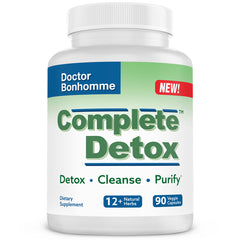
Longevity Complete Detox (Day Formula)
- Size
- 90 capsules · 30 servings
- Directions
- 3 capsules once daily
- Ingredients
- A botanical and fiber based formula containing ingredients including psyllium husk, green tea extract, dandelion extract and acai.
- Routine
- Designed for a simple daytime wellness routine.
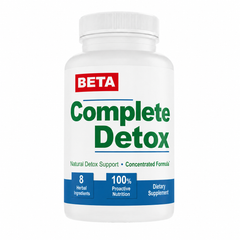
Longevity Complete Detox [BETA]
- Size
- 21 capsules · 7 servings
- Directions
- 3 capsules once daily
- Ingredients
- Contains botanical ingredients including milk thistle, psyllium, ginger, turmeric, acai and aloe vera.
- Routine
- Designed as a defined 7 day wellness routine.


