


Key takeaways
- Your body clock resets slowly after a long flight, about 1.5 hours a day after flying west and 1 hour a day after flying east. Well-timed light is the best tool you have.
- Cabin air is very dry, long hours in a seat leave you stiff, and meals drift off schedule. Each of these nudges your everyday rhythms.
- Your gut keeps a daily schedule that picks up when you wake and after you eat. When travel moves those times, many people notice their bowel habits change too.
- A good reset adds one small focus a day: light and sleep timing, water, regular meals, fiber-rich food, movement and a calmer evening.
- By day 7, aim for a routine you can keep: a steady wake time, regular meals, water within reach and daily movement.
Why the first week home can feel off
Fly home from Paris to New York and your watch jumps back six hours in one afternoon. Your body clock moves far more slowly. After a flight west, it shifts about 1.5 hours a day, so it needs about four days to catch up. Fly six time zones east and it shifts only about 1 hour a day, which stretches the catch-up to nearly a week.[1]
The body clock is only part of it. A travel day can mean dry cabin air, hours in a seat, meals at odd times and much less water than usual. Many people also find their bathroom routine goes off track.
You can feel the same way without boarding a plane. A house move or a week caring for a relative can scramble your days just as thoroughly. This guide explains what changes and why, then walks you through a simple plan for Day 1 to Day 7. If a stretch of holidays and celebrations threw you off instead, our guide to getting back to your routine after holidays covers that side.
Your body clock runs on light
Deep in your brain, a master clock keeps your body on a cycle of roughly 24 hours. It tells you when to feel sleepy or alert, and it helps time hunger and digestion. Light reaching your eyes is the main signal that keeps it set to local time. The Aerospace Medical Association, a professional group for flight medicine, calls sunlight the most powerful tool for adapting to a new time zone.[2]
When you cross time zones, local time and body time disagree. Your clock's natural cycle runs a little longer than 24 hours, so pushing it later is easier than pulling it earlier. That is why flying east usually feels harder than flying west.[1]
The CDC's travel health guide, known as the Yellow Book, uses light timing as a main tool for adjusting:[1]
| If you flew | Get bright light | Keep light low |
|---|---|---|
| East (your clock needs to move earlier) | Early morning | Evening |
| West (your clock needs to move later) | Evening | Early morning |
For very long trips, the best timing also depends on how many time zones you crossed. The same chapter notes that online jet lag calculators can tailor it to your route. It adds a few more tips:[1]
- Stay awake through the local day so you are ready to sleep at a local bedtime.
- Keep naps to about 20 to 30 minutes. Longer naps can make nighttime sleep harder.
- Your body takes about 5 hours to clear half a dose of caffeine, so stop about 6 hours before bed.
- Alcohol may help you drift off, but it leads to more broken sleep.
- Stay well hydrated, since running low on fluid can make the physical side of jet lag feel worse.
Dry air, long sitting and too little water
Airplane cabins are dry. A 2026 National Academies report gathered cabin measurements from many studies. Average humidity during flight was often 20% or lower, and one set of 80 flights had a median of about 10%. Humidity was usually highest at boarding and lower once the plane was in the air.[3]
The Aerospace Medical Association says this dry air can cause mild discomfort, mostly dry skin and irritated eyes in sensitive people. It suggests drinking about 8 ounces of water for each hour you fly.[2] On a busy travel day, it's easy to go hours without a drink at all.
Sitting is the other big one. Hours in a seat leave muscles stiff, and the same group suggests stretching and moving your feet and ankles regularly while you sit.[2]
Federal activity guidelines put "move more and sit less" first in their advice for adults. They also note that any amount of activity has some health benefit.[4] After a trip, a walk does two jobs at once. It gets your legs moving, and if you take it in daylight, it sends your body clock a strong time cue.
Meals on the move
Travel moves mealtimes around. Breakfast might happen at 4 a.m. body time, lunch might be a bag of pretzels, and dinner might land at what feels like midnight.
Food choices shift too. Airport counters, gas stations and restaurant menus make it easy to go a few days with few vegetables, beans, fruit or whole grains.
The newest Dietary Guidelines for Americans came out in January 2026. For a typical 2,000-calorie day, they suggest about 3 servings of vegetables and 2 of fruit. They also favor fiber-rich whole grains and point to water or other unsweetened drinks as your main beverages.[5]
If you ate very little fiber on the road, bring it back step by step. Our guide to adding fiber gradually explains why a slower ramp feels better.
Why your bathroom routine changes too
Your gut keeps time as well. In a small study of 25 healthy adults who wore pressure sensors in the colon for a full day, colon activity dropped during the night. Waking up tripled it, and meals roughly doubled it.[6]
That helps explain why many people have their most regular bathroom visit in the morning, often after breakfast. Our guide to why mornings are different covers more of this.
Travel moves both of those triggers. When you wake at a new hour and eat at odd times, the daily pattern your gut expects moves too. Dry air, less water, fewer vegetables and more sitting may add to the effect. Both the CDC and the Aerospace Medical Association list digestive upset among the symptoms of jet lag.[1][2]
There isn't much research on how often this happens. A Swiss survey from 1978 questioned about 10,500 travelers on their flights home from tropical trips. About 1 in 7 said their bowels had slowed down while they were away.[7]
That survey is nearly 50 years old and relied on memory, and a trip to the tropics differs from a weekend in another state. The plan below focuses on the everyday factors you can control.
Your 7 day reset, day by day
Each day adds one focus and keeps the ones before it. If a day goes sideways, pick up where you left off. If you can, start before you leave. In the last 2 or 3 days of a trip, shift your bedtime about an hour a day toward home time.[1]
| Day | Main focus | One small step |
|---|---|---|
| 1 | Light and a local bedtime | Get daylight at the right time and stay up until a normal bedtime |
| 2 | Water | Keep a filled bottle in sight and drink a glass with each meal |
| 3 | Regular mealtimes | Eat breakfast at the same time each day and leave unhurried time after it |
| 4 | Fiber-rich meals | Add one serving of vegetables, beans, fruit or whole grains to each meal |
| 5 | Movement | Take a 10 to 20 minute walk, outdoors if you can |
| 6 | A calmer evening | Stop caffeine about 6 hours before bed and keep evening light low |
| 7 | The week ahead | Stock the kitchen, prep a few meals and choose the habits to keep |
On Day 1, focus on light and a local bedtime. If you flew east to get home, get outside in the morning and keep your evening dim. If you flew west, go easy on bright early light and get outside in the late afternoon instead.[1] Pick a wake time and keep it all week.
The CDC suggests going to bed and getting up at the same time every day, and adults need at least 7 hours of sleep.[8] If you use a short supplement routine, follow its label and take it at the same time each day. Day 1 is a natural first morning for it.
On Day 2, add water. Put a filled bottle where you'll see it, like your desk or the kitchen counter, and drink a glass with each meal. Our guide to how much fluid you need has the numbers. If you take psyllium or are adding fiber, water matters even more, as our guide to hydration when increasing fiber explains.
On Day 3, settle into regular mealtimes. Eat breakfast at about the same time each day. Since waking and eating both spark colon activity,[6] a steady breakfast gives your gut a reliable morning cue. Leave 10 or 15 unhurried minutes afterward instead of rushing out the door.
On Day 4, add one fiber-rich food to each meal. Oatmeal with berries, beans in a soup or an apple with lunch all count. Our guide to your daily fiber number shows how far most people fall short.
On Day 5, take a 10 to 20 minute walk, ideally in daylight and ideally after a meal. Over time, work toward the federal goal of at least 150 minutes of moderate activity a week, such as brisk walking.[4] Stretch your calves and hips if long sitting left you stiff.
On Day 6, work on a calmer evening. Set a caffeine cutoff about 6 hours before bed.[1] The CDC also suggests skipping large meals and alcohol close to bedtime and keeping your bedroom quiet and cool.[8]
On Day 7, look at the week ahead. Restock the fridge with easy produce and a few ready proteins, and set aside time for twenty minutes of batch prep. Then choose two or three habits from this week to keep.
Where a short supplement routine fits
Some people like a clear marker for a reset week, something that starts on Day 1 and finishes on Day 7. A short supplement routine can be that marker. Picture the bottle on the kitchen counter beside a filled water glass, and the week circled on the calendar by the fridge.
A few habits make a short routine easy to fold into the plan above:
- Read the label before Day 1. Check the serving, the time of day, the number of days it runs and the cautions. Our guide to reading a detox supplement label walks through each part.
- Tie it to a step you're already rebuilding. If the label ties it to a meal, Day 3's steady breakfast time makes an easy anchor.
- Pour the water first. A full glass with each dose also counts toward Day 2's goal, and it matters most when a formula contains fiber such as psyllium.
- Mark each day off on the calendar. Seven checks in a row make the plan easy to see and easy to keep.
- Plan for Day 8. A short routine has a set finish, and the habits you picked on Day 7 carry on after it.
The routine sits alongside the plan. Daylight, water, fiber-rich meals, movement and sleep remain the foundation of the week.
Before you start
- Follow the label, including the time of day and the number of days it lists.
- If a formula contains psyllium, take each dose with a full glass of water. Psyllium swells as it absorbs liquid, and MedlinePlus advises drinking at least 8 ounces with it. If you've ever had trouble swallowing, check with your doctor first.[9] Add fiber gradually, as Day 4 suggests.
- Fiber can change how some medicines are absorbed. MedlinePlus advises keeping certain medicines at least 3 hours apart from psyllium, so ask your pharmacist how to time yours.[9]
- Tell your clinician and pharmacist about every supplement you take, so they can see your whole routine.
- Check with your doctor or pharmacist first if you take prescription medicine, are pregnant or nursing, or have a health condition.
When to see a clinician
Some changes after a trip deserve a professional's eyes. Talk with a health care professional promptly if you notice:
- pain, swelling or warmth in one leg during or after a long trip
- sudden shortness of breath or chest pain (call 911)
- loose or watery stools that last more than a few days or come with a fever
- blood in your stool, or black, tarry stools
- a change in bowel habits that lasts more than a couple of weeks after you get home
- belly pain that won't go away, or vomiting
- any new symptom that started after a new medicine or supplement
Frequently asked questions
How long does jet lag last?
It depends on how many time zones you crossed and which way you flew. CDC guidance says the body clock shifts about 1 hour a day after flying east and about 1.5 hours a day after flying west.[1] Six time zones east can take close to a week.
Should I nap on my first day home?
A short nap of 20 to 30 minutes can help you stay alert. Longer naps can make it harder to fall asleep at your new bedtime.[1]
Is it normal for my bathroom routine to change when I travel?
It's a common complaint. Your gut's daily rhythm follows your wake time and your meals, so it moves when they do.[6] Regular breakfasts, water, fiber-rich foods and walks are the everyday basics. If a change lasts more than a couple of weeks, or comes with any of the signs listed above, check in with a clinician.
Can I start the reset while I'm still traveling?
Yes. In the last 2 or 3 days of a trip, you can shift your bedtime about an hour a day toward home time.[1] If you use a short supplement routine, your first full morning home is often a simpler start, since breakfast time is more predictable and a full glass of water is easy to reach.
What should I do after day 7?
Keep the habits that felt good. A steady wake time, water with meals, fiber-rich foods and a daily walk carry the reset forward. Our guide to anchor habits shows how to make a new step stick. To see how a daily routine differs from a defined week, read our guide to daily detox support versus a 7 day reset.
The short version
After a long trip, your body clock shifts only about 1 to 1.5 hours a day. Dry cabin air, long sitting and odd mealtimes add to the jolt. Your gut also runs on a daily schedule that moves with your wake time and meals. A 7 day reset gives each day one focus, from light and a local bedtime on Day 1 to a plan for the week ahead on Day 7. Water, steady breakfasts, fiber-rich meals, a daily walk and a calmer evening fill the days between. If you like a clear marker, a short supplement routine can mark the start and finish of that week, and your daily habits carry it forward from there.
This article is for general education. It is not medical advice, and nothing here is intended to diagnose, treat, cure or prevent any disease. If you take prescription medicines, are pregnant or breastfeeding, or have a medical condition, talk with your doctor or pharmacist before starting any supplement, and never stop or change a prescribed medicine on the basis of general information.
Sources
- Riedy SM, Williams SG. Jet lag disorder. In: CDC Yellow Book 2026: Health Information for International Travel. Centers for Disease Control and Prevention; 2025. https://www.cdc.gov/yellow-book/hcp/travel-air-sea/jet-lag-disorder.html
- Aerospace Medical Association. Health Tips for Airline Travel. https://asma.org/asma/media/asma/Travel-Publications/HEALTH-TIPS-FOR-AIRLINE-TRAVEL-Trifold-2013.pdf
- National Academies of Sciences, Engineering, and Medicine. Health and Safety Impacts of Aircraft Cabin Temperatures. Appendix B: Supplemental Data and Analyses. The National Academies Press; 2026. https://www.nationalacademies.org/read/29472/chapter/10
- Office of Disease Prevention and Health Promotion. Top 10 Things to Know About the Second Edition of the Physical Activity Guidelines for Americans. https://odphp.health.gov/our-work/nutrition-physical-activity/physical-activity-guidelines/current-guidelines/top-10-things-know
- U.S. Department of Health and Human Services and U.S. Department of Agriculture. Dietary Guidelines for Americans, 2025-2030. January 2026. https://cdn.realfood.gov/DGA.pdf
- Rao SS, Sadeghi P, Beaty J, Kavlock R, Ackerson K. Ambulatory 24-h colonic manometry in healthy humans. Am J Physiol Gastrointest Liver Physiol. 2001;280(4):G629-G639. https://pubmed.ncbi.nlm.nih.gov/11254489/
- Steffen R, van der Linde F, Meyer HE. Risk of disease in 10,500 travelers to tropical countries and 1,300 tourists to North America [in German]. Schweiz Med Wochenschr. 1978;108(39):1485-1495. https://pubmed.ncbi.nlm.nih.gov/705301/
- Centers for Disease Control and Prevention. About Sleep. https://www.cdc.gov/sleep/about/index.html
- MedlinePlus. Psyllium. National Library of Medicine. https://medlineplus.gov/druginfo/meds/a601104.html
Product information
Facts from the product pages. Before using any supplement, read the full label, directions and cautions on the product page, and check with your doctor or pharmacist if you take medicines, are pregnant or nursing, or have a health condition.
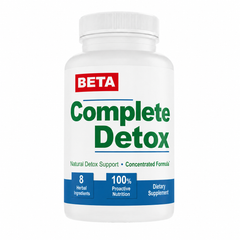
Longevity Complete Detox [BETA]
- Size
- 21 capsules · 7 servings
- Directions
- 3 capsules once daily
- Ingredients
- Contains botanical ingredients including milk thistle, psyllium, ginger, turmeric, acai and aloe vera.
- Routine
- Designed as a defined 7 day wellness routine.