


Key takeaways
- Adults need 7 or more hours of sleep a night. Going to bed and waking up at the same times each day helps you get there.
- Many people feel more comfortable leaving 2 to 3 hours between dinner and bed. Your stomach empties more slowly in the evening than in the morning.
- Caffeine can cut into your sleep even when you have it 6 hours before bed. Alcohol may help you nod off, but it tends to break up the second half of the night.
- Bright light and screens in the evening can push your body clock later. A 30 to 60 minute wind-down with dim lights tells your body the day is ending.
- GABA, 5-HTP, valerian and wild jujube have each been studied for relaxation and sleep. Two are traditional plants, and two are compounds your body already makes. Each comes with directions and safety notes worth reading.
The hours before bed
In a Boston sleep lab, 12 adults spent the four hours before bed reading. On five nights they read on a light-emitting tablet, and on five nights they read a printed book. On tablet nights they took longer to fall asleep and felt less sleepy at bedtime. Their body clocks shifted more than an hour later, and they were groggier the next morning.[1]
The volunteers read for the same hours and went to bed at the same time. The main difference was the light shining from the screen.
By the time you finish dinner, your body is already shifting toward rest. This guide walks through a calm evening, from dinner to lights out, and what researchers have looked at in four ingredients that often appear in evening formulas.
How much sleep you need
The CDC recommends 7 or more hours of sleep a night for adults ages 18 to 60. The range is 7 to 9 hours for ages 61 to 64, and 7 to 8 hours from age 65 on.[2]
Timing matters too. The CDC's first sleep tip is to go to bed and wake up at the same times each day.[2] Your body runs on an internal clock, and a steady schedule gives it a reliable signal.
Count back from your wake-up time. If your alarm is set for 6:30 a.m., aim to be in bed by about 11 p.m.
Dinner: give it some room
Your stomach works through a meal in stages. In a study of 123 healthy volunteers, about a quarter of a light test meal was still in the stomach two hours after eating. By four hours, almost all of it had moved on.[3] A typical dinner is larger and richer than that test meal, so it may take longer.
The time of day matters too. Researchers fed 16 healthy men the same solid meal at 8 a.m. and at 8 p.m. The evening meal took about half again as long to half-empty from the stomach.[4] Your digestive system slows as the day winds down.
That is why many people feel more comfortable finishing dinner 2 to 3 hours before lying down. The CDC's sleep tips include avoiding large meals close to bedtime.[2]
In a study of 52 healthy adults, those who ate more of their food late in the evening tended to sleep less well. The link was clearest in women. That study tracked habits rather than testing a change, so it can't show cause and effect.[5]
In practice, that means a moderate dinner, a lighter one when it runs late, and a small snack if you get hungry before bed. Our guide to how a meal moves through you hour by hour has the full timeline. Our guide to what happens to digestion overnight picks up the story after you fall asleep.
Caffeine and alcohol: watch the clock
Caffeine's effects can last well into the evening. In a home study of 12 healthy sleepers, researchers gave 400 milligrams of caffeine at bedtime, 3 hours before bed or 6 hours before. Even the dose taken 6 hours before bed cut total sleep by more than an hour on a sleep monitor. The volunteers' own reports suggested they didn't notice.[6]
That dose is roughly four cups of brewed coffee. A 2023 review of 24 studies counted about 107 milligrams in a cup of a little over 8 ounces. Across those studies, caffeine cut total sleep by about 45 minutes on average.
The authors suggested finishing a cup of coffee at least 8.8 hours before bed. For a typical pre-workout serving, with about twice the caffeine, they suggested 13.2 hours.[7]
For a 10:30 p.m. bedtime, that puts your last cup at about 1:40 p.m. Tea, cola and energy drinks count too.
Alcohol works differently. A review of studies in healthy volunteers found that alcohol helped people fall asleep faster and sleep more deeply early in the night. That held at every dose tested.
In the second half of the night, sleep became more broken, and dream sleep (REM sleep) started later. At moderate and higher doses, it also made up less of the night.[8]
If you drink in the evening, have it earlier and keep it modest. The CDC lists alcohol among the things to avoid before bedtime.[2]
Light and screens
Your body clock reads light to tell the time. In the evening, your brain begins releasing melatonin, a hormone that helps prepare you for sleep. Even ordinary room light can push that signal later.[9]
In one study, 116 healthy young adults spent the hours before bed in either ordinary room light or dim light. Compared with dim light, room light delayed the evening rise of melatonin in 99% of participants. It also shortened the nightly stretch of melatonin by about 90 minutes.[9]
Simple ways to dim your evening:
- After dinner, switch from overhead lights to lamps.
- Read on paper, or listen to music or an audiobook instead of scrolling.
- Turn off devices at least 30 minutes before bed, as the CDC suggests.[2]
- Charge your phone outside the bedroom.
Build a wind-down window
A wind-down window is a set stretch of time, often 30 to 60 minutes, that closes out your day. It helps to keep the steps about the same each night so they become a cue. Our guide to anchor habits shows how to attach a new step to one you already do.
A warm shower or bath is one step with research behind it. A review of 17 studies looked at bathing in water around 104 to 108.5 degrees Fahrenheit. When people bathed 1 to 2 hours before bed, even for just 10 minutes, they fell asleep faster. They also rated their sleep as better.
The authors think the warm water helps your body shed heat afterward, which is part of how you settle into sleep. They noted that research on the best timing is still limited.[10]
Other quiet steps that fit well:
- Tidy the kitchen and set out what you need for the morning.
- Write tomorrow's to-do list on paper so it is out of your head.
- Do some gentle stretching or slow breathing.
On a hectic night, keep one or two steps and let the rest go. Our guide to keeping a routine through a bad week explains why a small version still counts.
Set up your bedroom for rest
The CDC suggests a bedroom that is quiet, relaxing and cool.[2] Darkness matters too. In the light study above, room light during the usual hours of sleep cut melatonin by more than half in most trials.[9]
- Use blackout curtains or an eye mask, and cover glowing chargers and clocks.
- Use a fan or steady background sound if your street is noisy.
- Keep the room on the cool side and match your bedding to it.
Putting it together: a sample evening
| Before bed | Step | Why it helps |
|---|---|---|
| About 9 hours | Last cup of coffee | Caffeine can still trim sleep hours later [7] |
| 2 to 3 hours | Finish dinner | Gives your stomach time to empty [3] |
| 1 to 2 hours | Warm shower or bath | Linked to falling asleep faster [10] |
| 30 to 60 minutes | Dim the lights, screens off | Cuts light that can delay melatonin [2][9] |
| Lights out | Cool, dark, quiet room | Follows CDC tips and light research [2][9] |
Shift the times to fit your day. Our guide to routines for shift work covers nights and rotating schedules.
Four evening ingredients: where they come from
GABA, 5-HTP, valerian and wild jujube often appear in evening formulas. Here is where each one comes from and what researchers have looked at.
5-HTP
5-HTP (5-hydroxytryptophan) is a step in a chain your body already runs. You make it from tryptophan, an amino acid in protein foods. Your body turns 5-HTP into serotonin, and serotonin into melatonin, the hormone that helps set your sleep and wake cycle. Most 5-HTP in supplements comes from the seeds of an African plant, Griffonia simplicifolia.[11]
Small amounts turn up elsewhere in nature too. Researchers have found 5-HTP in extracts of some edible mushrooms, such as porcini.[11]
Early studies in healthy volunteers looked at 5-HTP and the stages of sleep. They compared it with a placebo at different doses and measured REM sleep, the dreaming stage.[11] Some people notice stomach upset, such as nausea, mostly at higher amounts. That is one more reason to stay with the serving on the label.[11]
Valerian
Valerian (Valeriana officinalis) root extract is widely used at bedtime.[12] The plant is native to Europe and Asia, and it now grows in North America too. The roots and rhizomes (underground stems) are the parts used, and people have taken it since the times of early Greece and Rome.[13]
A 2006 review gathered 16 placebo-controlled trials with 1,093 people, many of whom had ongoing sleep complaints. The trials compared valerian root extracts with a placebo and tracked sleep quality, using a range of doses and preparations.[12]
NCCIH, the National Center for Complementary and Integrative Health, lists the side effects some people have reported. They include headache, stomach upset, mental dullness and vivid dreams.[13]
Wild jujube
Wild jujube, also called sour jujube (Ziziphus jujuba var. spinosa), has been used in traditional Chinese practice for thousands of years. Its seed is a well-documented traditional herb, used on its own or alongside other herbs.[14]
The plant has long served as both food and traditional herb. Beyond the seed, its fruit, leaves and roots are rich in nutrients and plant compounds.[14]
Researchers have identified hundreds of plant compounds in sour jujube. Laboratory and animal studies of the seed have focused on how these compounds act on the body's GABA and serotonin signaling.[14]
One trial in Iran enrolled 106 women ages 45 to 65 who reported poor sleep. For 3 weeks, they took 250 milligrams of powdered jujube seed (the report did not name the variety) or a placebo twice a day. Researchers tracked their sleep quality scores.[15]
GABA
GABA (gamma-aminobutyric acid) is the main calming messenger in your brain and nervous system. It also occurs naturally in foods such as tea, tomatoes, soybeans, sprouted rice and some fermented foods. Lactic acid bacteria can make it during fermentation.[16]
A 2020 review gathered 14 placebo-controlled human studies of GABA taken by mouth, looking at stress and sleep. Three of them, all in adults who reported poor sleep, measured sleep with monitoring equipment. Those studies used 100 to 300 milligrams a day for 1 to 4 weeks.[16]
GABA is also present in the network of nerves that runs through your gut. Researchers are exploring how GABA from food and supplements interacts with the gut-brain axis, the two-way line of signals between your digestive tract and your brain.[16]
Where an evening supplement fits
The habits above set the stage for a restful evening. A supplement can sit alongside them, and your wind-down window gives it a natural spot.
Picture the start of your wind-down. The kitchen is tidy, the lamp is low, and the bottle sits beside your toothbrush with a glass of water on the sink. Taking it at the same point each night makes it one more step in the routine you've built, alongside an early last coffee and a cool, dark room. An evening formula built around botanicals traditionally taken at night fits this window.
Before you add one, spend a few minutes with the label. Look for these details:
- The full ingredient list. It also shows whether the formula includes melatonin.
- How the formula is listed. Some labels give an amount for each ingredient. Others list botanicals in a proprietary blend with a total weight, a common and legal format. Our guide to reading a supplement label shows how to read one.
- Directions and cautions. Check when to take it, and look for notes on age limits, allergens and medicines.
If you also take a daytime supplement, our guide to choosing a morning or evening routine can help you plan both.
Before you start
- Read the full label and follow the directions, including any age limits.
- Check with your doctor first if you are pregnant or nursing, have a health condition or take any medicine.
- Your body turns 5-HTP into serotonin, and too much serotonin activity can cause serious reactions.[11] If you take an antidepressant, a sedative, a sleep aid or any other product that affects serotonin or sleep, ask your doctor before using 5-HTP.
- Don't combine valerian with alcohol or sedatives.[13] Take evening formulas before bed, as the label directs, and don't drive or use machinery if you feel drowsy.
- Some formulas include oyster or other shellfish extracts. Check the allergen information if you are allergic to shellfish.
- Ask your pharmacist to look over the full ingredient list alongside any medicines you take, and keep a list of every supplement you use so your doctor can see your whole routine.
When to see a clinician
Some changes deserve a professional's eyes. Talk with a health care professional if you notice:
- trouble falling or staying asleep on most nights for several weeks
- loud snoring, gasping or pauses in breathing that someone else notices
- strong sleepiness during the day, or nodding off while driving
- burning in the chest, a sour taste or trouble swallowing that keeps coming back
- changes in mood or worry that last more than two weeks
- any new symptom that started after a new medicine or supplement
Frequently asked questions
How long should I wait between dinner and bed?
Many people find 2 to 3 hours comfortable. In studies of healthy volunteers, most of a light meal left the stomach within about four hours. Evening meals moved more slowly than morning ones.[3][4] If your schedule runs late, keep dinner lighter.
Will a glass of wine help me sleep?
It may help you fall asleep faster. Alcohol also tends to break up sleep in the second half of the night and delays dream sleep.[8] If you drink, have it earlier in the evening and keep it modest.
Do evening supplements contain melatonin?
Some do, so check the ingredient list. Melatonin is also a hormone your brain releases on its own in the evening, and even ordinary room light can push that signal later.[9] If you already use melatonin or another sleep product, check with your doctor or pharmacist before adding a new supplement.
Can a supplement replace these habits?
No. A supplement is meant to complement your routine. Dinner timing, light, caffeine and a steady bedtime are the foundation, and a supplement works alongside them.
The short version
A restful night starts in the evening. Aim for 7 or more hours of sleep on a steady schedule. Give dinner 2 to 3 hours before you lie down, finish your coffee by early afternoon and keep alcohol modest and early. Dim the lights, put screens away at least 30 minutes before bed and keep your bedroom cool, dark and quiet. The four ingredients covered here are traditional plants or compounds your body already makes, and each has safety notes worth reading. A supplement can fit into this routine as one more calm step alongside these habits.
This article is for general education. It is not medical advice, and nothing here is intended to diagnose, treat, cure or prevent any disease. If you take prescription medicines, are pregnant or breastfeeding, or have a medical condition, talk with your doctor or pharmacist before starting any supplement, and never stop or change a prescribed medicine on the basis of general information.
Sources
- Chang AM, Aeschbach D, Duffy JF, Czeisler CA. Evening use of light-emitting eReaders negatively affects sleep, circadian timing, and next-morning alertness. Proc Natl Acad Sci USA. 2015;112(4):1232-1237. https://pmc.ncbi.nlm.nih.gov/articles/PMC4313820/
- Centers for Disease Control and Prevention. About Sleep. https://www.cdc.gov/sleep/about/index.html
- Tougas G, Eaker EY, Abell TL, et al. Assessment of gastric emptying using a low fat meal: establishment of international control values. Am J Gastroenterol. 2000;95(6):1456-1462. https://pubmed.ncbi.nlm.nih.gov/10894578/
- Goo RH, Moore JG, Greenberg E, Alazraki NP. Circadian variation in gastric emptying of meals in humans. Gastroenterology. 1987;93(3):515-518. https://pubmed.ncbi.nlm.nih.gov/3609660/
- Crispim CA, Zimberg IZ, dos Reis BG, et al. Relationship between food intake and sleep pattern in healthy individuals. J Clin Sleep Med. 2011;7(6):659-664. https://pmc.ncbi.nlm.nih.gov/articles/PMC3227713/
- Drake C, Roehrs T, Shambroom J, Roth T. Caffeine effects on sleep taken 0, 3, or 6 hours before going to bed. J Clin Sleep Med. 2013;9(11):1195-1200. https://pmc.ncbi.nlm.nih.gov/articles/PMC3805807/
- Gardiner C, Weakley J, Burke LM, et al. The effect of caffeine on subsequent sleep: a systematic review and meta-analysis. Sleep Med Rev. 2023;69:101764. https://pubmed.ncbi.nlm.nih.gov/36870101/
- Ebrahim IO, Shapiro CM, Williams AJ, Fenwick PB. Alcohol and sleep I: effects on normal sleep. Alcohol Clin Exp Res. 2013;37(4):539-549. https://pubmed.ncbi.nlm.nih.gov/23347102/
- Gooley JJ, Chamberlain K, Smith KA, et al. Exposure to room light before bedtime suppresses melatonin onset and shortens melatonin duration in humans. J Clin Endocrinol Metab. 2011;96(3):E463-E472. https://pmc.ncbi.nlm.nih.gov/articles/PMC3047226/
- Haghayegh S, Khoshnevis S, Smolensky MH, Diller KR, Castriotta RJ. Before-bedtime passive body heating by warm shower or bath to improve sleep: a systematic review and meta-analysis. Sleep Med Rev. 2019;46:124-135. https://pubmed.ncbi.nlm.nih.gov/31102877/
- Maffei ME. 5-Hydroxytryptophan (5-HTP): natural occurrence, analysis, biosynthesis, biotechnology, physiology and toxicology. Int J Mol Sci. 2020;22(1):181. https://pmc.ncbi.nlm.nih.gov/articles/PMC7796270/
- Bent S, Padula A, Moore D, Patterson M, Mehling W. Valerian for sleep: a systematic review and meta-analysis. Am J Med. 2006;119(12):1005-1012. https://pmc.ncbi.nlm.nih.gov/articles/PMC4394901/
- National Center for Complementary and Integrative Health. Valerian. https://www.nccih.nih.gov/health/valerian
- Zheng X, Fu W, Lin X, et al. Ziziphus jujuba var. spinosa: a systematic review of phytochemistry, pharmacology, and sustainable resource utilization of its multiple plant parts. J Pharm Pharmacol. 2026;78(1). https://doi.org/10.1093/jpp/rgaf133
- Mahmoudi R, Ansari S, Haghighizadeh MH, Maram NS, Montazeri S. Investigation the effect of jujube seed capsule on sleep quality of postmenopausal women: a double-blind randomized clinical trial. Biomedicine (Taipei). 2020;10(4):42-48. https://pmc.ncbi.nlm.nih.gov/articles/PMC7735973/
- Hepsomali P, Groeger JA, Nishihira J, Scholey A. Effects of oral gamma-aminobutyric acid (GABA) administration on stress and sleep in humans: a systematic review. Front Neurosci. 2020;14:923. https://pmc.ncbi.nlm.nih.gov/articles/PMC7527439/
Product information
Facts from the product pages. Before using any supplement, read the full label, directions and cautions on the product page, and check with your doctor or pharmacist if you take medicines, are pregnant or nursing, or have a health condition.
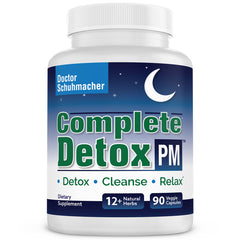
Longevity Complete Detox PM
- Size
- 90 capsules · 30 night supply
- Directions
- 3 capsules once daily, preferably about 30 minutes before sleep
- Ingredients
- Contains botanical extracts together with GABA and 5-HTP.
- Routine
- Designed as an evening supplement routine.


