


Key takeaways
- Holidays change many habits at once: later nights, richer meals, more drinks, fewer walks and often a trip to see family.
- People are more likely to start on goals at the beginning of a new week, month or year, and right after a holiday. Researchers call this the fresh start effect.
- That burst of motivation after a holiday fades quickly, so small steps taken in the first few days count for a lot.
- Small, steady steps are easier to keep than an all-or-nothing plan. In habit research, missing an occasional day did not derail progress, so a slip is no reason to start over.
- A gentle first week covers sleep, water, fiber and vegetables, movement and a couple of alcohol-free days, with nothing extreme required.
The first workday back is a natural starting line
Researchers once tracked when people signed personal goal contracts on a goal-setting website. On the first workday after a federal holiday, people were about 55% more likely to sign one than on a typical day. At the start of a new year, the jump was about 145%.[1]
The same team looked at gym records for nearly 12,000 university students. On the first day back from a school break, students were about a quarter more likely to visit the gym.[1] Researchers named this pattern the fresh start effect.
You may have felt it yourself. Once the decorations come down and the leftovers run out, a plain Tuesday can feel like a good day to get back on track. This guide explains what celebrations do to your routine, why fresh starts work, and how to use the first week back without going to extremes.
What a stretch of celebrations does to your routine
Holidays rarely change just one habit at a time. Late nights often come first. When you stay up for parties and sleep in the next morning, your sleep schedule drifts away from your usual workday rhythm. Scientists use the term social jet lag for the gap between the sleep timing your body prefers and the timing your calendar demands.[2]
In the 2006 survey of 501 people that described social jet lag, those with later body clocks had the biggest gap. They built up a sleep debt on workdays and caught up on days off.[2] After a week of late nights, the first early alarm can feel a bit like flying east.
Drinks often go along with the late nights. A review of the research in healthy volunteers found that alcohol, at every amount studied, helped people fall asleep faster. It also led to more disrupted sleep in the second half of the night.[3] So a nightcap can leave you feeling less rested even after a full night in bed.
Meals change too. Holiday tables lean toward rich dishes, sweets and party snacks, while vegetables often play a supporting role. Even in ordinary weeks, most adults fall short on vegetables. In a 2019 national survey, only about 1 in 10 American adults ate as many as the 2020-2025 Dietary Guidelines recommended at the time.[4]
Movement slips as well. Travel, houseguests and full calendars can push walks and workouts aside for days at a time. Did your celebrations include a long flight or drive to see family? Our guide to a 7 day reset after travel covers the body clock side of that trip.
Why fresh starts work
Why do dates like a new year, a birthday or the end of a holiday feel motivating? The researchers proposed two main explanations. Both start from the idea that these landmarks divide time into chapters. The habits from the holidays then feel like they belong to the last one.[1]
- A new chapter puts some distance between you and your recent past. That helps you see yourself as someone who can do things differently now.
- Landmarks interrupt the day-to-day rush. That gives you a moment to think about the bigger picture, including what you want your days to look like.
The research has limits worth knowing. It used real-world records, such as gym visits and goal sign-ups. Those records show when people start, but the studies did not directly test why.
The work also tells us more about starting than about sticking with it. In the researchers' data, the bump after a federal holiday faded quickly. Bumps tied to a new week, month or year wore off more slowly.[1] That is a good reason to use the first few days back while the energy is there.
The case for small restarts
All-or-nothing plans have a weak spot. One missed workout or one big dinner can make the whole plan feel broken. Then it's tempting to wait for the next landmark to try again.
Research on habit building points another way. Habit researchers at University College London summarized a well-known study of how habits form. New daily habits took an average of about 66 days to feel automatic, with wide variation from person to person. Missing the occasional day did not seriously set people back, and progress picked up again after a single miss.[5]
The same researchers suggest choosing small, manageable changes and doing them at the same time and place each day, such as after lunch.[5]
How you frame a goal matters too. A Swedish study followed 1,066 adults who made New Year's resolutions. A year later, 55% of those who answered the follow-up considered themselves successful.
People who aimed to start or add something did better than people who aimed to quit or avoid something, about 59% versus 47%.[6] Because people chose their own goals, that comparison shows a pattern and can't prove cause. The study also tested goal-setting help. The group that got a moderate amount of support did better than both the comparison group and the group that got the most.[6]
That suggests a simple rule for the first week back. Frame each step as something you'll add, like a walk after dinner or sparkling water with your meal. Our guide to keeping a routine alive through a bad week shows how a small version of a habit carries you through busy stretches.
A gentle plan for your first week back
You don't need to change everything on day one. Pick a small version of each habit below, and move to the fuller version once it feels easy.
| Habit | Small version | Fuller version |
|---|---|---|
| Sleep | Set one wake time and keep it all week | Add a regular bedtime that allows 7 or more hours |
| Water | Drink a glass with each meal | Keep a filled bottle in sight all day |
| Fiber and vegetables | Add one vegetable to lunch or dinner | Aim for vegetables or fruit at every meal |
| Movement | Take a 10 minute walk | Build toward 150 minutes a week |
| Alcohol | Choose two alcohol-free days | Set a weekly limit and keep a few more days alcohol-free |
Start with sleep. The CDC suggests going to bed and getting up at the same time every day. It recommends at least 7 hours a night for adults.[7]
The CDC also suggests avoiding caffeine in the afternoon and evening, and skipping large meals and alcohol before bed.[7] A steady wake time is often the easiest place to begin, since it anchors the rest of your day.
Bring back water. The newest Dietary Guidelines for Americans, released in January 2026, point to water and other unsweetened drinks as your main beverages.[8] A glass with each meal is an easy starting point. Our guide to how much fluid you need has the numbers.
Rebuild your plate around fiber and vegetables. The same guidelines suggest about 3 servings of vegetables and 2 of fruit a day, adjusted to your needs, along with fiber-rich whole grains.[8] Soups, stir-fries and sheet-pan vegetables make good use of leftover holiday produce. Add fiber gradually, as our guide to adding fiber step by step explains.
Move a little every day. Federal guidelines recommend at least 150 minutes of moderate activity a week, such as brisk walking. They also note that any amount of activity has some benefit, and that some benefits, including better sleep quality, show up right away.[9] A short walk after dinner counts, and so do a few trips up and down the stairs when the weather keeps you in.
Plan a few alcohol-free days. The 2025-2030 Dietary Guidelines advise adults to drink less alcohol for better overall health. They add that some people should avoid it completely, including anyone who is pregnant or takes a medicine that interacts with alcohol.[8]
The alcohol research institute at the National Institutes of Health (NIAAA) suggests deciding ahead of time how many days a week you'll drink. It also says it's a good idea to have some days when you don't drink at all.[10] To keep the goal about adding something, pick what you'll pour instead, such as sparkling water with lime or a mug of herbal tea.
Then put your restart on the calendar. Pick a start date, such as the first Monday back, and write down the two or three small steps you'll begin with. Linking each one to something you already do, like your morning coffee, helps it stick.[5] Our guide to anchor habits explains how.
Ways to mark the restart
A fresh start can feel more real when it has a clear first day and last day. The fresh start research describes landmarks as lines that divide time into chapters,[1] and you can draw your own with one of these markers.
- Circle a week on the calendar. Picture a paper calendar on the fridge, the first Monday back circled in pen and seven empty boxes after it. A check mark in each box is enough. Habit researchers say a simple tick sheet like this may help while a new habit forms.[5]
- Write a one-page plan. List the two or three small steps you picked from the table above, and note the anchor for each one. Keep the page where you'll see it each morning, such as beside the coffee maker.
- Add a short supplement routine. Some people like a routine that runs for a set number of days. The label sets how long it lasts, so the week has a clear end. Read the directions, the full ingredient list and the cautions before day one.
Habit research favors a stable spot, so keep the bottle in the same cool, dry place all week. Our guide to where the bottle sits covers what the evidence shows.
Whichever marker you choose, it sits alongside the plan above. Meals, water, movement and sleep stay at the center of the week, and the habits you keep after day seven carry the restart forward.
Before you start
- Read the full label and follow the directions, including how many days a routine is meant to last.
- Talk with your doctor or pharmacist first if you take any prescription medicine, are pregnant or nursing, or have a health condition.
- If a formula contains psyllium, take each dose with a full glass of water. MedlinePlus advises at least 8 ounces of liquid with psyllium, and suggests checking with your doctor first if you've ever had trouble swallowing.[11]
- Psyllium can affect how some medicines are absorbed. MedlinePlus advises keeping certain medicines at least 3 hours apart from it, so ask your pharmacist about timing.[11] When you add fiber from food, increase it gradually, as the plan above suggests.
- Keep a simple list of every supplement you take and bring it to your next visit with your doctor or pharmacist, so they can see your whole routine.
When to see a clinician
The weeks after the holidays are a good time to check in on anything that hasn't settled. Talk with a health care professional if you notice:
- a change in bowel habits that lasts more than a couple of weeks
- blood in your stool, or black, tarry stools
- belly pain that won't go away, or vomiting
- trouble sleeping most nights for several weeks, or daytime sleepiness that gets in the way of your day
- feeling low most days for two weeks or more
- finding it hard to cut back on alcohol
- any new symptom that started after a new medicine or supplement
Frequently asked questions
Should I wait until Monday or the first of the month to restart?
You don't have to. The research on fresh starts found that the first workday after a holiday is itself a strong starting point, and that the bump fades fast.[1] If today feels like a fresh start, use it, even for one small step.
I slipped on day three. Do I have to start over?
No. In research on habit building, missing an occasional day did not seriously set people back.[5] Pick up with your next meal, walk or glass of water.
Do I need to give up alcohol completely?
Current US dietary guidance advises drinking less for better overall health, and some people should avoid alcohol entirely.[8] For many adults, a practical step is choosing a few alcohol-free days each week, as NIAAA suggests.[10]
Do I need an extreme cleanse to make up for the holidays?
No. Your liver, kidneys and gut work every day, and they rely on steady inputs like fiber, water, movement and sleep. Our guide to how your body's natural detoxification processes work every day explains how. A gentle week of steady habits suits that daily rhythm, and a short routine with a clear first and last day can mark the week.
How often can I repeat a short routine?
Follow the label's directions on how many days each round runs. A short routine fits naturally at turning points in the year, such as the week after a trip, the first week back from the holidays or a change of season. Our guide to daily detox support versus a 7 day reset explains how the two kinds of routine differ.
The short version
Holidays change several habits at once: later nights, richer meals, more drinks and less movement. The first days back are a natural fresh start, but the motivation fades quickly, so small steps taken early count. Pick a wake time and drink water with meals. Add a vegetable to lunch or dinner, walk a little each day and plan a few alcohol-free days. Frame each step as something to add, and don't start over if you miss a day. A circled week on the calendar or a short routine with a clear finish can mark the restart, and your daily habits carry it forward.
This article is for general education. It is not medical advice, and nothing here is intended to diagnose, treat, cure or prevent any disease. If you take prescription medicines, are pregnant or breastfeeding, or have a medical condition, talk with your doctor or pharmacist before starting any supplement, and never stop or change a prescribed medicine on the basis of general information.
Sources
- Dai H, Milkman KL, Riis J. The fresh start effect: temporal landmarks motivate aspirational behavior. Manage Sci. 2014;60(10):2563-2582. doi:10.1287/mnsc.2014.1901. https://faculty.wharton.upenn.edu/wp-content/uploads/2014/06/Dai_Fresh_Start_2014_Mgmt_Sci.pdf
- Wittmann M, Dinich J, Merrow M, Roenneberg T. Social jetlag: misalignment of biological and social time. Chronobiol Int. 2006;23(1-2):497-509. https://pubmed.ncbi.nlm.nih.gov/16687322/
- Ebrahim IO, Shapiro CM, Williams AJ, Fenwick PB. Alcohol and sleep I: effects on normal sleep. Alcohol Clin Exp Res. 2013;37(4):539-549. https://pubmed.ncbi.nlm.nih.gov/23347102/
- Lee SH, Moore LV, Park S, Harris DM, Blanck HM. Adults meeting fruit and vegetable intake recommendations, United States, 2019. MMWR Morb Mortal Wkly Rep. 2022;71(1):1-9. https://pubmed.ncbi.nlm.nih.gov/34990439/
- Gardner B, Lally P, Wardle J. Making health habitual: the psychology of 'habit-formation' and general practice. Br J Gen Pract. 2012;62(605):664-666. https://pmc.ncbi.nlm.nih.gov/articles/PMC3505409/
- Oscarsson M, Carlbring P, Andersson G, Rozental A. A large-scale experiment on New Year's resolutions: approach-oriented goals are more successful than avoidance-oriented goals. PLoS One. 2020;15(12):e0234097. https://pubmed.ncbi.nlm.nih.gov/33296385/
- Centers for Disease Control and Prevention. About Sleep. https://www.cdc.gov/sleep/about/index.html
- U.S. Department of Health and Human Services and U.S. Department of Agriculture. Dietary Guidelines for Americans, 2025-2030. January 2026. https://www.dietaryguidelines.gov
- Office of Disease Prevention and Health Promotion. Top 10 Things to Know About the Second Edition of the Physical Activity Guidelines for Americans. https://odphp.health.gov/our-work/nutrition-physical-activity/physical-activity-guidelines/current-guidelines/top-10-things-know
- NIAAA, National Institutes of Health. Tips to Try. Rethinking Drinking. https://rethinkingdrinking.niaaa.nih.gov/thinking-about-change/tips-try
- MedlinePlus. Psyllium. National Library of Medicine. https://medlineplus.gov/druginfo/meds/a601104.html
Product information
Facts from the product pages. Before using any supplement, read the full label, directions and cautions on the product page, and check with your doctor or pharmacist if you take medicines, are pregnant or nursing, or have a health condition.
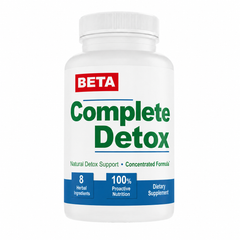
Longevity Complete Detox [BETA]
- Size
- 21 capsules · 7 servings
- Directions
- 3 capsules once daily
- Ingredients
- Contains botanical ingredients including milk thistle, psyllium, ginger, turmeric, acai and aloe vera.
- Routine
- Designed as a defined 7 day wellness routine.
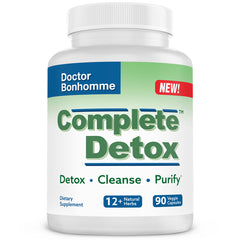
Longevity Complete Detox (Day Formula)
- Size
- 90 capsules · 30 servings
- Directions
- 3 capsules once daily
- Ingredients
- A botanical and fiber based formula containing ingredients including psyllium husk, green tea extract, dandelion extract and acai.
- Routine
- Designed for a simple daytime wellness routine.


