


Key takeaways
- Daily support and a 7-day reset are two routine styles. One is ongoing and settles into your normal morning. The other has a clear first day and a clear last day.
- People feel a real pull to start fresh at turning points like a new week, a new season or the end of a trip. Researchers call it the fresh start effect.
- New habits take time. In one well-known study, a new daily action took about 66 days on average to feel automatic. A daily routine is what carries a fresh start forward.
- The two styles can work together. A defined week can be the starting line, and a daily routine can be the road after it.
- Food, water, movement and sleep are the backdrop for either style. A realistic week adds one small step a day.
Why fresh starts feel so good
Monday really is a popular day to start over. Researchers studied swipe-card records from a university fitness center with nearly 12,000 student members. Students were about 33% more likely to work out at the start of a week. At the start of a new semester, the jump was 47%.[1]
The same team looked at a goal-setting website where people sign up to commit to personal goals. New commitments rose about 63% at the start of a week and about 145% at the start of a new year.[1] The researchers named this pull the fresh start effect. A new week, month, season or birthday seems to hand people a clean page.
That pull helps explain why two routine styles exist. One is steady daily support that becomes part of an ordinary morning. The other is a defined week with a first day and a last day. This guide compares them, shows when each one fits, and sketches a realistic week of food, water, movement and sleep around either one.
Two routine styles, side by side
Steady daily support works like brushing your teeth. You do it every day until you stop thinking about it. A defined routine works more like spring cleaning. It has a set length, and it belongs to a particular moment.
Here is how they compare on the details that shape a routine.
| What to compare | Steady daily routine | Defined 7-day routine |
|---|---|---|
| How long | Ongoing, with no set end | A set number of days, such as 7 |
| When to start | Any ordinary day | After travel, the holidays or a change of season |
| What gets you going | The same step after the same cue | The pull of a fresh start |
| Typical anchor | A daily cue, such as breakfast | A date circled on the calendar |
| What the label shows | Daily directions | A stated time limit |
| Best for | People who like a predictable rhythm | People whose rhythm was just knocked loose |
| Feels like | A habit you keep | A clear starting point |
The biggest differences are length and what gets you started. A daily routine runs on repetition, and a defined week starts from a date on the calendar.
Steady daily support: built for ordinary days
Daily support suits people who like a predictable rhythm. It also suits anyone who has started a big push in January and watched it fade by February.
Habit research shows why a steady routine matters. Psychologists describe a habit as an action your brain links to a cue, like buckling your seatbelt when you sit in the car. The more often you repeat the action after the same cue, the more automatic it becomes.[2]
In a well-known study from University College London, volunteers picked one daily health action and repeated it after the same cue each day. On average, it took about 66 days for the action to feel automatic.[2] Simple actions, like drinking a glass of water, got there faster than demanding ones, like doing 50 sit-ups.
A 2024 review pooled 20 studies with about 2,600 people. Four of those studies timed how long a habit took to form. The typical (median) time ran from about 59 to 66 days, and individual people ranged from 4 days to nearly a year.[3] Habits that people chose for themselves also tended to grow stronger.
Missing a day barely matters, which is good news for real life. In the London study, progress picked right back up after a single missed day.[2] Our guide on keeping a routine through a bad week shows how to scale a habit down on hard days so it keeps going.
A defined 7-day routine: built for turning points
A defined week suits moments when life has already knocked your rhythm loose. Think of the days after a long trip, the stretch after the holidays, or the first cool morning of fall.
These are the turning points the fresh start research describes. In one experiment, 165 adults picked a date to get an email reminder about a personal goal. When March 20 was labeled "the first day of spring," about 1 in 4 chose it. When the same date was labeled "the third Thursday in March," only about 1 in 14 did.[4]
The researchers traced part of this pull to a feeling of distance. A fresh start helps people set aside their past, imperfect selves, which makes it easier to begin.[4]
A defined week puts that feeling to work. Its first day gives you a clear place to start, and its last day tells you exactly what you're signing up for. It fits naturally into:
- the week after a vacation or a work trip
- the days after the holidays or a big celebration
- a seasonal reset, such as the start of spring or fall
- any moment you want to recommit to healthier habits
Two other guides in this series cover those occasions in depth. For a day-by-day plan after time away, see a 7 day wellness reset after travel. For the weeks after big gatherings, see getting back to your routine after holidays and celebrations.
Which style fits you right now?
A few questions can help you choose.
- Has a trip, a move or a holiday stretch thrown off your routine? A defined week gives you a clean place to restart.
- Is your schedule fairly steady right now? A daily routine slips easily into an ordinary breakfast.
- Do you like a clear finish line? A 7-day routine has one built in.
- Would you rather not think about it at all? Once a daily habit is automatic, it takes almost no effort.
- Still not sure? Start with whichever feels easier this week. Habits people choose for themselves tend to grow stronger.[3]
How the two styles work together
You don't have to pick one style for life. A defined week can be the starting line, and a daily routine can be the road after it.
Here's how that might look. You start a 7-day routine the Monday after a trip. The following Monday, you switch to a once-a-day routine that fits your normal breakfast.
The defined week lets you start at a moment when motivation runs high. The daily routine gives new habits the weeks or months they usually need to settle in.[3]
If the two products you're considering share ingredients, such as psyllium husk, run them one after the other. Taking them on the same days would double up. Running them in sequence also keeps your fiber change gradual. Our guide to adding fiber step by step explains why a slow ramp is easier on your gut.
When the next big disruption comes, you can repeat the pattern. Follow each label, and ask your clinician if you're unsure how often a defined week is right for you. If you're still deciding when in the day to take things, our guide to choosing a morning or evening routine can help.
What a realistic week looks like
Whichever style you choose, the capsules take a few seconds of your day. Food, water, movement and sleep fill the rest of the week, and that's where this plan spends its time. Here is one realistic plan. It adds a single step each day, so nothing feels extreme.
- Day 1: Set your anchor. Keep your capsules where you eat breakfast and take them as the label directs, with a full glass of water. Our guide to anchor habits shows how to tie a new step to an old one.
- Day 2: Add one fiber-rich food to lunch, such as beans, lentils, berries or a whole grain. Small amounts are fine, since your gut likes gradual change.
- Day 3: Fill a water bottle in the morning and keep it in sight all day. Our guide on how much fluid you need has the numbers.
- Day 4: Take a 10-minute walk after a meal. Adults are advised to get 150 to 300 minutes of moderate activity a week, and brisk walking counts. Any amount of activity has some benefit.[5]
- Day 5: Pick a bedtime and set a reminder 30 minutes before it. Adults ages 18 to 60 need 7 or more hours of sleep a night.[6]
- Day 6: Do a short strength session, like squats or push-ups against a kitchen counter. The federal guidelines call for muscle-strengthening activity at least 2 days a week.[5]
- Day 7: Spend 20 minutes getting ready for next week. Make a grocery list, wash produce and pack a few snacks for the week. Our Sunday batch prep guide has a simple plan.
By the end of the week, you have a breakfast anchor, a fiber habit, a water bottle, a walk, a bedtime and a plan. Keep the steps that felt easiest and let the rest wait. Simple actions tend to become automatic sooner.[2]
Where a supplement fits in each style
Neither style asks you to fast, drink only juice or skip meals. A supplement, if you use one, is a simple daily step that rides along with food, water, movement and sleep.
In a steady daily routine, picture a bottle beside the coffee maker and a glass of water poured while the kettle heats. A daily formula taken around breakfast fits this style. Its label gives daily directions with no end date.
In a defined week, picture a Monday circled on the calendar after a trip, with seven small boxes to tick off. A short routine with a clear start and finish fits this style. Its label gives the number of days, such as up to 7.
Formulas in either style come in different builds. A fiber-based formula, such as one built on psyllium husk, calls for a full glass of water with each dose. A formula with green tea extract or guarana can bring natural caffeine, so it belongs early in the day. Botanical formulas may also list plants such as milk thistle, dandelion, ginger or turmeric, and a few of these have notes in the list below. Some also list aloe, a plant with a long history. It was used in ancient Greece, Rome, Babylonia and China.[7] Today's aloe products can be made from the gel of the inner leaf, the latex from the leaf's outer layer or the whole crushed leaf.[7]
When a defined week ends, you can move to a daily routine the following Monday. Or you can simply keep the breakfast anchor, the water bottle and the walk after a meal that you started during the week.
Before you start
- Read the full label and follow the directions. If a label sets a time limit, such as 7 days, keep to it.
- Take each dose of a psyllium product with a full glass of water, at least 8 ounces. With too little fluid, psyllium can swell and cause choking, so skip psyllium products if you have trouble swallowing.[8]
- Psyllium shouldn't be taken at the same time as some medicines. If you take a daily medicine, ask your pharmacist how far apart to space them.[9]
- Green tea extract and guarana can both contain caffeine. If you're sensitive to caffeine, count them along with your coffee and tea, and keep them to the morning.
- Milk thistle and dandelion are relatives of ragweed, daisies and marigolds. Milk thistle may cause allergic reactions in people sensitive to those plants.[10] If you react to these plants, ask your clinician before trying either one.[11]
- If you take a blood thinner, ask your doctor first. Ginger and green tea are among the herbs reported to interact with warfarin.[12] Dandelion might interact with blood thinners and with water pills (diuretics).[11]
- Check with your doctor or pharmacist first if you take prescription medicine, are pregnant or nursing, or have a health condition.
When to see a clinician
Some changes deserve a professional's eyes. Talk with a health care professional promptly if you notice:
- yellowing of the skin or the whites of the eyes, or dark urine
- belly pain that won't go away, or vomiting
- trouble swallowing, choking or chest discomfort after taking any fiber product
- blood in your stool or a lasting change in bowel habits
- any new symptom that started after a new supplement or medicine
Frequently asked questions
Is a 7-day reset better than a daily routine?
They do different jobs. A defined week gives you a clear starting point at a turning point. A daily routine is how habits settle in over the following weeks and months. You can use both, one after the other.
Can I use a daily formula and a 7-day routine at the same time?
Compare the two ingredient lists first. If they share ingredients, such as psyllium, the simplest plan is to use them one after the other. If you'd like to combine them, check with your pharmacist or clinician first.
What if I miss a day?
Pick it back up at your next usual time. In habit research, one missed day didn't knock people off track.[2] What counts is the overall pattern across weeks.
How often can I do a 7-day reset?
A defined routine is built for defined moments, such as after travel, after the holidays or at a change of season, so it can come back around each time one of those moments does. Follow the label on how long to use it, and ask your clinician if you're unsure what's right for you.
Do I need to change what I eat during the week?
You don't need to fast or follow a special plan. Regular meals with fiber and protein, plenty of water, daily movement and steady sleep are the right backdrop for either routine.
The short version
Daily support and a 7-day reset are two ways to organize the same good intentions. A defined week uses the natural pull of a fresh start after travel, the holidays or a change of season. A daily routine gives new habits the weeks or months they need to become automatic. You can also combine them, one after the other. Around either one, steady meals with fiber and protein, enough water, regular movement and good sleep round out the routine.
This article is for general education. It is not medical advice, and nothing here is intended to diagnose, treat, cure or prevent any disease. If you take prescription medicines, are pregnant or breastfeeding, or have a medical condition, talk with your doctor or pharmacist before starting any supplement, and never stop or change a prescribed medicine on the basis of general information.
Sources
- Dai H, Milkman KL, Riis J. The fresh start effect: temporal landmarks motivate aspirational behavior. Manage Sci. 2014;60(10):2563-2582. https://doi.org/10.1287/mnsc.2014.1901
- Gardner B, Lally P, Wardle J. Making health habitual: the psychology of 'habit-formation' and general practice. Br J Gen Pract. 2012;62(605):664-666. https://pmc.ncbi.nlm.nih.gov/articles/PMC3505409/
- Singh B, Murphy A, Maher C, Smith AE. Time to form a habit: a systematic review and meta-analysis of health behaviour habit formation and its determinants. Healthcare (Basel). 2024;12(23):2488. https://pmc.ncbi.nlm.nih.gov/articles/PMC11641623/
- Dai H, Milkman KL, Riis J. Put your imperfections behind you: temporal landmarks spur goal initiation when they signal new beginnings. Psychol Sci. 2015;26(12):1927-1936. https://pmc.ncbi.nlm.nih.gov/articles/PMC4839284/
- U.S. Department of Health and Human Services. Physical Activity Guidelines for Americans, 2nd edition: Top 10 Things to Know. https://odphp.health.gov/our-work/nutrition-physical-activity/physical-activity-guidelines/current-guidelines/top-10-things-know
- Centers for Disease Control and Prevention. About Sleep. Reviewed November 2023. https://www.cdc.gov/sleep/about/index.html
- National Center for Complementary and Integrative Health. Aloe Vera. Updated February 2025. https://www.nccih.nih.gov/health/aloe-vera
- Code of Federal Regulations. 21 CFR 201.319, Water-soluble gums, hydrophilic gums, and hydrophilic mucilloids (including psyllium): warnings and directions. eCFR. https://www.ecfr.gov/current/title-21/chapter-I/subchapter-C/part-201/subpart-G/section-201.319
- MedlinePlus. Psyllium. U.S. National Library of Medicine. Revised June 2024. https://medlineplus.gov/druginfo/meds/a601104.html
- National Center for Complementary and Integrative Health. Milk Thistle. Updated February 2025. https://www.nccih.nih.gov/health/milk-thistle
- National Center for Complementary and Integrative Health. Dandelion. Updated November 2024. https://www.nccih.nih.gov/health/dandelion
- Tan CSS, Lee SWH. Warfarin and food, herbal or dietary supplement interactions: a systematic review. Br J Clin Pharmacol. 2021;87(2):352-374. https://pubmed.ncbi.nlm.nih.gov/32478963/
Product information
Facts from the product pages. Before using any supplement, read the full label, directions and cautions on the product page, and check with your doctor or pharmacist if you take medicines, are pregnant or nursing, or have a health condition.

Longevity Complete Detox (Day Formula)
- Size
- 90 capsules · 30 servings
- Directions
- 3 capsules once daily
- Ingredients
- A botanical and fiber based formula containing ingredients including psyllium husk, green tea extract, dandelion extract and acai.
- Routine
- Designed for a simple daytime wellness routine.
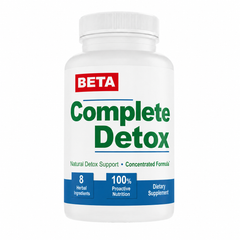
Longevity Complete Detox [BETA]
- Size
- 21 capsules · 7 servings
- Directions
- 3 capsules once daily
- Ingredients
- Contains botanical ingredients including milk thistle, psyllium, ginger, turmeric, acai and aloe vera.
- Routine
- Designed as a defined 7 day wellness routine.


