


Key takeaways
- In a study of 96 volunteers, a new daily habit took anywhere from 18 to 254 days to feel automatic. The typical figure was about 66 days, and simple actions got there sooner.
- Missing a single day didn't set people back in a meaningful way. Steady repetition over weeks matters more than a perfect record.
- A written "when X, I will Y" plan, tied to something you already do every day, helps a new step happen more reliably.
- Fewer daily moments help. In a review of 76 studies of prescription medicines, people took once-daily doses more reliably than doses taken three or four times a day.
- A routine that lasts has a minimum version for bad weeks and a simple, forgiving way to track it.
The 21-day myth
You've probably heard that it takes 21 days to form a habit. That number didn't come from habit research. It traces back to anecdotal reports about how long plastic surgery patients took to get used to their new appearance.[1]
When researchers at University College London measured habit formation, they found a different picture. They followed 96 volunteers for 12 weeks. Each person chose one healthy eating, drinking or activity habit and did it every day in the same setting.[2]
Some picked something as small as drinking a glass of water. Others chose a longer routine, such as 50 sit-ups.[1] The time it took for the new habit to feel automatic ranged from 18 to 254 days.[2] The typical time was about 66 days, and simpler actions got there faster.[1]
This guide covers what that research means for your own routine. You'll see why simple tends to last and how to tie a new step to your day. You'll also find a plan for bad weeks and a low-pressure way to track progress.
What a habit is, in plain terms
A habit is an action your brain links to a cue. The cue can be a time, a place or something you just did. After enough repeats, the cue starts the action with little thought. Washing your hands after using the bathroom is a classic example.[1]
Psychologists Wendy Wood and Dennis Rünger describe habits as an efficient, default way of responding. People form them by repeating the same response in the same setting.[3] Once formed, a habit tends to carry on even after motivation fades.[1] That matters because motivation rises and falls, while a habit keeps going on the days you don't feel like it.
Why simple routines last longer
In the London study, simple actions such as drinking water became automatic sooner than longer routines like a set of sit-ups.[1] The same researchers advise keeping the action the same while a habit forms, because changing it from day to day works against it becoming automatic.[1]
Research on medicines points the same way. A review pooled 76 studies that used electronic pill bottle caps to record each time people opened them. On a once-daily schedule, people took 79% of their doses. That fell to 69% for twice daily, 65% for three times daily and 51% for four times daily.[4]
The gap between once and twice daily was small and wasn't statistically significant. The drop at three and four doses was clear, and the authors concluded that simpler, less frequent schedules are easier to follow.[4] These studies tracked prescription medicines, so read them as general behavior research. The pattern is easy to apply to any routine: each added daily moment is one more chance to forget.
Step 1: Start with one step you want to do
Pick the step yourself, and pick something you like. In a small flossing study, people who felt more positive about flossing built stronger habits, apart from how often they flossed.[5] Habit researchers also suggest keeping the change small and manageable.[1]
Frame it as something to add. Habits form around actions, and you can't build a habit of not doing something.[1] So "drink a glass of water after breakfast" gives your brain more to work with than "stop forgetting water."
Start smaller than feels impressive. A 10-minute walk you take every day builds the cue and the response a habit needs. You can stretch it once it feels automatic.
Step 2: Tie it to an anchor and write a when-then plan
An anchor is something you already do every day without fail, such as making coffee, eating breakfast or brushing your teeth. Attach the new step to it. Some people call this habit stacking. Our guide to anchor habits shows how to pick a strong one.
Then put the plan into words. Psychologists call this an implementation intention: "When X happens, I will do Y." A review that pooled 94 tests found that people who made these if-then plans reached their goals more often than people who only set the goal. The effect was medium to large.[6]
The plan seems to work in two ways. It makes the cue easier to notice, and it makes the response more automatic once the cue shows up.[6] A few examples:
- "When I set my coffee mug in the sink, I fill a glass of water and drink it."
- "After I eat lunch, I walk around the block before I sit back down."
- "When I plug in my phone at night, I lay out tomorrow's walking shoes."
Where the new step sits in the sequence can matter too. The same exploratory flossing study, which included 50 adults, also tested timing. People told to floss right after brushing tended to build stronger habits than those told to floss before. Eight months later, the after-brushing group still flossed more often.[5]
Step 3: Make the cue easy to see
A plan works best when the anchor and the tools sit together. Put a clean glass next to the kettle, and keep your walking shoes by the door.
Placement helps with supplements, too. Our guide to where you keep your bottles covers what the evidence shows, and our storage guide explains which spots to avoid. If you take more than one product, a pill organizer with morning and evening rows saves a decision every day.
A little prep at the start of the week can carry the rest of it. Our guide to a 20-minute Sunday prep shows one way to set up meals and supplies in one sitting.
Step 4: Decide your minimum version now
At some point, travel, a deadline or a sick kid will break your rhythm. The London study offers some comfort here. Missing one opportunity didn't meaningfully change the habit's progress, and gains picked up again after a single miss.[1][2]
So plan for the hard days before they arrive. Decide what the smallest acceptable version of each step looks like. A 30-minute walk becomes 5 minutes, and a full breakfast becomes yogurt and fruit. Our guide to keeping a routine through a bad week walks through how to build one.
Built-in slack can also keep you going. In a field study of daily step goals, some people had a harder goal plus a few "emergency" skip days to use after a miss. They reached their step goal on about one more day a week than people with a plain hard or easy goal.[7] In online experiments by the same team, these reserves helped people keep going after a miss instead of giving up.[7]
For supplements, the minimum version is simple. Take your usual serving at your usual anchor. If you miss a day, pick up again at the next one, and don't double up unless the label says to.
Step 5: Track it, kindly
Writing your progress down helps. A review of 138 experiments with nearly 20,000 people found that monitoring progress helped people reach their goals. The effect was larger when people recorded progress physically or shared it with someone.[8] A check mark on a paper calendar counts, and habit researchers suggest exactly that kind of daily tick sheet.[1]
Streaks deserve some care. In seven studies, people who saw an unbroken streak in their log were more likely to keep going. When the log showed a broken streak, people were less likely to continue, especially when they blamed themselves for the break. The drop was smaller when they could repair the streak.[9]
So track in a way that forgives a miss. Count the days you did it each week instead of an unbroken chain. Or follow a simple rule: never miss twice in a row.
A simple day, start to finish
Here is what a simple routine can look like. Each step rides on a moment that already happens.
| Moment | Anchor you already have | One small step |
|---|---|---|
| Morning | Finishing breakfast | A full glass of water and your morning supplement |
| Midday | Getting up from lunch | A 10-minute walk |
| Evening | Plugging in your phone | Start winding down and take your evening supplement |
| Weekly | Sunday afternoon | Refill the pill organizer and check off the week |
That's four small steps, and none of them needs a new time slot. If your schedule shifts week to week, our guide to routines for an unpredictable calendar shows how to anchor to events instead of clock times.
Where a once-daily supplement fits
A supplement taken once a day is a single step on a single anchor. In the dosing research above, once-daily schedules had the highest share of doses taken.[4] Picture that step at one of two moments in your day.
- A morning step. The bottle sits by the kettle, and a clean glass is already set out. A daily formula fits a plan like this one: "After I finish breakfast, I take my morning supplement with a full glass of water." If your label points to the time before the meal, anchor it to filling the kettle instead.
- An evening step. An evening formula built around botanicals traditionally taken at night fits the start of your wind-down, when the lamps are low and the house is getting quiet. The plan might read: "When I plug in my phone for the night, I take my evening supplement with water."
If you use both, that's two moments a day, each tied to something you already do. Our guide to choosing a morning or evening routine can help you decide where to start. Whichever you choose, read the directions, the ingredient list and any cautions on the label. A supplement is meant to sit alongside the basics: meals with fiber and protein, water through the day, regular movement and steady sleep.
Before you start
- Read the full label and follow the directions. If you miss a day, take the next serving at your usual time instead of doubling up.
- Check with your doctor or pharmacist first if you take prescription medicine, are pregnant or nursing, or have a health condition.
- Psyllium absorbs liquid. If a formula contains it, take each dose with a full glass of water.[10]
- Green tea extract and guarana are both natural sources of caffeine, so formulas that contain them belong in the morning.
- If a formula contains 5-HTP, keep in mind that your body turns it into serotonin.[11] Ask your doctor first if you take an antidepressant, a sedative, a sleep aid or anything else that affects serotonin or sleep. Take evening formulas before bed, as the label directs, and don't drive if you feel drowsy.
- Some formulas include oyster or other shellfish extracts. Check the allergen information if you're allergic to shellfish.
When to see a clinician
Check in with a health care professional if you notice:
- sleep trouble that lasts for weeks or affects your days
- loud snoring, gasping or pauses in breathing during sleep
- a lasting change in bowel habits
- any new symptom that started after a new medicine or supplement
Frequently asked questions
How long until a new routine feels automatic?
It varies a lot. In the London study, it took anywhere from 18 to 254 days, with a typical time of about 66 days.[1][2] Plan on roughly two months, and expect simple steps to settle in sooner.
What if I miss a day?
Pick up at your next anchor. In the London study, a single missed day didn't meaningfully slow habit formation.[2] For supplements, take the next serving at the usual time and don't double up.
Should I take my morning and evening supplements together to save a step?
Follow each label. A formula with caffeine sources such as green tea extract or guarana fits the morning, and an evening formula belongs in your wind-down. Two anchors a day is still a simple plan.
Do I need an app to track my routine?
No. In research on goal tracking, progress that people wrote down or shared had a bigger effect than progress kept in their heads.[8] A paper calendar by the bottle works well.
How many new habits should I start at once?
Start with one or two. Habit researchers suggest small, manageable changes.[1] Once the first steps feel automatic, you can add another. Our guide to building a routine without fasting or extreme cleanses has more ideas.
The short version
A wellness routine can be simple, and the research suggests simple holds up better. New habits took about 66 days to feel automatic in a London study, with a wide range, and simple actions settled in sooner. Tie each step to an anchor you already have, write a "when X, I will Y" plan, and keep the cue where you'll see it. Decide your minimum version before a bad week, track progress in a way that forgives a miss, and pick up again after a skipped day. A once-daily supplement in the morning or at bedtime fits this kind of plan, alongside food, water, movement and sleep.
This article is for general education. It is not medical advice, and nothing here is intended to diagnose, treat, cure or prevent any disease. If you take prescription medicines, are pregnant or breastfeeding, or have a medical condition, talk with your doctor or pharmacist before starting any supplement, and never stop or change a prescribed medicine on the basis of general information.
Sources
- Gardner B, Lally P, Wardle J. Making health habitual: the psychology of 'habit-formation' and general practice. Br J Gen Pract. 2012;62(605):664-666. https://pmc.ncbi.nlm.nih.gov/articles/PMC3505409/
- Lally P, van Jaarsveld CHM, Potts HWW, Wardle J. How are habits formed: modelling habit formation in the real world. Eur J Soc Psychol. 2010;40(6):998-1009. https://doi.org/10.1002/ejsp.674
- Wood W, Rünger D. Psychology of habit. Annu Rev Psychol. 2016;67:289-314. https://pubmed.ncbi.nlm.nih.gov/26361052/
- Claxton AJ, Cramer J, Pierce C. A systematic review of the associations between dose regimens and medication compliance. Clin Ther. 2001;23(8):1296-1310. https://pubmed.ncbi.nlm.nih.gov/11558866/
- Judah G, Gardner B, Aunger R. Forming a flossing habit: an exploratory study of the psychological determinants of habit formation. Br J Health Psychol. 2013;18(2):338-353. https://pubmed.ncbi.nlm.nih.gov/22989272/
- Gollwitzer PM, Sheeran P. Implementation intentions and goal achievement: a meta-analysis of effects and processes. Adv Exp Soc Psychol. 2006;38:69-119. https://doi.org/10.1016/S0065-2601(06)38002-1
- Sharif MA, Shu SB. Nudging persistence after failure through emergency reserves. Organ Behav Hum Decis Process. 2021;163:17-29. https://doi.org/10.1016/j.obhdp.2019.01.004
- Harkin B, Webb TL, Chang BP, et al. Does monitoring goal progress promote goal attainment? A meta-analysis of the experimental evidence. Psychol Bull. 2016;142(2):198-229. https://pubmed.ncbi.nlm.nih.gov/26479070/
- Silverman J, Barasch A. On or off track: how (broken) streaks affect consumer decisions. J Consum Res. 2023;49(6):1095-1117. https://doi.org/10.1093/jcr/ucac029
- MedlinePlus. Psyllium. U.S. National Library of Medicine. https://medlineplus.gov/druginfo/meds/a601104.html
- Maffei ME. 5-Hydroxytryptophan (5-HTP): natural occurrence, analysis, biosynthesis, biotechnology, physiology and toxicology. Int J Mol Sci. 2020;22(1):181. https://pmc.ncbi.nlm.nih.gov/articles/PMC7796270/
Product information
Facts from the product pages. Before using any supplement, read the full label, directions and cautions on the product page, and check with your doctor or pharmacist if you take medicines, are pregnant or nursing, or have a health condition.
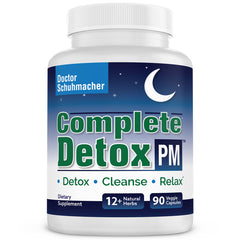
Longevity Complete Detox PM
- Size
- 90 capsules · 30 night supply
- Directions
- 3 capsules once daily, preferably about 30 minutes before sleep
- Ingredients
- Contains botanical extracts together with GABA and 5-HTP.
- Routine
- Designed as an evening supplement routine.
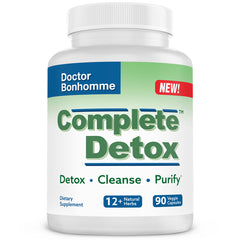
Longevity Complete Detox (Day Formula)
- Size
- 90 capsules · 30 servings
- Directions
- 3 capsules once daily
- Ingredients
- A botanical and fiber based formula containing ingredients including psyllium husk, green tea extract, dandelion extract and acai.
- Routine
- Designed for a simple daytime wellness routine.


