


Key takeaways
- Your liver is your body's metabolic hub. Much of what you absorb from a meal passes through it first.
- Between meals and overnight, it keeps blood sugar steady. It breaks down stored glycogen and also makes new glucose.
- It builds most of the protein in your blood, including albumin and clotting proteins. It also turns ammonia from protein into urea.
- It stores vitamin A, vitamin B12, iron and copper, starts the activation of vitamin D, processes hormones and makes bile.
- Balanced meals, fiber, less alcohol, regular movement, steady sleep and care with medicine doses all suit the liver's daily work.
The organ that never clocks out
Tucked under your right ribs, your liver is holding a reserve of vitamin B12 right now, often enough for a few years.[1] Last night, while you slept, it kept your blood sugar steady without a single snack. Today it will build proteins, sort fats and turn leftover nitrogen from your meals into a waste your kidneys can send away.
The liver is only about 2% of an adult's body weight. That's roughly 3 pounds in a 150-pound person.[2] Yet about three-quarters of its blood comes straight from the gut, through a large vein called the portal vein.[2] That blood carries simple sugars, amino acids and some vitamins and minerals. So the liver gets the first look at much of what you absorb.[3]
One of the liver's jobs is changing compounds in two steps so they dissolve in water and can leave in urine or bile. Our guide to how your body's daily detox processes work covers that in detail. This guide covers the rest of the job list: blood sugar, fats, proteins, vitamins and minerals, hormones and bile. It ends with the daily habits that suit that work and a simple way to keep track of what you take.
Keeping blood sugar steady between meals
Your brain and other organs need a steady supply of glucose, even when you haven't eaten for hours. Between meals, your liver keeps that supply coming.[4]
After a meal, insulin rises and the liver takes in glucose. It links some of it into glycogen, a compact storage form of sugar.[4] Insulin also passes through the liver first, and the liver takes up and breaks down part of it. That helps set how much insulin reaches the rest of your body.[5] Your muscles store glycogen too, but they keep it for themselves. They lack the enzyme needed to send that glucose back into the blood, and the liver has it.[6]
Between meals, insulin falls and a hormone called glucagon rises. The liver switches from storing glucose to releasing it.[4] It breaks down glycogen. It also builds brand-new glucose from smaller pieces, a process called gluconeogenesis. The raw materials include lactate and amino acids from your muscles and glycerol from stored fat.[7]
Making new glucose kicks in early. In a classic 1991 study, researchers tracked liver glycogen in people during a 68-hour fast using a special type of scanner. Newly made glucose supplied about 64% of the body's glucose over the first 22 hours, and more as the fast went on.[8]
The liver also runs on an internal clock. Studies, mostly in mice, show that this clock helps time when the liver makes glucose and builds fat.[7]
Handling fats
Fat from a meal travels mostly through the lymph system before it reaches your blood. The liver then takes up what's left of those fat particles.[4] It can burn fatty acids for its own energy. During a long fast or on very low-carb eating, it also turns them into ketones, a fuel other organs can use.[4][7]
After a meal, the liver builds fats and ships them out. It packs them into particles called very low-density lipoproteins (VLDL). These travel through the blood to muscles for fuel or to fat tissue for storage.[4]
The liver also makes bile acids from cholesterol, a fatty building material your cells use for their membranes.[4][9] Bile acids break fat into tiny droplets so you can absorb it, along with vitamins A, D, E and K. Most bile acids are taken back up near the end of the small intestine and returned to the liver for reuse. Only about 5% end up leaving the body.[9] Our guide to thick, gel-forming fiber and fullness explains how some fibers behave in the gut.
Building proteins and clearing nitrogen
Your liver is a protein factory. It makes 85 to 90% of the protein circulating in your blood.[4] The biggest is albumin, about 55% of the protein in plasma, the liquid part of blood. Albumin helps hold fluid inside your blood vessels and carries fats and hormones around the body.[4]
The liver also makes almost all of the clotting factors, the proteins that let your blood form a clot when you get a cut.[2]
Protein leaves a waste product behind. When you digest protein, bacteria in your gut make ammonia. Your body makes more as it breaks down amino acids.[4][10] Ammonia can harm cells, so the liver changes it into urea, a safer waste.[4] Your kidneys then send urea out in urine.[10] Our one-page guide to kidney function picks up the story from there.
The liver's pantry: vitamins and minerals
Your liver is also a pantry. It stores some nutrients for later and changes others into forms your body can use.
| Nutrient | What the liver does | A detail worth knowing |
|---|---|---|
| Vitamin A | Stores it | Kept in cells called stellate cells [2][4] |
| Vitamin B12 | Keeps a long-term reserve | Often enough for a few years [1] |
| Vitamin D | Takes the first step in activating it | The kidneys finish the job [11] |
| Iron and copper | Stores both [2] | Copper leaves the body mainly in bile [12] |
These reserves give your body a cushion. Food still supplies them, so a varied diet keeps the pantry stocked.
Hormones pass through, too
Hormones are chemical messengers, and many of them pass through the liver. You've already met insulin. The liver also turns thyroid hormone from its storage form, T4, into the more active T3.[2] It helps process sex hormones as well.[2] And albumin, made in the liver, carries some hormones through the blood.[4]
Bile: a digestive juice with a second job
Your liver makes about 600 milliliters of bile a day, roughly 2.5 cups.[9] Between meals, your gallbladder stores it. When you eat, bile flows into the small intestine to help digest fats and some vitamins.[3]
Bile is also a way out. It carries bilirubin, the yellow pigment left over from old red blood cells, which gives bile its color.[9] It also carries most of the body's extra copper.[12] That's why regular bowel movements belong in the liver's story. Our guide to your daily fiber number shows how much fiber adults are advised to eat.
Everyday habits that suit the liver's work
What you eat, drink and do each day shapes what your liver has to work with.
- Drink less alcohol, or none. Your liver processes the alcohol you drink. Current federal guidance says to drink less alcohol for better overall health. Some people shouldn't drink at all. That includes anyone pregnant, people in recovery or who can't control their drinking, and people whose medicines or health conditions interact with alcohol.[13]
- Read medicine labels. Your liver processes many medicines.[4] Acetaminophen is in more than 600 prescription and over-the-counter products. Too much can cause severe liver damage. The FDA's maximum for adults is 4,000 mg a day from all products combined. Check each Drug Facts label so you don't double up.[14]
- Eat balanced meals. Regular meals with protein, whole grains, vegetables and fruit supply the amino acids and glucose the liver turns into albumin and glycogen. The Dietary Guidelines for Americans, 2025-2030, advise putting protein foods and fiber-rich whole grains first and avoiding sugar-sweetened drinks.[13]
- Get your fiber from whole grains, beans, vegetables and fruit. Our guide to adding fiber gradually shows how to ramp up.
- Stay active. Working muscles draw on glucose and fat from the liver and send back lactate it can recycle into new glucose.[7] Adults need at least 150 to 300 minutes of moderate activity a week, plus muscle-strengthening activity on at least 2 days.[15]
- Protect your sleep. Your liver runs on a daily rhythm, so a steady schedule for sleep and meals fits the way it works. The CDC recommends at least 7 hours a night for most adults.[16]
Keeping track of what you take
A short written list makes every pharmacy visit easier. Write down each prescription, over-the-counter medicine, vitamin, herb and supplement you take, with the amount and the time of day. Keep one copy on your phone and another on the fridge door. The FDA suggests making a habit of telling your pharmacist about the other medicines and supplements you take.[14]
Labels fill in the details. On a medicine, the Drug Facts label lists the ingredients, which is how you catch the same one in two products.[14] On a supplement, the Supplement Facts panel shows the serving size and the ingredients. You may see an amount for each ingredient, or several ingredients grouped in a blend with one total amount. Our guide to reading a supplement label explains how those labels are set out. Copy the product name and the directions onto your list. Our series guide to reading a supplement label walks through the rest of the panel.
A few small habits keep the list current. Picture a pill organizer filled on Sunday evening while the kettle heats, with a pen clipped to the list so you can update it whenever something changes. Our guide to setting up a pill organizer shows one way to lay it out.
Before you start
- Read the full label and follow the directions.
- Add each new product to your written list, and bring the list to every pharmacy visit.
- If you have a food or plant allergy, check the ingredient list and any allergen statement on every product you take.
- Check with your doctor or pharmacist first if you take prescription medicine, are pregnant or nursing, or have a health condition.
When to see a clinician
Talk with a health care professional promptly if you notice:
- yellowing of the skin or the whites of the eyes
- dark urine or pale stools that don't go away
- pain or swelling in the upper right side of your belly
- bruising or bleeding more easily than usual
- nausea, loss of appetite or tiredness that lingers without a clear reason
- any new symptom that started after a new medicine or supplement
If you think someone has taken too much acetaminophen, call Poison Help at 1-800-222-1222 right away.
Frequently asked questions
What does my liver do while I sleep?
It keeps your blood sugar steady. Through the night it draws on stored glycogen and also builds new glucose from lactate, amino acids and glycerol.[7][8] By morning, it has been feeding your brain and other organs for hours.
How much alcohol is OK?
Current US guidance doesn't set a daily number. It says drinking less is better for overall health. Some people, including anyone pregnant or taking a medicine that interacts with alcohol, shouldn't drink at all.[13] Your clinician can help you decide what's right for you.
Why do medicine labels warn about the liver?
Your liver processes many medicines.[4] With acetaminophen, taking too much can cause severe liver damage. Because it turns up in so many products, check every Drug Facts label so you don't double up.[14]
Does my liver really store vitamins?
Yes. It keeps a reserve of vitamin A and enough vitamin B12 for a few years, along with iron and copper.[1][2] It also takes the first step in turning vitamin D into its active form.[11]
What does my liver need from me each day?
Your liver works around the clock, and it relies on what you bring it. Balanced meals, fiber and water, regular movement, enough sleep and care with alcohol and medicines all give it good material to work with. Many people also make a daily supplement part of that routine. If you do, follow the label and add it to the list you share with your pharmacist.
The short version
Your liver is your body's metabolic hub. It keeps blood sugar steady between meals and overnight, using stored glycogen and new glucose. It burns fat, ships fat out and makes bile acids. It builds most of the protein in your blood and turns ammonia into urea. It stores vitamin A, vitamin B12, iron and copper, and it starts the work of activating vitamin D. It also handles hormones and makes about 2.5 cups of bile a day. Balanced meals, fiber, less alcohol, movement, sleep and care with medicine doses all suit that work. A current list of everything you take, shared with your pharmacist, rounds out those habits.
This article is for general education. It is not medical advice, and nothing here is intended to diagnose, treat, cure or prevent any disease. If you take prescription medicines, are pregnant or breastfeeding, or have a medical condition, talk with your doctor or pharmacist before starting any supplement, and never stop or change a prescribed medicine on the basis of general information.
Sources
- MedlinePlus Medical Encyclopedia. Vitamin B12. U.S. National Library of Medicine; reviewed January 21, 2025. https://medlineplus.gov/ency/article/002403.htm
- Kalra A, Yetiskul E, Wehrle CJ, Tuma F. Physiology, Liver. StatPearls. NCBI Bookshelf; updated May 1, 2023. https://www.ncbi.nlm.nih.gov/books/NBK535438/
- National Institute of Diabetes and Digestive and Kidney Diseases. Your Digestive System & How It Works. https://www.niddk.nih.gov/health-information/digestive-diseases/digestive-system-how-it-works
- Trefts E, Gannon M, Wasserman DH. The liver. Curr Biol. 2017;27(21):R1147-R1151. https://pmc.ncbi.nlm.nih.gov/articles/PMC5897118/
- Najjar SM, Perdomo G. Hepatic insulin clearance: mechanism and physiology. Physiology (Bethesda). 2019;34(3):198-215. https://pmc.ncbi.nlm.nih.gov/articles/PMC6734066/
- Patino SC, Orrick JA. Biochemistry, Glycogenolysis. StatPearls. NCBI Bookshelf; updated January 27, 2024. https://www.ncbi.nlm.nih.gov/books/NBK549820/
- Rui L. Energy metabolism in the liver. Compr Physiol. 2014;4(1):177-197. https://pmc.ncbi.nlm.nih.gov/articles/PMC4050641/
- Rothman DL, Magnusson I, Katz LD, Shulman RG, Shulman GI. Quantitation of hepatic glycogenolysis and gluconeogenesis in fasting humans with 13C NMR. Science. 1991;254(5031):573-576. https://pubmed.ncbi.nlm.nih.gov/1948033/
- Hundt M, Basit H, John S. Physiology, Bile Secretion. StatPearls. NCBI Bookshelf; updated September 26, 2022. https://www.ncbi.nlm.nih.gov/books/NBK470209/
- MedlinePlus. Ammonia Levels. U.S. National Library of Medicine; updated September 19, 2023. https://medlineplus.gov/lab-tests/ammonia-levels/
- NIH Office of Dietary Supplements. Vitamin D: Fact Sheet for Health Professionals. https://ods.od.nih.gov/factsheets/VitaminD-HealthProfessional/
- NIH Office of Dietary Supplements. Copper: Fact Sheet for Health Professionals. https://ods.od.nih.gov/factsheets/Copper-HealthProfessional/
- U.S. Department of Agriculture and U.S. Department of Health and Human Services. Dietary Guidelines for Americans, 2025-2030. January 2026. https://cdn.realfood.gov/DGA.pdf
- U.S. Food and Drug Administration. Don't Overuse Acetaminophen. Consumer Updates. https://www.fda.gov/consumers/consumer-updates/dont-double-acetaminophen
- U.S. Department of Health and Human Services. Top 10 Things to Know About the Second Edition of the Physical Activity Guidelines for Americans. https://odphp.health.gov/our-work/nutrition-physical-activity/physical-activity-guidelines/current-guidelines/top-10-things-know
- Centers for Disease Control and Prevention. About Sleep. Reviewed November 20, 2023. https://www.cdc.gov/sleep/about/index.html
Product information
Facts from the product pages. Before using any supplement, read the full label, directions and cautions on the product page, and check with your doctor or pharmacist if you take medicines, are pregnant or nursing, or have a health condition.
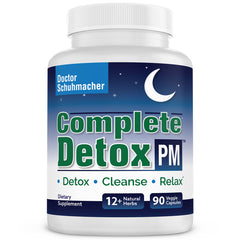
Longevity Complete Detox PM
- Size
- 90 capsules · 30 night supply
- Directions
- 3 capsules once daily, preferably about 30 minutes before sleep
- Ingredients
- Contains botanical extracts together with GABA and 5-HTP.
- Routine
- Designed as an evening supplement routine.
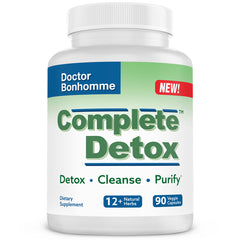
Longevity Complete Detox (Day Formula)
- Size
- 90 capsules · 30 servings
- Directions
- 3 capsules once daily
- Ingredients
- A botanical and fiber based formula containing ingredients including psyllium husk, green tea extract, dandelion extract and acai.
- Routine
- Designed for a simple daytime wellness routine.


