


Key takeaways
- "Hype" means exaggerated marketing. Plenty of well-made supplements come with careful marketing, and a few quick checks help you find them.
- Red flags include disease talk, fast weight promises, secret-sounding language and vague talk of toxins. Plans that ask you to fast, strong laxatives with no time limit and no way to reach the company belong on the list too.
- A typical label gives you a Supplement Facts panel, directions, "supports" wording with the FDA notice and a way to reach the maker. Many also show a manufacturing statement and cautions.
- The right formula is one that fits your day, whether that's a morning routine, an evening routine or a set 7 day reset.
- A pharmacist can check any supplement against your medicines. Bring the bottle or a photo of the label.
A crowded shelf, and a short list of questions
About 6 in 10 U.S. adults took a dietary supplement in the past month, according to national survey data from 2021 to 2023. Nearly 4 in 10 took two or more.[1]
Detox formulas are a busy corner of that market. Search "detox" online and you'll see capsules, teas, powders, short kits and monthly bottles. Some carry big promises on the front.
Most of the choosing comes down to a few questions. What does the label actually say? Who made the product, and can you reach them? Does it fit the way you live?
This guide covers the marketing red flags worth skipping and the parts of a label worth reading. It shows how to match a formula to your routine. It ends with questions to bring to your pharmacist.
What "hype" means here
Hype is marketing that promises more than any supplement can honestly say. The trouble sits in the sales copy. Plenty of well-made supplements are marketed with care, and the checks below help you find them.
U.S. law draws the lines. A supplement label may describe how an ingredient supports normal body function, with an FDA notice attached.[2] It may not say or hint that a product affects a disease.[2]
The Federal Trade Commission also expects health claims in ads to rest on sound scientific evidence.[3] When marketing ignores those rules, it tells you something about the company behind it. Our guide to what "detox support" actually means explains the label language in more detail.
Red flags in detox marketing
Any one of these is a reason to slow down and look closer.
- The product promises to fix a medical problem. Supplements aren't allowed to make that kind of claim.[2] A promise that one product fixes a wide range of diseases tops FDA's list of health fraud warning signs.[4]
- The ads promise fast weight change. FDA lists quick fixes, such as losing 30 pounds in 30 days, among its warning signs of health fraud.[4] Weight loss products are also among the most common places FDA finds hidden drug ingredients. In a review of FDA warnings from 2007 to 2016, about 4 in 10 tainted products sold as supplements were marketed for weight loss.[5]
- The ads lean on secret-sounding language. Phrases like "secret ingredient" and "new discovery" are on FDA's warning list. So is talk of a truth that the government or drug companies don't want you to know.[4]
- The label talks about "toxins" without naming any. Words like flush, purge or melt away tell you nothing about what a product does. A careful label names a normal body function, such as digestive regularity.
- The plan asks you to fast or to live on the product. By law, a dietary supplement is meant to add to the diet. It can't be presented as a conventional food or as the only item of a meal or the diet.[6]
- A strong laxative comes with no time limit. Senna, a common stimulant laxative herb, is meant for short-term use. MedlinePlus advises talking with a doctor before taking it for more than a week.[7] Any product with a strong laxative should tell you how long to use it. Stimulant herbs like senna belong to a different group from fiber such as psyllium.[7][8]
- You can't find a way to reach the company. Supplement labels must include a U.S. address or phone number for reporting serious problems.[9] A brand you can't contact is hard to trust.
What you may see on the label
A label is the company's way of telling you what's inside and how to use it. Here are the parts you're likely to see, and what each one tells you.
| Label part | What you may see | What it tells you |
|---|---|---|
| Supplement Facts panel | The serving size and each ingredient, sometimes grouped in a named blend | What's in each serving [10] |
| Directions | How many capsules, when and with what | Where the formula fits in your day |
| Claims | "Supports" wording, an asterisk and the FDA notice | That the claim is structure/function wording [2] |
| Manufacturing | A GMP statement, sometimes with "Made in USA" | The federal standards behind the product [11] |
| Testing marks | A third-party seal on some products | That an outside group checked quality [12] |
| Cautions | Notes on allergies, medicines, pregnancy or water | Points worth raising with your pharmacist |
| Contact details | A U.S. address or phone number | Where to send questions or report a problem [9] |
Many formulas group their botanicals in a proprietary blend. It's a common and legal way to list a formula. The panel gives the blend a name and a total weight, then lists its ingredients in order from most to least by weight.[10] Our guide to reading a supplement label explains what you can learn from one.
Every supplement maker must follow federal good manufacturing practice rules, known as GMP. They require set standards for each product's identity, purity, strength and composition.[11] Makers must also run at least one test to confirm the identity of each dietary ingredient before using it.[11] A GMP line on a label points to these rules. Our guide to reading a supplement label covers what those words mean.
Some products also carry a third-party mark. To earn the USP Verified mark, for example, a product goes through testing and an audit against USP quality standards and FDA's GMP rules.[12] A seal is about quality. It isn't a promise about results.[13] A product without a seal can still be well made. Our guide to third-party marks explains what each one tests.
Structure/function claims are easy to spot. Each one describes a role in the body's normal work, ends with an asterisk and points to the FDA notice.[2]
If a formula lists green tea extract or guarana, it contains natural sources of caffeine. Guarana seeds can contain up to about 6% caffeine.[14] A large review found that up to about 400 milligrams of caffeine a day, from all sources, isn't linked to harmful effects in healthy adults.[15] If you're sensitive to caffeine, count these botanicals along with your coffee and tea, and keep them to the morning.
If you're browsing online and can't see the Supplement Facts panel, you can ask the company for a photo of the label. For a line-by-line walk through the panel itself, see our guide to reading a detox supplement label.
Questions to bring to your pharmacist
Pharmacists know medicines in depth, and they are often the easiest expert to reach. Bring the bottle, or a photo of the label, and ask:
- Does anything in this formula interact with my medicines?
- How far apart should I take it from my other medicines?
- I already drink coffee or tea. How does a formula with green tea extract or guarana fit into my day?
- Should I avoid anything here because of an allergy, pregnancy or an upcoming surgery?
- Is there anything I should watch for as I start?
The NIH Office of Dietary Supplements suggests asking about benefits, risks, the right dose, and how long to take a product.[13] It also advises telling all your health care providers about every supplement you take, especially before surgery. Keeping a written list of what you take, with doses, makes that easy.[13]
Match the formula to your routine
The best formula is the one you'll take as directed, day after day. Start with your day, then choose the format.
If mornings are your steady time, a formula taken around breakfast rides along with a habit you already have. Follow the label on whether it goes before or after the meal. Morning is also the natural slot for anything with caffeine sources, and you can count it alongside your coffee.
If evenings are calmer, look for a formula built for the time before bed. Its label will tell you when to take it, and evening formulas often include a note about drowsiness.
If you want a clear starting point, a 7 day routine has a defined start and end. It suits the week after travel or a busy holiday stretch. The label gives the number of days.
Plan for busy weeks, too. Travel and late nights are when routines slip, so decide ahead of time what your short version will look like. Our guide to the version of your routine that survives a bad week shows how to build one.
Whichever you choose, tie it to something you already do. Our guide to anchor habits shows how. When you compare prices, our guide to cost per serving does the math. For a closer look at timing, see our guide to choosing a morning or evening routine.
Reading a formula's style on the label
The label usually tells you which routine a formula was built for. Three parts of it do most of the work: the ingredient list, the directions and the cautions.
| Formula style | Where it usually fits | What to read on the label |
|---|---|---|
| A fiber-based formula, such as psyllium husk | Around a meal, with a full glass of water | How much water to take with it |
| A daily formula with green tea extract or guarana | Morning, around breakfast | The timing, and the caffeine sources in the ingredient list |
| An evening formula built around botanicals traditionally taken at night | Before bed | The timing, and any notes on drowsiness, medicines and allergens |
| A short routine with a clear start and finish | A defined week, such as after a trip | The number of days |
Picture each one in its place. The morning formula sits on the counter by the kettle, next to the mug you reach for at 7 a.m. The evening formula waits on the nightstand for the quiet minutes after the dishes are done. The short routine lives on the calendar as seven small boxes after a trip.
Some formulas mix styles, such as fiber with tea-based botanicals. In that case, follow the directions as written. They cover the timing and the water, and a morning slot keeps the caffeine sources early in your day.
If the label leaves you unsure which style a formula is, ask the company. A good one will tell you when to take it and what's in it. Whichever style you choose, it sits alongside meals with protein and fiber, enough water, regular movement and steady sleep. None of these styles should ask you to fast.
Before you start
- Read the full label and follow the directions. If a label sets a time limit, such as 7 days, keep to it.
- Take each dose of a psyllium product with a full glass of water.[16] Ask your pharmacist how far apart to take it from your medicines.[8] When you add fiber from food, add it gradually over a few weeks.[17]
- Green tea extract and guarana can both supply caffeine. Count them with your other caffeine, and keep them to the morning.
- Some evening formulas contain valerian, GABA or 5-HTP. 5-HTP affects serotonin, and formulas with it are for adults only. Ask your doctor first if you take an antidepressant, a sedative or a sleep aid. Take an evening formula at bedtime as the label directs, and don't drive if you feel drowsy.
- Some formulas include oyster or other shellfish extracts. Check the allergen information if you are allergic to shellfish.
- Check with your doctor or pharmacist first if you take prescription medicine, are pregnant or nursing, or have a health condition.
When to see a clinician
Some reactions are worth a call. Talk with a health care professional promptly if you notice:
- a racing or pounding heartbeat, or shakiness that doesn't settle
- diarrhea or cramping that lasts
- trouble swallowing or chest discomfort after taking a fiber product
- yellowing of the skin or the whites of the eyes, or dark urine
- any new symptom that started after a new supplement or medicine
Frequently asked questions
Is a strong effect a sign that a detox product is working?
No. Your body's own detox work happens quietly, every day. Urgent trips to the bathroom or a jittery feeling mean it's time to stop, reread the label and check with your pharmacist.
How long should I take a detox supplement?
Follow the label. Some formulas are made for everyday use as part of a regular routine. Others are designed for a set period, such as 7 days, and the label gives the number of days.
Can I take more than one detox product at a time?
Many people take more than one supplement. Nearly 4 in 10 U.S. adults take two or more.[1] Lay the labels side by side to see which ingredients show up in both. A pharmacist can look at the full list with you.
Does a third-party seal mean a product is better?
A seal means an outside group checked quality, such as whether the bottle holds what the label says. It isn't a promise about results.[13] A product without a seal can still be well made. It's fair to ask any company what it tests and to request a certificate of analysis for your batch.
Do I need a detox supplement if I eat well?
A supplement is meant to add to a good diet, and it can be one small, steady step in a routine you already keep. For many adults, fiber is the clearest gap. Our guide to your daily fiber number shows how to check yours.
The short version
Choosing a detox supplement gets easier once you separate the product from the hype. Pass on products that promise to fix a medical problem, promise fast weight change, lean on secret-sounding language or talk about toxins they never name. Be careful with plans that ask you to fast, strong laxatives with no time limit and companies you can't reach. Then read the label: the Supplement Facts panel, the directions, the "supports" wording with its FDA notice and any cautions. Pick the formula that fits your day, and bring your questions to a pharmacist.
This article is for general education. It is not medical advice, and nothing here is intended to diagnose, treat, cure or prevent any disease. If you take prescription medicines, are pregnant or breastfeeding, or have a medical condition, talk with your doctor or pharmacist before starting any supplement, and never stop or change a prescribed medicine on the basis of general information.
Sources
- Stierman B, Couch CA, Gahche JJ, Mishra S. Dietary Supplement Use: United States, August 2021-August 2023. NCHS Data Brief No. 561. National Center for Health Statistics; May 2026. https://www.cdc.gov/nchs/data/databriefs/db561.pdf
- Code of Federal Regulations. 21 CFR 101.93, Certain types of statements for dietary supplements. eCFR. https://www.ecfr.gov/current/title-21/chapter-I/subchapter-B/part-101/subpart-F/section-101.93
- Federal Trade Commission. Health Products Compliance Guidance. December 2022. https://www.ftc.gov/business-guidance/resources/health-products-compliance-guidance
- U.S. Food and Drug Administration. 6 Tip-offs to Rip-offs: Don't Fall for Health Fraud Scams. https://www.fda.gov/consumers/consumer-updates/6-tip-offs-rip-offs-dont-fall-health-fraud-scams
- Tucker J, Fischer T, Upjohn L, Mazzera D, Kumar M. Unapproved pharmaceutical ingredients included in dietary supplements associated with US Food and Drug Administration warnings. JAMA Netw Open. 2018;1(6):e183337. https://pmc.ncbi.nlm.nih.gov/articles/PMC6324457/
- Federal Food, Drug, and Cosmetic Act, section 201(ff), 21 U.S.C. 321(ff) (definition of "dietary supplement"). Legal Information Institute, Cornell Law School. https://www.law.cornell.edu/uscode/text/21/321
- MedlinePlus. Senna. U.S. National Library of Medicine. https://medlineplus.gov/druginfo/meds/a601112.html
- MedlinePlus. Psyllium. U.S. National Library of Medicine. https://medlineplus.gov/druginfo/meds/a601104.html
- Federal Food, Drug, and Cosmetic Act, section 403(y), 21 U.S.C. 343(y). U.S. Code via GovInfo. https://www.govinfo.gov/content/pkg/USCODE-2023-title21/html/USCODE-2023-title21-chap9-subchapIV-sec343.htm
- Code of Federal Regulations. 21 CFR 101.36, Nutrition labeling of dietary supplements. eCFR. https://www.ecfr.gov/current/title-21/chapter-I/subchapter-B/part-101/subpart-C/section-101.36
- Code of Federal Regulations. 21 CFR Part 111, Current good manufacturing practice in manufacturing, packaging, labeling, or holding operations for dietary supplements. eCFR. https://www.ecfr.gov/current/title-21/chapter-I/subchapter-B/part-111
- United States Pharmacopeia. Dietary Supplements Verification Program. https://www.usp.org/verification-services/dietary-supplements-verification-program
- NIH Office of Dietary Supplements. Dietary Supplements: What You Need to Know. https://ods.od.nih.gov/factsheets/WYNTK-Consumer/
- Schimpl FC, da Silva JF, Gonçalves JF, Mazzafera P. Guarana: revisiting a highly caffeinated plant from the Amazon. J Ethnopharmacol. 2013;150(1):14-31. https://pubmed.ncbi.nlm.nih.gov/23981847/
- Wikoff D, Welsh BT, Henderson R, et al. Systematic review of the potential adverse effects of caffeine consumption in healthy adults, pregnant women, adolescents, and children. Food Chem Toxicol. 2017;109(Pt 1):585-648. https://pubmed.ncbi.nlm.nih.gov/28438661/
- Code of Federal Regulations. 21 CFR 201.319, Water-soluble gums, hydrophilic gums, and hydrophilic mucilloids (including psyllium): warnings and directions. eCFR. https://www.ecfr.gov/current/title-21/chapter-I/subchapter-C/part-201/subpart-G/section-201.319
- MedlinePlus Medical Encyclopedia. Fiber. U.S. National Library of Medicine. https://medlineplus.gov/ency/article/002470.htm
Product information
Facts from the product pages. Before using any supplement, read the full label, directions and cautions on the product page, and check with your doctor or pharmacist if you take medicines, are pregnant or nursing, or have a health condition.
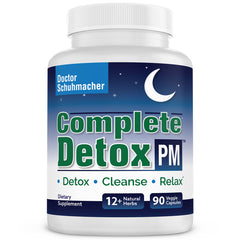
Longevity Complete Detox PM
- Size
- 90 capsules · 30 night supply
- Directions
- 3 capsules once daily, preferably about 30 minutes before sleep
- Ingredients
- Contains botanical extracts together with GABA and 5-HTP.
- Routine
- Designed as an evening supplement routine.
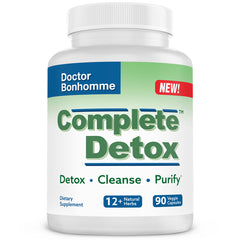
Longevity Complete Detox (Day Formula)
- Size
- 90 capsules · 30 servings
- Directions
- 3 capsules once daily
- Ingredients
- A botanical and fiber based formula containing ingredients including psyllium husk, green tea extract, dandelion extract and acai.
- Routine
- Designed for a simple daytime wellness routine.


