


![Longevity Complete Detox [BETA 21 Caps]: 7 Day Intensive Detox & Digestive Support](http://longevitypremier.com/cdn/shop/files/DetoxBeta-mid_100x100.png?v=1787365739)





Single digit blood pressure drops in 6–8 weeks: Nattokinase RCTs
Clinical trials show nattokinase can produce modest, measurable blood-pressure reductions when taken at study dosages for six to eight weeks. In one randomized trial, 2,000 FU/day brought a modest, measurable reduction in systolic and diastolic blood pressure. Another using 100 mg/day saw notable diastolic reductions, especially in men. If you take blood thinners or blood-pressure medication, talk to your doctor before adding it.
TL;DR:
- The strongest evidence comes from small trials, with limited long-term data showing no effect on artery plaque buildup over three years.
- Safety concerns focus mainly on bleeding risks, especially if combined with blood thinners, anticoagulants, or antihypertensive medications, requiring medical guidance.
- Manufacturers should specify enzyme activity in fibrinolytic units (FU) because milligram amounts alone do not confirm potency or effectiveness.
- Blood pressure should be monitored regularly when trying nattokinase, and it is best used as an adjunct support alongside lifestyle changes and prescribed medications.
Table of Contents
- What Do Clinical Trials Say About Nattokinase and Blood Pressure?
- How Does Nattokinase Work in the Body?
- Is Nattokinase Safe, and Who Should Avoid It?
- What Dosage Was Used in Studies, and How Do You Try It Safely?
- Why Trust This Take on the Evidence?
- Bottom Line: Where Nattokinase Fits in a Blood-Pressure Plan
- A Formulation Approach Built on Decades of Practice
- Sources
- FAQ
What Do Clinical Trials Say About Nattokinase and Blood Pressure?
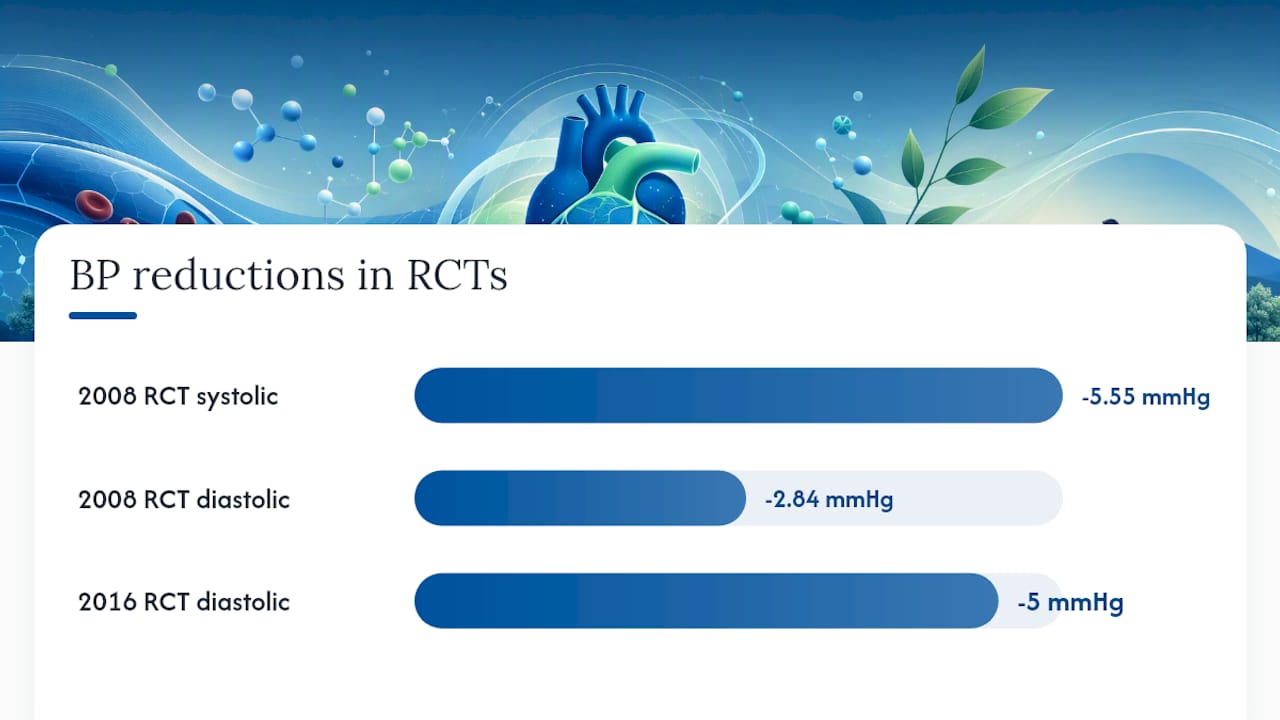
The strongest data point comes from a randomized, double-blind, placebo-controlled trial published in Hypertension Research in 2008. Participants took 2,000 fibrinolytic units (FU) of nattokinase daily for eight weeks. Compared to the placebo group, the nattokinase group showed a net reduction of −5.55 mmHg in systolic blood pressure and −2.84 mmHg in diastolic blood pressure. That is a real, statistically observed shift, not a rounding error, though it is worth noting this was a relatively small trial and eight weeks is a short window for judging anything cardiovascular.
A separate line of evidence comes from a North American RCT published in 2016, which took a different dosing approach entirely. Instead of measuring in fibrinolytic units, researchers gave participants 100 mg of nattokinase per day for eight weeks. The result was a statistically significant reduction in diastolic blood pressure, with the effect more pronounced in men. Male participants saw average diastolic pressure fall from 86 mmHg to 81 mmHg, alongside measurable changes in von Willebrand factor, a protein tied to blood clotting and vascular function.
Statistic Snapshot: Pooled data across trials suggest nattokinase supplementation is associated with moderate reductions in systolic and diastolic blood pressure, according to a 2023 systematic review and meta-analysis.
That meta-analysis pooled results from multiple randomized trials, covering roughly 607 participants in total. The pooled numbers land lower than the standout 2008 trial, which is typical when you average a strong result against smaller or shorter studies. The review’s authors were candid about the limitations: few trials exist, dosing protocols vary widely between studies, and the populations tested were not large enough to draw firm conclusions about who benefits most.
A few patterns show up consistently across this research:
- Reductions tend to appear within the six to eight week range used in most trials, not immediately.
- Diastolic pressure seems to respond at least as reliably as systolic pressure, sometimes more so.
- Dosing protocols differ enough (2,000 FU versus 100 mg) that direct comparisons between trials are imperfect.
- Sample sizes remain small by pharmaceutical standards, typically dozens rather than thousands of participants.
There is also a longer-term data point worth weighing honestly. A trial following participants for three years on 2,000 FU/day found no measurable slowing of atherosclerosis progression, the buildup of plaque in artery walls. That does not contradict the shorter-term blood-pressure findings, but it does suggest the benefits observed over eight weeks have not yet been shown to translate into structural changes in blood vessels over years. Short-term numbers and long-term outcomes are two different questions, and the current research answers the first one more convincingly than the second.
Clinical commentary from mainstream health resources tends to echo this same balance. WebMD’s overview of nattokinase notes that while early results are promising for circulatory wellness, the field needs larger and longer trials before anyone can define an optimal dose or a definitive safety profile. That is a fair summary of where the evidence actually sits right now: encouraging, consistent in direction, but still early.
How Does Nattokinase Work in the Body?
Nattokinase is a fibrinolytic enzyme, meaning it has a natural capacity to interact with fibrin, a protein involved in blood clot structure. It comes from nattō, a traditional Japanese food made from fermented soybeans, where the enzyme is produced during fermentation by Bacillus subtilis bacteria.
Researchers have proposed a few overlapping mechanisms for how this enzyme might influence circulatory wellness:
- Fibrinolytic activity: Nattokinase interacts with fibrin networks, supporting the body’s own clot-management processes.
- Peptide generation during digestion: As nattokinase breaks down in the digestive tract, it appears to yield peptides that can inhibit angiotensin-converting enzyme (ACE), an enzyme involved in narrowing blood vessels.
- Renin activity changes: Some trial data suggests shifts in renin activity, a hormone-driven pathway that helps regulate blood vessel tone.
- Von Willebrand factor changes: The North American RCT observed measurable shifts in this clotting-related protein alongside the diastolic pressure drop.
The ACE connection is the one that gets the most attention, because ACE inhibitors are a well-known category of prescription blood-pressure medication. Nattokinase is not an ACE inhibitor drug, and it is not marketed or intended to work as one. But the peptides it generates during digestion appear to interact with some of the same biological pathway, which gives researchers a plausible explanation for why blood vessels might relax somewhat after weeks of use.
One detail matters more than most people realize: not all nattokinase products behave the same way once they hit your stomach. Formulation and stability challenges are well documented in the research literature, with studies on bioavailability showing that enzyme activity can degrade depending on manufacturing process, encapsulation, and storage conditions. A product that tests well in a lab can lose potency before it ever reaches your bloodstream if it is not formulated with that stability in mind.
Pro Tip: Look for products that state their potency in fibrinolytic units (FU) rather than milligrams alone. Two products with the same milligram weight can have very different actual enzyme activity, since FU measures what the enzyme actually does rather than how much of it is present by weight.
Is Nattokinase Safe, and Who Should Avoid It?
Across the major trials, reported adverse events have generally been few, though sample sizes were small enough that rare side effects could easily go undetected. That is not a reason for alarm, but it is a reason for caution, particularly if you fall into a higher-risk category.
The biggest safety consideration by far involves bleeding risk. Because nattokinase interacts with fibrin and clotting-related proteins, combining it with certain medications raises the theoretical and, in some cases, documented risk of excessive bleeding.
- Warfarin and other vitamin K antagonists: Combining these with a fibrinolytic supplement could compound blood-thinning effects beyond what your doctor intended when prescribing your dose.
- Direct oral anticoagulants (DOACs), such as apixaban or rivaroxaban: Similar concern, since both act on clotting pathways from different angles.
- Antiplatelet drugs, including aspirin and clopidogrel: These already reduce platelet clumping, and stacking another agent with clotting-related activity increases bleeding risk further.
- Prescription antihypertensive medications: If nattokinase produces even a modest additive effect on top of your existing blood-pressure medication, the combination could push your pressure lower than intended, raising the risk of dizziness or fainting.
Statistic Snapshot: The North American RCT that used 100 mg/day also tracked von Willebrand factor, a clotting-related protein, and found measurable shifts alongside the diastolic pressure changes, reinforcing why the bleeding-risk conversation with a clinician matters before you start.
Certain populations warrant extra caution or should sit this one out entirely until they’ve spoken with a healthcare provider. Pregnant or breastfeeding individuals fall into this category, given the lack of trial data specific to that population. People scheduled for surgery should stop any fibrinolytic supplement well ahead of time, since surgical teams need predictable clotting behavior. Anyone with a diagnosed bleeding disorder, such as hemophilia or von Willebrand disease, should treat nattokinase as off-limits without direct medical guidance.
A simple monitoring checklist helps here. Track your resting blood pressure at the same time each day using a validated home monitor, and watch for unusual bruising, prolonged bleeding from small cuts, unusually heavy menstrual bleeding, or lightheadedness that could signal your pressure has dropped further than expected. Any of those signs warrants a call to your clinician, not a wait-and-see approach.
What Dosage Was Used in Studies, and How Do You Try It Safely?
The two headline trials used different dosing approaches, making direct comparisons between them imperfect. The 2008 trial used 2,000 FU per day, measured in fibrinolytic units, a way of quantifying enzyme activity rather than raw weight. The 2016 North American trial used 100 mg per day, a straight milligram measurement. Both ran for eight weeks, and both showed measurable diastolic pressure changes by the end of that window.
This is exactly why FU matters more than milligrams alone when you’re comparing products. A capsule labeled “100 mg” tells you almost nothing about actual enzyme activity unless the manufacturer also discloses FU potency, since production methods affect how active the enzyme actually is once it is in capsule form.
If you and your clinician decide trying nattokinase makes sense for your situation, a few practical steps make the process more useful:
- Choose a product that discloses its potency in FU, ideally with third-party testing to confirm purity and activity level.
- Log your blood pressure daily for at least a week before you start, so you have a real baseline rather than a guess.
- Get sign-off from your prescribing clinician first, especially if you take any blood thinner or blood-pressure medication.
- Recheck your readings at the four-week and eight-week marks, since that mirrors the timeline used in the trials that showed results.
Pro Tip: Don’t expect a dramatic swing. The trial data points to changes in the single digits of mmHg, not the kind of drop you’d see from starting a new prescription. Track trends over weeks, not day-to-day fluctuations, which are normal and often larger than the supplement’s actual effect.
Why Trust This Take on the Evidence?
This article was written by Charles, with. Longevitypremier’s editorial approach leans on more than three decades of combined healthcare practice experience across its formulation team, which shapes how the brand reads clinical literature and translates it into product decisions.
A few things guide that process:
- Formulations are built around carefully selected ingredients chosen for quality and consistency, not marketing trends.
- Product positioning sticks to structure and function language, describing how ingredients may support normal wellness rather than claiming to treat or cure any condition.
- Editorial content and product development stay separate functions, meaning this kind of research breakdown is written to inform, not to oversell any single ingredient.
- Readers are encouraged to bring findings like these to their own clinician rather than treating them as medical instruction.
— Charles
Bottom Line: Where Nattokinase Fits in a Blood-Pressure Plan
The honest read on nattokinase is that it produces modest, real reductions in blood pressure over six to eight weeks in controlled trials, alongside a bleeding-risk profile that demands respect if you take anticoagulants or antihypertensive drugs. It belongs in the category of adjunctive support, something layered alongside prescribed care and lifestyle habits like the CDC’s blood-pressure prevention guidance, never as a replacement for either.
It may be reasonable to discuss trying it if you already have well-controlled or borderline blood pressure and want to explore natural options under supervision. It is not reasonable to swap out a prescribed medication for it, or to start it without telling your doctor if you’re on a blood thinner. Bring your baseline readings to that conversation. That single step does more for your safety than any dosage decision you’ll make on your own.
A Formulation Approach Built on Decades of Practice
The company builds its supplement line around the idea that targeted, purposeful formulation beats generic wellness blends. That philosophy shows up directly in the Longevity Blood Pressure Formula, a blend built around hawthorn, kudzu, garlic, rutin, and sage, ingredients selected to support healthy cardiovascular function and normal circulation as part of a broader wellness routine.

If the trial data on nattokinase has you thinking about what else supports healthy blood pressure, pairing that curiosity with a daily habit worth committing to is the next logical step. The formula reflects more than 30 years of combined healthcare practice experience going into ingredient selection, not a trend-chasing blend thrown together for a product launch. You can review the full ingredient list and current pricing on the Longevity Blood Pressure Formula product page, where the three-bottle value pack is also available for readers who want to commit to a full monitoring cycle rather than a single bottle.
Sources
For readers who want to review the primary research firsthand, start with the 2008 Hypertension Research trial, the 2016 North American RCT, and the 2023 systematic review and meta-analysis. For broader lifestyle context, the CDC’s guidance on preventing high blood pressure remains a solid foundation. You may also find our guide to blood pressure herbs backed by clinical evidence useful for comparing other natural options.
This article is general information, not a substitute for advice from a qualified doctor. Consult a qualified healthcare professional about your own circumstances before acting on anything here.
- Effects of nattokinase on blood pressure: a randomized, controlled trial | Hypertension Research
- Consumption of nattokinase is associated with reduced blood pressure and von Willebrand factor: randomized North American clinical trial (PMC)
- Nattokinase supplementation and cardiovascular risk factors: systematic review and meta-analysis (PMC)
- Long-term nattokinase trial (PubMed)
FAQ
What Are the Side Effects of Nattokinase?
Reported side effects across trials have generally been mild and infrequent, though study sizes were small. The main practical concern is increased bleeding risk, particularly bruising or prolonged bleeding, especially when combined with blood-thinning medications.
What Do Cardiologists Say About Nattokinase?
Clinical commentary generally treats nattokinase as a promising area for circulatory wellness support, while stressing that larger, longer trials are needed to establish optimal dosing and a complete safety profile, a caution echoed in WebMD’s clinical overview. Most clinicians view it as worth discussing rather than dismissing outright, provided it is used alongside, not instead of, prescribed care.
Why Don’t Doctors Prescribe Nattokinase?
Nattokinase is sold as a dietary supplement, not an FDA-approved medication, so it isn’t something a doctor writes a prescription for. Some clinicians remain cautious because the trial pool is still small relative to established blood-pressure drugs, and long-term safety data, such as the three-year atherosclerosis trial, hasn’t shown the same structural benefits seen in short-term blood-pressure numbers.
How Do I Know if Nattokinase Is Working?
Track your blood pressure daily using a home monitor, starting with a baseline week before you begin. Trial data suggests changes typically show up around the six to eight week mark, with realistic reductions in the range of a few mmHg rather than a dramatic drop.
What Dose of Nattokinase Was Used in Clinical Trials?
The two major RCTs used either 2,000 FU per day or 100 mg per day, both over an eight week period. Fibrinolytic units (FU) measure enzyme activity and tend to be a more reliable way to compare products than milligram weight alone.