




![Longevity Complete Detox [BETA 21 Caps]: 7 Day Intensive Detox & Digestive Support](http://longevitypremier.com/cdn/shop/files/DetoxBeta-mid_100x100.png?v=1787365739)






The Right Blood Pressure Cuff Size Makes or Breaks Your Reading
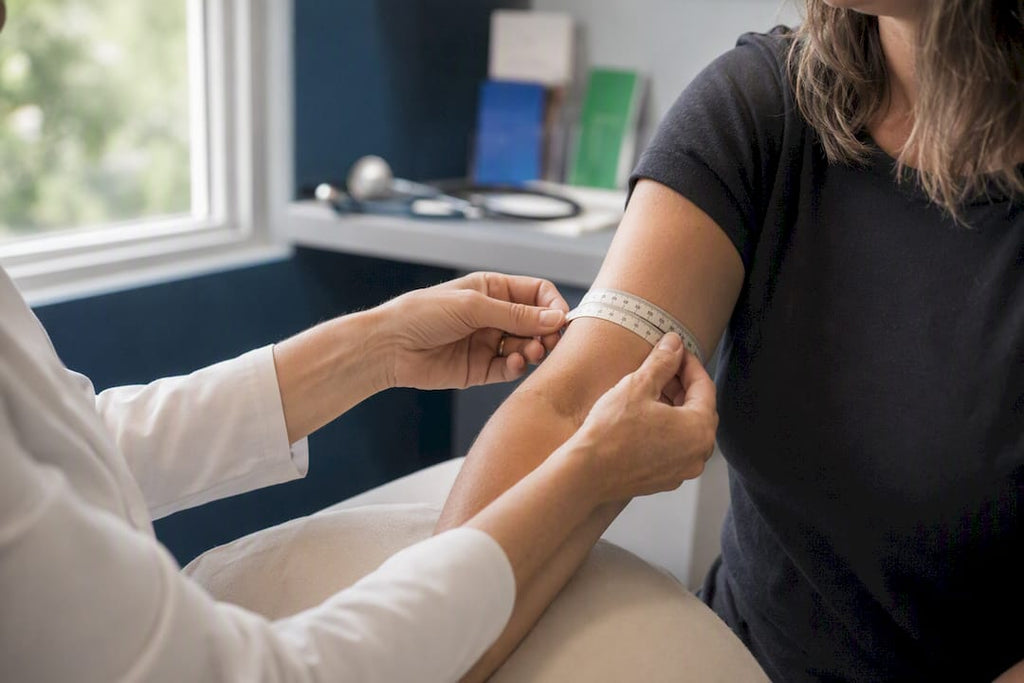
Measure the middle of your upper arm with a tape measure, then match that number to the cuff’s printed size range. Grab this wrong and the consequences aren’t trivial. A cuff that’s too small can overestimate your systolic blood pressure by up to 20 mm Hg, enough to turn a normal reading into a false hypertension diagnosis.
- Bladder length should be at least 80% of arm circumference
- Bladder width should be at least 37% of arm circumference
- Wrong size cuff: readings can be off by double digits
Key Takeaways
Accurate blood pressure readings depend on matching bladder length and width to your measured arm circumference, not to a generic size label.
| Point | Details |
|---|---|
| Measure first | Wrap a tape measure around your relaxed mid-upper arm and round to the nearest centimeter. |
| Match the cuff | Bladder length needs to be at least 80% and width at least 37% of that measurement. |
| Wrong size skews results | An undersized cuff can overestimate systolic pressure by up to 20 mm Hg. |
| Prep matters as much as size | Rest five minutes, skip caffeine, and average two readings taken a minute apart. |
| Validate periodically | Bring your monitor to a clinic visit to compare it against office equipment. |
If you’re managing blood pressure long term, pairing accurate at-home tracking with daily support like the Longevity Blood Pressure Formula gives you both the numbers and the nutritional groundwork to act on them.
Table of Contents
- Which Cuff and Monitor Should You Actually Buy?
- How Do You Measure Your Arm for a Blood Pressure Cuff?
- What Are the Standard Blood Pressure Cuff Sizes?
- Where Exactly Should the Cuff Sit on Your Arm?
- What’s the Best Routine for Taking an Accurate Reading?
- Why Does Cuff Size Actually Change the Number?
- What Should You Do If Your Readings Seem Off?
- How Much Error Can a Wrong Cuff Really Cause?
- What Clinicians See Go Wrong Most Often
- Frequently Asked Questions
- Sources
Which Cuff and Monitor Should You Actually Buy?
For home use, a validated automatic upper-arm monitor is the safest bet. These devices are what major health institutions recommend because they measure at brachial artery level, where clinical guidelines are built around decades of data.
Wrist and finger monitors are more convenient, but they’re also more sensitive to hand position and tend to drift from true readings, which is why clinicians steer most people away from them. The exception is arms so large or unusually shaped that a standard upper-arm cuff genuinely won’t fit, in which case a clinician might guide you toward a validated wrist device or a thigh cuff on the forearm.
One more thing: cuff sizing isn’t standardized across brands. A “large” cuff from one manufacturer might fit a different circumference than a “large” from another, since research has found real variation in how companies label cuff sizes.
Pro Tip: Never trust the size name on the box. Always check the printed circumference range stitched or printed on the cuff itself before you buy or use it.
How Do You Measure Your Arm for a Blood Pressure Cuff?
Grab a flexible tape measure and let your dominant arm hang loose at your side, relaxed, not flexed.
- Find the midpoint between the tip of your shoulder (acromion) and the tip of your elbow (olecranon).
- Wrap the tape around your arm at that midpoint, snug but not compressing the skin.
- Read the number in centimeters, rounding to the nearest whole centimeter.
- Multiply that number by 0.8 to find your minimum required bladder length.
Say your arm measures 40 cm. Eighty percent of that is 32 cm, which puts you squarely in “adult” cuff territory rather than “small adult.” The most common measuring mistakes are a bunched-up sleeve pressing under the tape and a flexed bicep, both of which throw off the number by a centimeter or more.
A measurement taken over a rolled-up, tight sleeve isn’t measuring your arm. It’s measuring your arm plus fabric compression, and that error follows you straight into your cuff purchase.
What Are the Standard Blood Pressure Cuff Sizes?
Once you know your arm circumference in centimeters, matching it to a labeled cuff size is straightforward using clinical sizing standards.
These ranges reflect widely used clinical guidance on cuff sizing, but manufacturers vary slightly. Always cross-check the specific cuff’s printed range against your own measurement before you commit to a purchase.
Where Exactly Should the Cuff Sit on Your Arm?
Position determines accuracy just as much as size does. Get this wrong and even a perfectly sized cuff will feed you bad numbers.
- Push your sleeve up or remove tight clothing entirely. Don’t just roll it up and leave a tight band of fabric underneath.
- Place the cuff’s lower edge about 1 inch (2.5 cm) above the bend of your elbow, per standard clinical placement instructions.
- Center the bladder over the inside of your arm, roughly in line with the brachial artery.
- Rest your arm on a table or armrest so the cuff sits level with your heart, not hanging at your side or raised above your shoulder.
- Tighten until you can just slide two fingers underneath. Snug, not painful.
If you can only comfortably use one arm because of an IV site, mastectomy history, or dialysis access, that’s fine. Just use the same arm every time so your readings stay comparable across days.
Pro Tip: Blood pressure often differs slightly between arms. Measure both once, then stick with whichever arm reads higher for all future checks.
What’s the Best Routine for Taking an Accurate Reading?
Getting the cuff right is half the battle. The other half is what you do in the ten minutes before you press “start.”
- Skip caffeine, tobacco, and exercise for at least 30 minutes beforehand.
- Empty your bladder. A full one can add several points to your reading.
- Sit quietly for five minutes with your back supported and feet flat on the floor, not crossed.
- Rest your arm at heart level on a table, palm up, completely still.
- Take two readings one minute apart and average them, a practice recommended by the CDC for reducing measurement noise.
- Log the time of day. Morning and evening checks, repeated over five days, give your clinician a fuller picture than a single office visit ever could.
Why Does Cuff Size Actually Change the Number?
The mechanics here are simple physics, not guesswork. A too-small cuff can’t fully encircle and compress the artery, so it needs higher pressure to flatten it, which the monitor reads as a falsely elevated systolic number. An oversized cuff does the opposite. It distributes pressure over too much tissue and tends to underestimate what’s really happening in the artery.
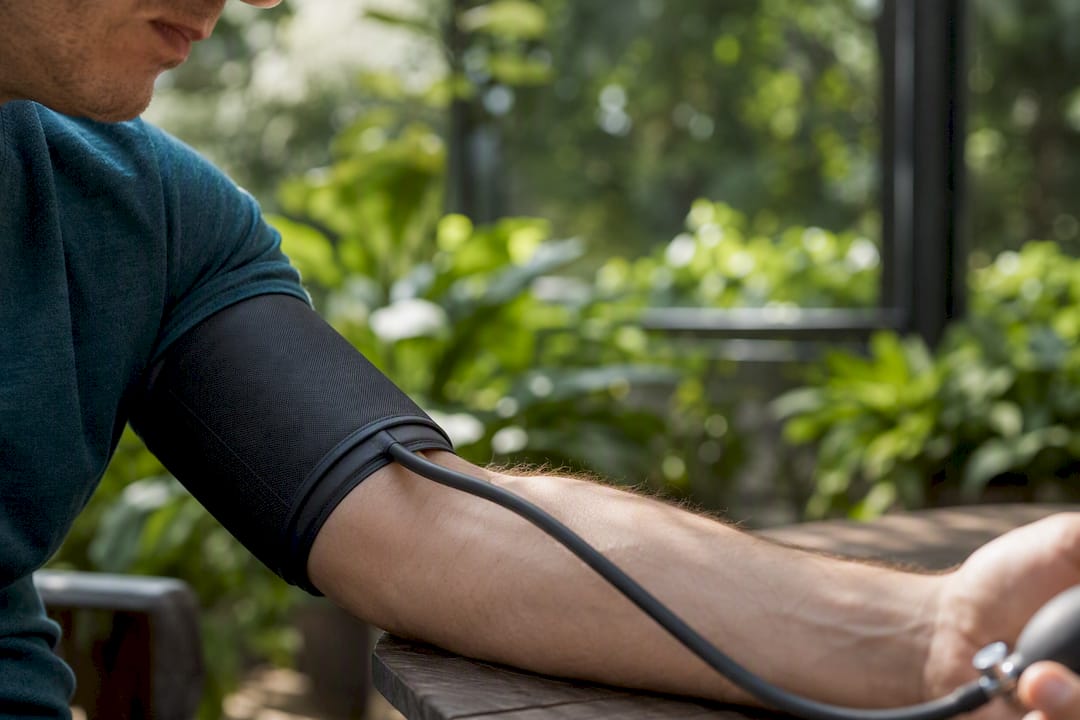
The reported swing is significant. An undersized cuff can inflate your systolic reading by up to 20 mm Hg, which is the difference between a normal reading and a Stage 2 hypertension flag.
What Should You Do If Your Readings Seem Off?
Bring your home monitor and cuff to your next appointment so a clinician can compare it side by side with office equipment. This is the single fastest way to catch a sizing or calibration problem.
If numbers seem inconsistent from day to day, work through this list before assuming something’s medically wrong:
- Recheck your arm measurement. Weight changes shift circumference over months.
- Confirm cuff placement and your prep routine matched the steps above.
- Replace the batteries. Low power skews digital readings more than people expect.
- Check the manufacturer’s site for recalls or recommended recalibration intervals.
Call a clinician immediately for a reading above 180/120 mm Hg or if you have chest pain, vision changes, or shortness of breath alongside a high number. Otherwise, just re-measure in 20 to 30 minutes.
How Much Error Can a Wrong Cuff Really Cause?
Twenty millimeters of mercury. That’s the reported ceiling for how far an undersized cuff can push your systolic reading off target, and it’s enough to move someone from “normal” to “hypertensive” on paper alone.
Two organizations anchor the sizing rule that matters most here: Target:BP and the joint AHA/ACC hypertension guidelines both specify bladder length at 80% or more of arm circumference and bladder width at 37% or more. Neither number is arbitrary. Both come from decades of comparing cuff-derived readings against intra-arterial measurement.
For deeper technical detail, Target:BP’s cuff-sizing page and the CDC’s home monitoring guidance are the two most useful starting points.
What Clinicians See Go Wrong Most Often
The two mistakes I see repeated constantly: people grab whatever “adult” cuff came in the box regardless of their actual arm size, and they measure over a bunched sleeve that’s already compressing the arm before the cuff even inflates.
Both are fixable in five minutes with a tape measure and a bare arm. If your numbers still seem off after fixing those, validation against an office device settles it for good.
— Charles
Frequently Asked Questions
How do I know if my blood pressure cuff is the wrong size? Measure your mid-upper-arm circumference and compare it against the cuff’s printed range. If your arm falls outside that range, the cuff is wrong for you regardless of what the label says.
Can a blood pressure cuff be too big? Yes. An oversized cuff tends to underestimate your true blood pressure because the pressure spreads across too much tissue to accurately compress the artery.
Is a wrist blood pressure monitor accurate? Wrist monitors are generally less reliable than validated upper-arm devices for diagnosis or ongoing management, largely due to their sensitivity to hand position during measurement.
How often should I check my blood pressure at home? Morning and evening checks for five consecutive days, with two readings averaged each time, give your clinician a solid picture for review.
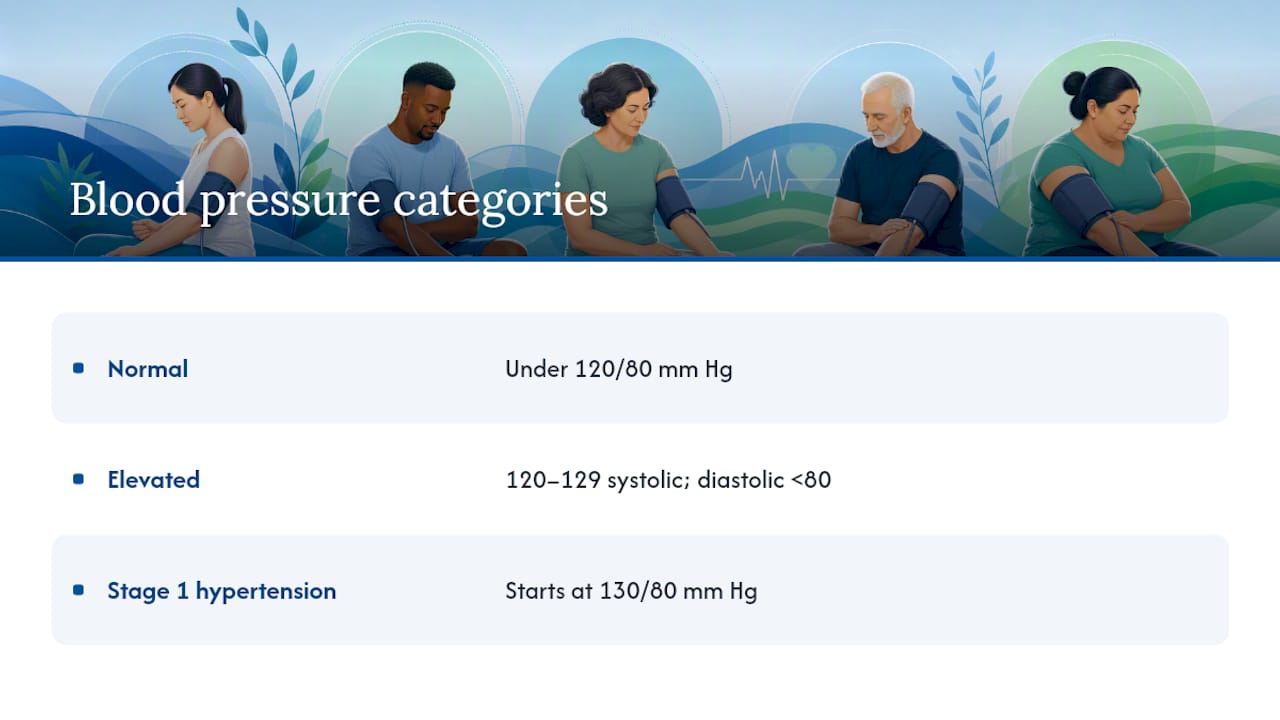
What is considered a normal blood pressure reading? Normal is under 120/80 mm Hg. Elevated is 120 to 129 systolic with diastolic under 80, and Stage 1 hypertension starts at 130/80.
This article is general information, not a substitute for advice from a qualified doctor. Consult a qualified healthcare professional about your own circumstances before acting on anything here.
Sources
- Selecting a Cuff Size – Target:BP
- Effects of cuff size — Journal scan (ACC)
- Blood pressure chart: What your reading means - Mayo Clinic
- Measuring Your Blood Pressure | High Blood Pressure | CDC
- Blood pressure measurement - MedlinePlus
Always discuss unusual or persistent readings with your clinician for personalized interpretation.