


![Longevity Complete Detox [BETA 21 Caps]: 7 Day Intensive Detox & Digestive Support](http://longevitypremier.com/cdn/shop/files/DetoxBeta-mid_100x100.png?v=1787365739)




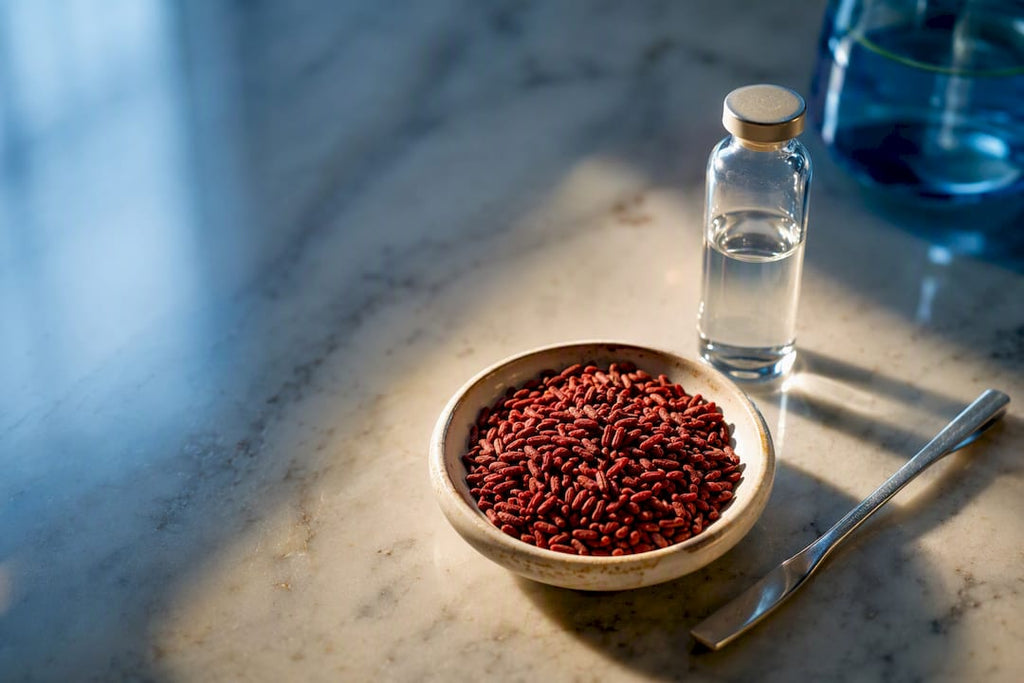
3 mg/day Warning: Red Yeast Rice Safety and How to Reduce Risk
Red yeast rice can lower LDL cholesterol, but it isn’t inherently safe. It contains monacolin K, a compound chemically identical to the prescription drug lovastatin, and unregulated potency means two bottles from two brands can deliver wildly different doses. That variability, plus a real risk of a contaminant called citrinin, is why anyone considering it needs a conversation with a clinician first, not a trip to checkout.
TL;DR:
- Red yeast rice can lower LDL cholesterol similarly to low-dose statins, but its potency varies greatly across products due to unregulated manufacturing.
- Serious adverse effects like liver injury and muscle breakdown, although rare, can occur at doses as low as 3 mg of monacolins per day, with some high-potency products exceeding this easily.
- Combining red yeast rice with prescription statins or CYP3A4 inhibitors can double exposure to monacolin K, significantly increasing the risk of side effects.
- Contamination with citrinin and inconsistent monacolin K levels make it essential to verify third-party testing and avoid products without a current Certificate of Analysis.
- Anyone considering red yeast rice should consult a healthcare professional, undergo baseline labs, and closely monitor for side effects, especially if on other medications or with existing liver or kidney conditions.
Table of Contents
- Understanding Red Yeast Rice Safety Through the Research
- Red Yeast Rice Side Effects: From Mild to Medical Emergency
- Who Should Avoid Red Yeast Rice and Why Interactions Matter
- Contamination, Potency Variability, and How to Spot a Safer Product
- Dosing, EFSA Warnings, and Why ‘Safe’ Is Hard to Define
- How to Use Red Yeast Rice Safely, Step by Step
- What Longevity Premier Looks For in a Cholesterol Formula
- A Measured Take on Natural Cholesterol Support
- A Quality-Focused Option for Cholesterol Support
- Sources
Understanding Red Yeast Rice Safety Through the Research
The clearest thing the research shows is a paradox: red yeast rice works, and that’s part of the problem. Randomized trials and pooled analyses confirm meaningful LDL reductions, often in the same range you’d expect from a low-dose statin, because monacolin K inhibits the same liver enzyme (HMG-CoA reductase) that statins target. That’s not a coincidence. It’s the same drug, delivered through a fermented rice product instead of a pill bottle.
The trouble is what the trials can’t tell you. Most red yeast rice studies run a few months, enroll a few hundred people at most, and were never designed to catch the adverse events that show up in one person out of ten thousand. Liver injury and severe muscle breakdown are exactly the kind of rare, slow-building harms that short trials miss.
Post-market data fills in some of that gap, and the picture is mixed. Surveillance systems and safety reviews suggest overall rates of liver and muscle problems tied to red yeast rice are low, yet case reports keep surfacing with severe, individual harm, including documented instances of muscle and liver dysfunction that trial data alone never flagged.
By the numbers: Regulators have flagged serious adverse events at intakes as low as 3 mg of monacolins per day, a dose easily exceeded by standard commercial capsules.
What this means for the safety of red yeast rice supplements:
- LDL lowering is real and reasonably well documented in controlled trials.
- Trials are underpowered to catch rare but serious harms like liver failure or rhabdomyolysis.
- Regulatory and case-report data show the risk isn’t hypothetical, even if it’s uncommon.
- Efficacy and risk rise together because both come from the same active compound.
Red Yeast Rice Side Effects: From Mild to Medical Emergency
Most people who take red yeast rice notice nothing worse than an upset stomach. The serious risks are rarer, but they’re the reason this supplement deserves more respect than a bottle of fish oil.
Common side effects tend to show up in the first few weeks and usually resolve on their own:
- Stomach upset or bloating
- Heartburn
- Headache
- Dizziness
Serious side effects are the ones that require you to stop and call your doctor, not wait it out:
- Muscle pain, tenderness, or unexplained weakness (a possible sign of myopathy or, rarely, rhabdomyolysis)
- Dark or “cola colored” urine, which can signal muscle breakdown affecting the kidneys
- Yellowing skin or eyes, unusual fatigue, or abdominal pain in the upper right side, all suggestive of liver injury
- Signs consistent with an allergic reaction, such as swelling or difficulty breathing
Statistic to know: Mayo Clinic notes that red yeast rice carries the same potential side effect profile as prescription statins, because the mechanism of action is identical, not just similar.
If you notice muscle symptoms or dark urine, stop taking the supplement and get evaluated the same day. This isn’t a “wait and see if it gets worse” situation. A clinician will typically order a liver function panel (ALT and AST) and a creatine kinase (CK) test, the same labs used to monitor patients on statin therapy. Elevated CK points to muscle injury; elevated liver enzymes point to hepatic stress. Catching either early, rather than after weeks of ignoring symptoms, is what keeps a scary lab result from becoming a hospital admission.
Who Should Avoid Red Yeast Rice and Why Interactions Matter
Red yeast rice doesn’t exist in isolation inside your body. It gets processed by the same liver pathway, the CYP3A4 enzyme system, that handles a long list of common medications. Stack red yeast rice on top of something else competing for that pathway, and monacolin K levels can climb well past what the label promised.
The combinations worth flagging:
- Prescription statins. Taking red yeast rice alongside a statin essentially doubles your statin-class exposure without your doctor knowing the real dose.
- CYP3A4 inhibitors, including certain antibiotics (erythromycin, clarithromycin) and antifungals (itraconazole, ketoconazole), which slow the breakdown of monacolin K and raise blood levels.
- Niacin, which independently raises the risk of muscle toxicity when combined with statin-like compounds.
- Ciclosporin, an immunosuppressant that both raises monacolin K exposure and carries its own muscle-injury risk.
- Grapefruit and alcohol, both of which stress liver metabolism and compound the hepatic risk red yeast rice already carries.
Cleveland Clinic specifically advises against use during pregnancy and breastfeeding, given the lack of safety data and the known risks tied to statin-class compounds in fetal development. The same caution applies to anyone with existing liver or kidney disease, since those are the organs doing the work of clearing the compound. If you’re already prescribed a statin, adding red yeast rice on your own isn’t a natural complement. It’s duplicate therapy with an unknown dose attached.
Contamination, Potency Variability, and How to Spot a Safer Product
Here’s the part most marketing pages skip entirely: red yeast rice supplements aren’t standardized, and that’s not a minor labeling quirk. It’s the central safety problem with the whole category.
During fermentation, the mold species Monascus purpureus can produce citrinin, a nephrotoxin linked to kidney damage. Independent testing has repeatedly found citrinin in products marketed as “citrinin-free,” meaning the claim on the label and the reality in the capsule don’t always match. Monacolin K content tells the same story. Two bottles claiming an identical serving size can differ several-fold in actual active compound, which means you can follow dosing instructions exactly and still have no idea how much statin-equivalent material you just swallowed.
What to check before you buy:
- Ask for a current Certificate of Analysis (COA) that specifically tests for both monacolin K content and citrinin levels.
- Favor manufacturers that publish third-party lab results rather than in-house testing only.
- Look for products aligned with recognized quality benchmarks, such as USP verification standards, even though red yeast rice itself isn’t FDA-regulated as a drug.
- Be skeptical of “standardized extract” language with no accompanying numbers. A percentage without a COA is a marketing claim, not proof.
Pro Tip: Email the manufacturer and ask for their most recent third-party COA before you buy, not after. A company that stalls or refuses is telling you something about what’s actually in the capsule.
Dosing, EFSA Warnings, and Why ‘Safe’ Is Hard to Define
There is no FDA-approved daily dose of monacolin K, because the agency has never approved red yeast rice as a drug in the first place. It’s sold as a dietary supplement, which means it skips the pre-market safety testing and standardized dosing that a prescription statin goes through before reaching a pharmacy shelf.
Europe has taken the more concrete regulatory stance. EFSA’s scientific opinion reiterated that monacolin K intakes at or above 3 mg per day may pose a risk of severe musculoskeletal and liver adverse effects, a threshold that pushed several EU member states toward tighter restrictions on red yeast rice products.
The number that matters: many commercial capsules deliver monacolin K in a range that meets or exceeds that 3 mg/day threshold flagged by EFSA, often without stating the amount clearly on the label.
- The FDA has not approved red yeast rice as a drug, and enforcement has historically focused on products that resemble regulated lovastatin too closely.
- EFSA’s opinion applies specifically to monacolin K from red yeast rice sources, not to prescription statins, which go through separate dosing and monitoring standards.
- Because most labels list “red yeast rice extract” in milligrams without specifying monacolin K content, you often cannot calculate your actual exposure without a COA in hand.
That gap between what regulators worry about and what labels disclose is the practical safety problem. You can follow the bottle’s instructions perfectly and still not know if you’re under, at, or well past the threshold that concerns EU regulators.
How to Use Red Yeast Rice Safely, Step by Step
If you and your clinician decide red yeast rice is worth trying, treat it exactly like starting a new statin, because that’s functionally what it is.
- Review current medications first. Flag any statins, CYP3A4 inhibitors, or niacin your clinician needs to know about before you start.
- Get baseline labs. Ask for liver function tests (ALT/AST) and a CK level before your first dose, so you have something to compare against later.
- Never stack it with a prescription statin unless your clinician is actively supervising that combination.
- Set a follow-up lab appointment within four to eight weeks of starting, the same window clinicians use when initiating statin therapy.
- Know your stop criteria in advance. New muscle pain, dark urine, or unusual fatigue means stop and call, not wait for the follow-up visit.
- Report serious side effects through the FDA’s MedWatch adverse event system, and keep the product’s COA on file in case your clinician needs the lot-specific testing data.
Pro Tip: Keep the product box and COA until you’ve finished the bottle. If a side effect shows up, that paperwork is what tells your doctor exactly what dose and contaminant profile you were exposed to.
What Longevity Premier Looks For in a Cholesterol Formula
Formulating a cholesterol supplement responsibly means starting from the same question this article just walked through: how much of the active compound is actually in the capsule, and can you prove it? Longevity Premier draws on more than 30 years of healthcare practice experience to build cholesterol support around transparency rather than marketing shorthand, pairing red yeast rice with complementary ingredients like plant sterols and garlic instead of leaning on monacolin K alone to do all the work.
What that looks like in practice:
- Formulations built around ingredient transparency rather than vague “proprietary blend” labeling.
- A preference for verifiable testing claims over unsubstantiated potency percentages.
- Product development informed by decades of clinical formulation experience rather than trend chasing.
None of that replaces a conversation with your own physician before you start anything new.
A Measured Take on Natural Cholesterol Support
Red yeast rice sits in an uncomfortable middle ground: too effective to dismiss as a placebo, too unregulated to hand out without oversight. That combination makes it one of the more misunderstood supplements on the market. People hear “natural” and assume “gentle.” The chemistry says otherwise.
My honest read is that red yeast rice deserves a place in the conversation about cholesterol management, but only alongside a clinician who’s willing to order baseline labs and actually look at a Certificate of Analysis. Quality-focused formulation matters here more than almost any other supplement category, precisely because the active ingredient is a drug hiding inside a food product. If you’re going to consider it, do it with your eyes open and your doctor in the loop, not with a bottle you found through a five-star review.
— Charles
A Quality-Focused Option for Cholesterol Support
If you’ve read this far, you already know the core problem with red yeast rice on its own: unpredictable potency and murky sourcing. That’s the exact gap Longevity Premier built its Cholesterol Formula around, combining red yeast rice with plant sterols and garlic rather than relying on a single unregulated compound to carry the entire formula.
The formula reflects the same standard this article has argued for throughout: know what you’re taking and why. That doesn’t replace medical guidance, and it shouldn’t. Talk with your clinician before adding any new cholesterol supplement, especially if you’re already on a statin. If you want to look at ingredient sourcing and formulation details for yourself, the Longevity Cholesterol Formula product page lays out the full ingredient panel, or start at Longevitypremier to see the full product lineup and get in touch with questions before you buy.
This article is general information, not a substitute for advice from a qualified doctor. Consult a qualified healthcare professional about your own circumstances before acting on anything here.
Sources
- Red yeast rice | NCCIH
- Safety and Efficacy of Red Yeast Rice (Monascus purpureus) as an Alternative Therapy for Hyperlipidemia
- Red Yeast Rice Supplement: Warnings & Side Effects | Cleveland Clinic