




![Longevity Complete Detox [BETA 21 Caps]: 7 Day Intensive Detox & Digestive Support](http://longevitypremier.com/cdn/shop/files/DetoxBeta-mid_100x100.png?v=1787365739)






Berberine vs Metformin: Which One Actually Fits Your Care Plan?
For most adults with type 2 diabetes, metformin remains the first-line choice, and berberine has not earned a place as its replacement. The two compounds converge on a shared cellular target, the AMPK pathway, which is why they produce genuinely similar effects on blood sugar. But similar isn’t identical, and the gap between them shows up in exactly the places that matter for safety.
Metformin has decades of trial data, predictable dosing, and FDA oversight behind it. Berberine is an unregulated supplement with real pharmacological activity but wide variation in potency from bottle to bottle, according to Cleveland Clinic.
Here’s the comparison in brief:
- Mechanism: both activate AMPK, but metformin also suppresses hepatic glucose output through liver-specific pathways, while berberine leans more heavily on gut and microbiome effects.
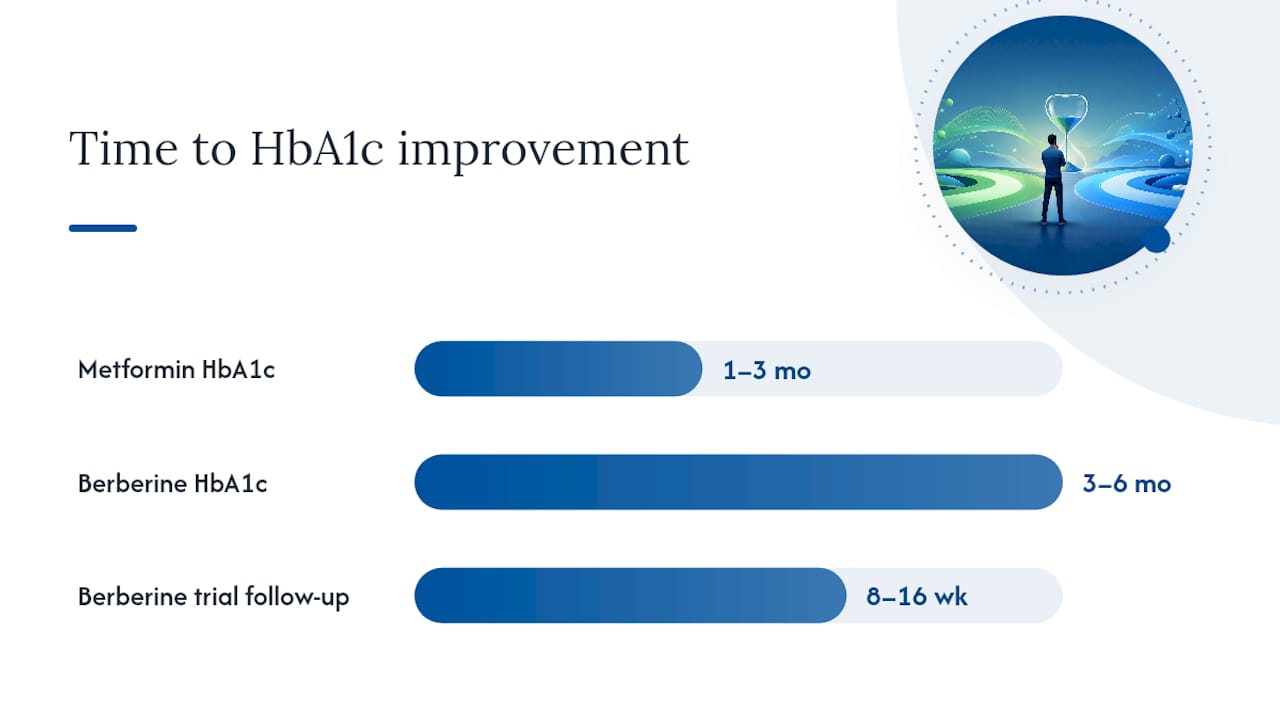
- Speed and magnitude: metformin typically moves HbA1c within 1 to 3 months; berberine often needs 3 to 6 months to show a comparable change.
- Safety: metformin carries a rare lactic acidosis risk in kidney impairment; berberine’s long-term safety data simply doesn’t exist at the same scale.
- Interactions: berberine affects liver enzymes and drug transporters in ways most supplement users never get screened for.
- Regulation: metformin is manufactured to strict pharmaceutical standards; berberine supplements are not required to prove potency or purity before sale.
If you have type 2 diabetes and elevated HbA1c, metformin stays the anchor of your treatment. A clinician might consider berberine as an adjunct for mild insulin resistance or dyslipidemia, but swapping out a prescribed medication for an over-the-counter capsule without medical guidance is a genuinely risky move.
Key Takeaways
Metformin remains the reliable, first-line choice for glucose control, while berberine’s role stays limited to a supervised adjunct with meaningful product-quality caveats.
| Point | Details |
|---|---|
| Shared mechanism, different depth | Both activate AMPK, but metformin has decades of RCT evidence and berberine does not. |
| Speed of effect differs | Metformin often shows HbA1c change in 1 to 3 months; berberine typically needs 3 to 6 months. |
| GI tolerability varies | One trial found GI side effects in about 20% of berberine users versus about 30% on metformin. |
| Interaction risk is real | Berberine affects liver enzymes and drug transporters, raising interaction risk with anticoagulants and other medications. |
| Quality control matters | Longevitypremier prioritizes third-party testing and transparent sourcing for its Gluco Formula and Cholesterol Formula lines. |
Table of Contents
- Berberine vs Metformin: How Do Their Mechanisms Compare?
- Does Berberine Lower Blood Sugar as Fast as Metformin?
- What Side Effects Should You Expect From Each?
- Can You Safely Combine Berberine With Other Medications?
- How Should You Dose Berberine or Metformin Correctly?
- When Might a Clinician Consider Berberine Instead of Metformin?
- What Should You Monitor When Starting Either Treatment?
- What Does Recent Research Say About Berberine and Metformin?
- A Practical Read on Where Berberine Really Fits
- Where Quality-Focused Supplements Fit Alongside Your Care Plan
- Frequently Asked Questions
- Sources
Berberine vs Metformin: How Do Their Mechanisms Compare?
Both compounds converge on the same master switch inside your cells: AMPK, or AMP-activated protein kinase. Think of AMPK as a cellular energy sensor. When it activates, it tells the liver to stop overproducing glucose and tells muscle tissue to pull more sugar out of the bloodstream. That single shared mechanism explains why berberine and metformin, chemically unrelated compounds, end up producing overlapping metabolic effects.
The way they get there is where things diverge sharply.
Metformin absorbs well orally and travels systemically to the liver, where it directly suppresses gluconeogenesis, the process of manufacturing new glucose from amino acids and fat byproducts. It also modestly improves insulin sensitivity in muscle tissue. This is well-characterized pharmacology backed by decades of clinical use.
Berberine works almost the opposite way. Its oral bioavailability is famously poor, often cited around 1% in standard extracts, according to the same review. Very little of an oral dose reaches systemic circulation intact. Instead, berberine’s main action happens locally in the gut: it reshapes microbiome composition, affects bile acid signaling, and activates AMPK in intestinal and liver tissue that it does reach. This is also part of why berberine’s effects on cholesterol and triglycerides sometimes outperform what you’d expect from its blood levels alone.
Picture a simple map of where each drug acts. Metformin’s main circuit runs liver to bloodstream to muscle. Berberine’s main circuit runs gut to microbiome to liver, with a smaller, more variable systemic loop layered on top. That difference in circuitry is why onset timing, dosing consistency, and side-effect patterns don’t match up neatly between the two.
Pharmacokinetics also shape how fast you feel anything. Metformin’s absorption is reliable enough that clinicians can predict blood levels from a given dose. Berberine’s absorption depends heavily on formulation, gut transporters, and even what you ate that day, which makes its onset far less predictable from person to person.
- Metformin: high oral bioavailability, hepatic gluconeogenesis suppression, modest muscle insulin sensitization.
- Berberine: low oral bioavailability, strong gut and microbiome activity, AMPK activation where it does reach tissue.
- Both: shared AMPK activation as the unifying mechanism behind their metabolic effects.
Pro Tip: If you’re curious why two “similar” supplements can feel completely different in effect, check whether the product uses a standard extract or a bioavailability-enhanced formulation. That detail matters more for berberine than almost any other variable in how it performs.
Does Berberine Lower Blood Sugar as Fast as Metformin?
Not quite, and the timeline difference is one of the most clinically important facts in this whole comparison. Metformin tends to show measurable HbA1c improvement within 1 to 3 months of consistent use, often with symptomatic changes like less fatigue or fewer glucose swings noticeable within days to weeks. Berberine typically takes longer, frequently 3 to 6 months before a comparable HbA1c signal emerges.
A narrative review covering both compounds found that in shorter trials, berberine can produce metabolic effects comparable to metformin, but the studies backing that finding tend to be smaller and less rigorously controlled than the multi-decade trial record behind metformin, according to PMC. That’s an important distinction: “comparable in a small trial” is not the same claim as “comparable in the broader body of evidence.”
A few limitations show up again and again in berberine research:
- Small sample sizes. Many berberine trials enroll a few dozen to a couple hundred participants, far below the scale of major metformin trials like UKPDS.
- Short follow-up periods. Most berberine studies run 8 to 16 weeks, too brief to assess durability or rare adverse events.
- Formulation heterogeneity. One trial’s “berberine 500 mg” may not behave like another’s, because extraction methods and bioavailability enhancers vary widely.
- Publication bias. Supplement research skews toward positive results published in lower-impact journals, which can inflate perceived effectiveness.
For practical purposes, a clinically meaningful HbA1c drop is usually considered to be around 0.5 to 1 percentage point or more. Trials suggest metformin reliably clears that bar within a few months in most patients with elevated baseline HbA1c. Berberine can approach similar territory in some studies, but the timeline stretches out and the confidence interval around that outcome is wider given the smaller evidence base.
If your HbA1c is significantly elevated and you need control soon, that timeline gap alone argues against leaning on berberine as your primary tool. If you’re managing prediabetes or mild elevations and have more runway, the slower kinetics matter less.
What Side Effects Should You Expect From Each?
Gastrointestinal symptoms dominate the side-effect profile for both drugs, but the rates differ in ways worth knowing before you start either one. A 2025 trial found gastrointestinal side effects in a somewhat lower percentage of berberine recipients compared to metformin recipients (https://www.ijbcp.com/index.php/ijbcp/article/view/6037), suggesting berberine may be somewhat gentler on the gut for some people, though results vary across studies and formulations.

Metformin’s most-cited serious risk is lactic acidosis, a rare but potentially life-threatening buildup of lactic acid in the blood. It’s strongly associated with impaired kidney function, severe dehydration, or acute illness that reduces oxygen delivery to tissues, which is why prescribers routinely check kidney function before starting and periodically afterward.
Berberine’s risk profile is murkier, not because it’s necessarily more dangerous, but because the long-term safety data simply doesn’t exist at metformin’s scale. Years of supplement use haven’t been tracked the way decades of metformin prescriptions have.
Metformin’s tolerability strategies are well established: starting at a low dose, titrating slowly, and switching to extended-release formulations cuts GI complaints substantially for many patients. Berberine users don’t have that same standardized playbook. Dose adjustment tends to be trial and error, complicated further by inconsistent potency across supplement brands.
A quick side-by-side on the main safety points:
- GI tolerability: berberine roughly 20% incidence versus metformin roughly 30% in one comparative trial.
- Serious rare risk: metformin carries lactic acidosis risk in kidney impairment; berberine has no comparable well-documented rare event, but also lacks the surveillance to know for sure.
- Long-term safety data: metformin, decades of tracked use; berberine, limited and short-duration.
- Tolerability fix: metformin has extended-release options and slow titration protocols; berberine relies on inconsistent, product-specific dose adjustment.
Can You Safely Combine Berberine With Other Medications?
Berberine isn’t pharmacologically inert, and that’s exactly the problem for anyone mixing it with prescription drugs without oversight. It inhibits several cytochrome P450 liver enzymes and affects P-glycoprotein, a transporter protein that controls how many drugs move through your gut wall and kidneys. Those two mechanisms combined mean berberine can raise or lower blood levels of anticoagulants, sedatives, and other glucose-lowering medications in ways most people never get screened for.
Metformin has its own contraindications, chiefly advanced kidney impairment, acute conditions that reduce oxygen delivery (like severe heart failure or sepsis), and situations requiring iodinated contrast dye for imaging, where it’s typically paused temporarily. Pregnancy requires individualized clinician judgment rather than a blanket rule.
Before combining either compound with anything else you’re taking, run through this checklist:
- Kidney function: both drugs’ safety profiles hinge heavily on how well your kidneys clear medications.
- Pregnancy or planned pregnancy: neither should be started or continued without direct clinician guidance.
- Polypharmacy: if you’re on blood thinners, sedatives, or multiple diabetes medications, berberine’s enzyme effects raise real interaction risk, as clinical guidance notes.
- Any new supplement: even “natural” doesn’t mean risk-free when it alters liver enzyme activity.
Prescription drug interactions get screened by your pharmacist automatically. Supplement interactions don’t, which is exactly why medical guidance consistently recommends talking to a clinician or pharmacist before adding berberine to any existing regimen.
How Should You Dose Berberine or Metformin Correctly?
Metformin dosing follows a predictable, well-documented path: most adults start around 500 mg once or twice daily and titrate up to a maintenance range, often 1,500 to 2,000 mg daily, with extended-release formulations available to ease GI symptoms. Your prescriber controls this precisely because the drug’s absorption is consistent from dose to dose.
Berberine trials commonly use 500 mg taken two to three times daily, but that number means less than it sounds like it should. Because oral bioavailability sits so low, absorption depends heavily on the specific extract, whether it’s paired with bioavailability enhancers, and even individual gut microbiome composition.
If you’re evaluating a berberine product, run it through this quality checklist:
- Third-party testing. Look for a certificate of analysis from an independent lab, not just the manufacturer’s own claim.
- Standardized alkaloid content. The label should specify actual berberine content, not a vague “proprietary blend.”
- No hidden blends. Proprietary formulas that don’t disclose exact milligram amounts make it impossible to compare doses across brands.
- Formulation transparency. Some products use enhanced-absorption technology; know whether yours does and adjust expectations accordingly.
Pro Tip: A supplement label listing “berberine complex” without a specific milligram figure for berberine hydrochloride itself is a red flag. Demand the actual number.
This variability is exactly why prescription dosing beats supplement dosing on predictability. Your metformin prescription delivers the same active compound at the same strength every time. Your berberine capsule might not, even from the same store shelf.
When Might a Clinician Consider Berberine Instead of Metformin?
Metformin stays the default starting point for anyone newly diagnosed with type 2 diabetes and an elevated HbA1c. That’s not conservatism, it’s the evidence talking: decades of RCTs back its glucose-lowering reliability, and its dosing and safety profile are thoroughly mapped.
Berberine tends to enter the conversation in narrower situations:
- Prediabetes or mild insulin resistance, where a patient wants non-prescription support alongside diet and exercise changes.
- Metformin intolerance, when persistent GI side effects make the prescription drug unworkable and alternatives are being explored under supervision.
- Predominant dyslipidemia or obesity, where berberine’s stronger lipid effects in some comparative studies make it worth discussing as an adjunct, since preclinical data suggests it may outperform metformin on cholesterol and triglyceride markers even when metformin remains superior for glycemic control.
- Combination approaches, occasionally explored to potentially allow lower doses of each agent while improving overall lipid and glucose profiles, though this requires direct clinical oversight.
Before adding either compound, a good decision framework asks: what’s the actual goal (glucose control, lipid improvement, or both), what safety checks are needed first, and what’s the monitoring plan going forward?
None of these scenarios support stopping a prescribed metformin regimen and replacing it with an over-the-counter berberine supplement on your own. That decision belongs in a conversation with the clinician managing your diabetes care, not in a solo product comparison.
What Should You Monitor When Starting Either Treatment?
Baseline labs matter before you start anything. That means checking kidney function (eGFR), liver enzymes if clinically indicated, and a current HbA1c and fasting glucose reading. Your clinician should also review your full medication list for interaction risk, particularly if berberine is being considered alongside other prescriptions.
Once you start, the timeline looks roughly like this: symptomatic check-ins and glucose monitoring in the first 1 to 4 weeks, an HbA1c recheck around the 3-month mark, and periodic kidney function checks for anyone on long-term metformin.
Watch for these red flags that warrant stopping and contacting your clinician immediately:
- Unusual muscle pain, difficulty breathing, or extreme fatigue, which can signal lactic acidosis on metformin.
- Severe or persistent GI symptoms that don’t improve with dose adjustment.
- Unexpected changes in effectiveness of other medications, which could indicate a berberine drug interaction.
- Signs of low blood sugar if you’re combining glucose-lowering agents.
A simple shared checklist, kept alongside your diabetic supply management routine, helps keep monitoring consistent between appointments rather than something that only happens at the doctor’s office.
What Does Recent Research Say About Berberine and Metformin?
The evidence base has grown, but it hasn’t closed the gap between the two compounds. Recent narrative reviews continue to describe berberine’s metabolic effects as promising yet inconsistently studied compared to metformin’s decades-deep trial record, according to PMC.
A few themes stand out across recent literature:
- Berberine trials still vary widely in dosage, extract type, and duration, which makes cross-study comparison difficult.
- Follow-up periods for berberine research rarely extend past several months, leaving long-term cardiovascular outcomes essentially untested.
- Public comparisons calling berberine “nature’s Ozempic” don’t hold up against the actual mechanism; berberine works through AMPK and gut pathways, not the GLP-1 receptor pathway that drives semaglutide’s effects, and UCLA Health has pushed back on that framing directly.
- What would shift practice: larger, standardized-formulation randomized trials with multi-year follow-up, similar in scale to what metformin already has behind it.
Until that evidence exists, berberine’s role stays adjunct, not replacement.
A Practical Read on Where Berberine Really Fits
The mechanistic overlap between these two compounds is real, and it’s tempting to treat “similar pathway” as “similar drug.” That’s the mistake I see most often in how people talk about this comparison. Shared AMPK activation doesn’t erase the difference between a drug with regulated manufacturing and decades of outcome data versus a supplement whose potency varies by brand.
Where berberine earns a legitimate place is as an adjunct, particularly for lipid support or mild insulin resistance, under a clinician’s watch. Where it doesn’t belong is in your medicine cabinet as a silent swap for a prescription that’s already working. Monitor the labs, respect the product-quality gap, and let your care team make the substitution call, not a supplement label.
Where Quality-Focused Supplements Fit Alongside Your Care Plan
If product-quality inconsistency is what gives you pause about berberine, that concern is exactly the right instinct, and it’s the problem Longevitypremier was built to address for the supplement side of metabolic health. Rather than making therapeutic claims, Longevitypremier focuses on third-party testing and transparent certificates of analysis so you know what’s actually in the capsule, not just what the label promises.

The Gluco Formula and Cholesterol Formula lines are built around standardized ingredient sourcing for glucose and lipid metabolism support, the same categories where product variability undermines so many berberine supplements on the market. For readers who want to understand dosing considerations, contraindications, and how to evaluate any supplement before adding it to an existing regimen, the free guide on supplement safety walks through exactly that, without pretending to replace your clinician’s advice. If you’re managing type 2 diabetes or metabolic syndrome, read it, then bring your questions to the person managing your prescriptions.
Frequently Asked Questions
Is berberine as effective as metformin for lowering blood sugar? Berberine can produce meaningful glucose-lowering effects, but it typically takes longer, often 3 to 6 months versus metformin’s 1 to 3 months, and the evidence behind it comes from smaller, shorter trials.
Can I replace metformin with berberine on my own? No. Stopping a prescribed metformin regimen without clinician guidance risks losing glucose control, and berberine’s unregulated status means potency and quality vary between products.
How does berberine compare to Ozempic or semaglutide? Berberine works through AMPK and gut pathways, not the GLP-1 receptor mechanism that drives Ozempic and semaglutide. Popular comparisons calling it “nature’s Ozempic” oversimplify how differently these compounds actually work, according to UCLA Health.
What are the most common berberine interactions? Berberine inhibits certain liver enzymes and affects drug transporters, which can alter levels of anticoagulants, sedatives, and other glucose-lowering medications. Always check with a pharmacist before combining it with prescriptions.
Are metformin’s side effects worse than berberine’s?
Is berberine regulated the same way as metformin? No. Metformin is an FDA-approved prescription drug with strict manufacturing standards. Berberine is sold as a supplement, meaning potency and purity aren’t independently verified before it reaches store shelves.
This article is general information, not a substitute for advice from a qualified doctor. Consult a qualified healthcare professional about your own circumstances before acting on anything here.
Sources
- Metformin and berberine, two versatile drugs in treatment of common metabolic diseases - PMC
- Berberine vs. Metformin: Are They the Same? - Cleveland Clinic
- Berberine for Weight Loss | Ohio State Health & Discovery
- Berberine is a potential alternative for metformin with good regulatory effect on lipids in treating metabolic diseases
- Berberine is a promising supplement but it’s not a magical weight-loss solution | Mayo Clinic Press