



![Longevity Complete Detox [BETA 21 Caps]: 7 Day Intensive Detox & Digestive Support](http://longevitypremier.com/cdn/shop/files/DetoxBeta-mid_100x100.png?v=1787365739)






TMAO, SCFAs, LPS: How the Gut and Heart Connection Changes Care
Yes, gut health measurably affects heart health, and the evidence isn’t fringe science anymore. Two microbial byproducts drive most of the effect: TMAO, a metabolite that promotes artery-clogging plaque, and short-chain fatty acids (SCFAs), which help keep blood pressure and inflammation in check. If you have elevated cardiovascular risk, the practical move is straightforward: adjust your diet toward fiber and plants, and loop in your clinician before changing anything else.
TL;DR:
- Elevating TMAO levels from red meat, eggs, and dairy correlates with higher risks of heart attack, stroke, and worse heart failure outcomes, but causation remains unproven.
- Increasing dietary fiber through plant-based foods can lower cardiovascular risks by as much as 30%, mainly by reducing fat absorption and promoting protective SCFA production.
- A compromised gut barrier allows bacterial toxins like LPS into the bloodstream, triggering inflammation that contributes to artery clogging and heart disease.
- Microbiome tests and TMAO blood levels are available but are not yet proven clinical tools, with standard risk assessments like blood pressure and lipid panels remaining primary.
- Lifestyle changes, including eating more plants, reducing red meat intake, and adding prebiotic foods, are the most effective, practical steps anyone can take today.
Table of Contents
- How the gut heart connection actually works at the cellular level
- What does the human evidence actually show?
- What can you actually do about it today?
- Should you get your TMAO or microbiome tested?
- Why this evidence still comes with real caveats
- How Longevitypremier thinks about supplements in this picture
- A closing note on how to read this evidence
- Where supplements fit alongside diet and clinical care
- Sources
How the gut heart connection actually works at the cellular level
The gut heart connection runs through three main biological channels, and understanding them changes how you think about a dinner plate.
The first is the TMA to TMAO pathway. When you eat red meat, eggs, or full-fat dairy, you’re feeding your gut bacteria choline, carnitine, and lecithin. Certain microbes convert these compounds into trimethylamine (TMA), which travels to your liver and gets oxidized into trimethylamine N-oxide, or TMAO. This metabolite is now recognized as pro-atherogenic, meaning it actively contributes to plaque buildup in artery walls, according to a comprehensive review of the gut heart axis published in PMC. It’s not a side effect of bad genetics. It’s a direct product of what your gut bacteria do with what you feed them.
The second channel works in the opposite direction. SCFAs, mainly butyrate, acetate, and propionate, come from bacteria fermenting fiber you can’t digest yourself. These compounds strengthen your intestinal lining, calm systemic inflammation, and appear to help regulate blood pressure. Where TMAO pushes cardiovascular risk up, SCFAs tend to pull it down.
The third channel involves what happens when your gut barrier gets leaky. A compromised intestinal lining lets lipopolysaccharide (LPS), a component of bacterial cell walls, slip into your bloodstream. Once there, LPS triggers immune receptors like TLR4 and activates inflammatory cascades including the NF-κB pathway and inflammasome complexes. That’s a fancy way of saying your immune system starts treating your bloodstream like a battlefield, and chronic low-grade inflammation is a known driver of atherosclerosis.
There’s also a feedback loop specific to heart failure. When cardiac output drops, blood flow to the gut drops with it. Reduced perfusion changes the gut environment itself, often making it more permeable and less hospitable to beneficial bacteria. The vagus nerve, which runs a constant two-way conversation between your gut and your autonomic nervous system, appears to carry signals both directions in this loop.
Key mechanisms driving the gut heart axis:
- TMAO production: gut microbes metabolize choline and carnitine into TMA, which the liver converts into a pro-atherogenic compound
- SCFA protection: fiber fermentation yields butyrate, acetate, and propionate, which support barrier integrity and blood pressure regulation
- Gut permeability and LPS: a weakened intestinal barrier lets bacterial endotoxin enter circulation, triggering inflammatory signaling
- Autonomic cross-talk: the vagus nerve and reduced cardiac perfusion create bidirectional feedback in heart failure, according to a mechanistic review in Circulation Research
What does the human evidence actually show?
Mechanisms explain plausibility. Cohort studies and trials tell you whether it matters in real people, and here the picture is consistent, if not yet definitive.
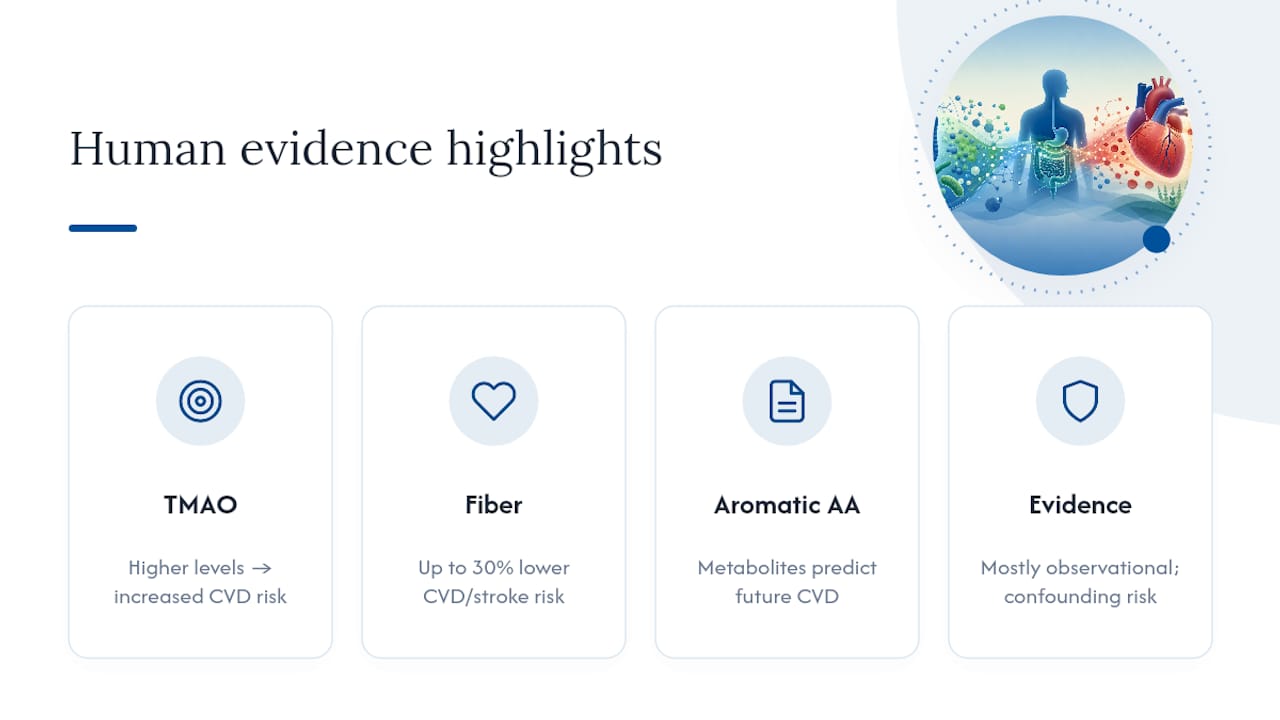
Higher circulating TMAO levels associate with increased risk of atherosclerosis, heart attack, stroke, and worse outcomes in existing heart failure patients. That association shows up across multiple cohort analyses cited in the PMC review of the gut heart axis, though the strength of the relationship varies by population and study design. This is correlational data, not proof that lowering TMAO with a pill or powder will cut your personal risk. But the consistency across independent cohorts is hard to dismiss.
Fiber-rich diets can lower the risk of heart disease and stroke by as much as 30%, largely through reduced fat and cholesterol absorption combined with SCFA production that helps regulate blood pressure.
That figure comes from dietary epidemiology, not a microbiome supplement trial, and it’s one of the more robust numbers in this entire field. Fiber does double duty: it directly blunts fat absorption in the gut and it feeds the bacteria that produce protective SCFAs. Few single dietary changes carry that kind of dual mechanism.
More recent multiomics work adds a layer researchers didn’t have access to a decade ago. The MetaCardis consortium tracked microbial metabolites of aromatic amino acids like phenylalanine and tyrosine and found they associate with kidney function markers and predict future cardiovascular disease in cohort analysis, according to a study published in Nature Communications. This points toward what researchers now call a gut-kidney-heart axis, where microbial byproducts affect more than one organ system simultaneously. Separately, NIH-funded research has found that specific gut bacteria can reduce cholesterol and lower heart disease risk in controlled settings, which is part of why pharmaceutical and nutraceutical researchers are watching this space closely.
None of this amounts to proof of causation. Almost all of the human data is observational, meaning researchers measure metabolite levels and disease outcomes in existing populations rather than randomly assigning people to different gut bacteria. Confounding is a real risk. People who eat more red meat, and therefore produce more TMAO, often differ from fiber-heavy eaters in a dozen other ways that also affect heart health. Long-term randomized controlled trials that directly test microbiome interventions against hard cardiac outcomes remain scarce.
What can you actually do about it today?
You don’t need a lab test to start acting on this. Diet remains the highest-leverage, lowest-risk intervention available, and it’s the one backed by the most consistent evidence.
- Shift toward a plant-forward eating pattern. Whole grains, legumes, fruits, vegetables, and nuts all supply the fiber that SCFA-producing bacteria need to thrive. This is the single change with the clearest evidence trail behind it.
- Cut back on frequent red meat. You don’t have to eliminate it, but treating it as an occasional food rather than a daily staple reduces the choline and carnitine load that feeds TMAO production. Fish and plant proteins are reasonable swaps.
- Add prebiotic foods regularly. Onions, garlic, leeks, and oats contain compounds that selectively feed beneficial gut bacteria.
- Include fermented foods with realistic expectations. Yogurt, kefir, and tempeh introduce live cultures, but evidence that probiotic supplements specifically improve cardiovascular outcomes remains mixed and preliminary. Food-based fermentation is a reasonable habit; don’t expect a capsule to substitute for it.
- Move your body and protect your sleep. Regular exercise and adequate sleep both influence microbiome diversity, and unnecessary antibiotic use can disrupt it for months.
Pro Tip: Try replacing one red-meat dinner per week with a legume-based dish or oily fish like salmon. It’s a small enough change to stick with, and it directly targets both the TMAO pathway and your omega-3 intake at once.
If you’re tracking progress, pair dietary changes with a basic monitoring routine: a home blood pressure log a few times a week, and a lipid panel on whatever schedule your clinician recommends, usually annually for most adults.
Should you get your TMAO or microbiome tested?
Testing in this space is available, but it’s not yet where routine cardiology practice lives. Here’s the honest state of things.
- TMAO blood tests exist through specialty labs, but they’re currently more useful for research stratification than for guiding day-to-day treatment decisions, since there’s no established clinical threshold that changes prescribing.
- Microbiome sequencing can show you which bacterial families dominate your gut, but it doesn’t yet translate into a validated cardiovascular risk score the way a lipid panel does.
- Your clinician will still lean on blood pressure readings, a standard lipid panel, fasting glucose, and kidney function markers as the backbone of cardiovascular risk assessment. Gut-focused biomarkers may eventually supplement that picture, not replace it.
- Seek medical evaluation promptly for chest pain, sudden palpitations, blood pressure that stays elevated despite lifestyle changes, or new gastrointestinal symptoms paired with unexplained weight loss.
A downloadable blood pressure log can help you track trends between clinic visits, which gives your provider more useful data than a single office reading.
Why this evidence still comes with real caveats
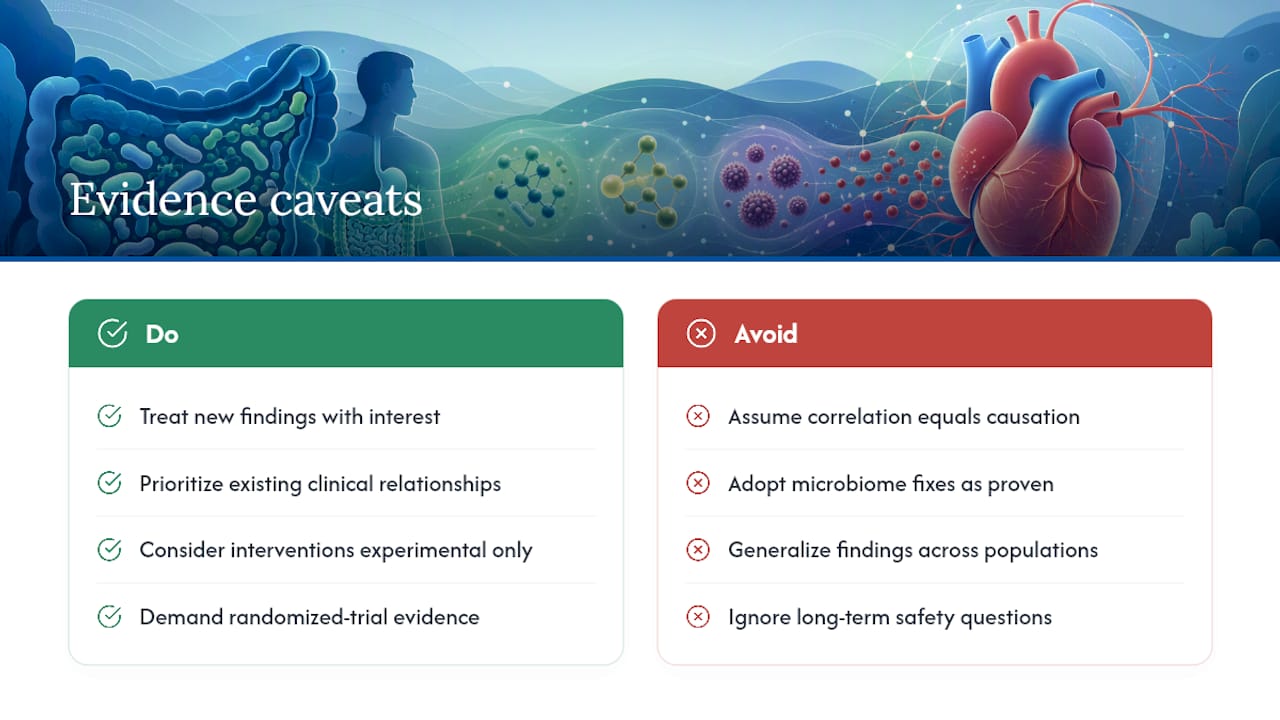
Observational associations are not the same as proven cause and effect. Most of what we know connects gut metabolites to heart disease through correlation, and randomized trials showing that changing your microbiome directly prevents heart attacks or strokes are still limited, as researchers note in a review on the gut-heart axis in heart failure.
Human microbiome studies also vary enormously by population, background diet, and the lab methods used to sequence bacteria, which makes findings hard to compare across studies. Emerging interventions, precision probiotics targeting specific strains, drugs that inhibit TMAO production, and fecal microbiota transplants, show promise in early research but remain experimental, with unresolved questions about long-term safety and durability of effect.
The honest takeaway: this is a genuinely active and fast-moving research area, not a solved problem. Treat new findings with interest and your existing clinical relationships with priority.
How Longevitypremier thinks about supplements in this picture
Longevitypremier’s formulations draw on more than 30 years of healthcare practice experience, and that background shapes a specific philosophy: targeted nutrition should support what diet and clinical care are already doing, not attempt to replace either one.
Products like the Longevity Cholesterol Formula and Longevity Blood Pressure Formula are built around ingredients with a track record in cardiovascular support, positioned as adjuncts within a broader plan that includes fiber intake, movement, and regular monitoring. If you’re weighing whether a supplement fits your situation, start by checking for interactions with any medications you take, introduce one product at a time so you can track effects, and keep your provider informed. A free resource guide walks through how these formulations are designed to complement, not substitute for, prescribed treatment.
A closing note on how to read this evidence
The gut heart connection is real, well-documented, and still incomplete. What frustrates me about how this topic often gets covered is the whiplash between two bad extremes: either “your microbiome controls everything” hype, or dismissive shrugs that ignore a genuinely substantial body of cohort and mechanistic research. Neither serves you. The honest position is that diet-driven changes to your gut bacteria plausibly move the needle on cardiovascular risk, the effect sizes are real but modest, and no single food or supplement rewires your risk overnight. Treat this as one more lever, not the whole machine. Partner with a clinician who knows your full health picture before you make major changes, especially if you’re already managing blood pressure or cholesterol.
— Charles
Where supplements fit alongside diet and clinical care
If you’ve read this far, you already know the biggest lever is dietary: more fiber, less frequent red meat, more plants. Where a targeted formulation can help is filling gaps that a busy week or an imperfect diet leaves behind.

Longevitypremier’s Longevity Cholesterol Formula combines plant sterols, red yeast rice, and garlic for cholesterol and triglyceride support, while the Longevity Blood Pressure Formula uses hawthorn, kudzu, and sage, ingredients studied for their role in circulatory support. Both are designed as adjuncts to a fiber-forward diet and clinical monitoring, never as a substitute for prescribed medication. If digestive health is part of your picture too, that’s a separate but related piece of the puzzle worth discussing with your provider.
Always talk to your clinician before starting a new supplement, particularly if you take blood pressure or cholesterol medication, since interactions are possible. Download the free ebook for a plain-language rundown of how these formulas are built, then browse the full product lineup at Longevitypremier to see which category matches your current goals.
Sources
- The Gut–Heart Axis: A Comprehensive Review of Microbiota’s Role in Cardiovascular Health and Disease and Emerging Therapeutic Strategies - PMC
- How a fiber-rich diet promotes heart health — Harvard Health
- A gut microbiome-kidney-heart axis predictive of future cardiovascular diseases — Nature Communications
- Gut-Heart Axis: The Role of Gut Microbiota and Metabolites in Heart Failure — Circulation Research
This article is general information, not a substitute for advice from a qualified doctor. Consult a qualified healthcare professional about your own circumstances before acting on anything here.