


![Longevity Complete Detox [BETA 21 Caps]: 7 Day Intensive Detox & Digestive Support](http://longevitypremier.com/cdn/shop/files/DetoxBeta-mid_100x100.png?v=1787365739)





Turmeric Supplement Benefits for Buyers: Formulation, Trials, Labels
Turmeric and curcumin supplements have the strongest support for short-term relief of knee osteoarthritis pain and certain inflammation markers, with weaker or inconsistent evidence for heart disease, metabolic, or broad disease prevention. Benefits depend heavily on the specific formulation, since bioavailability varies widely between products. If you take blood thinners, diabetes medication, or have liver disease, talk to your clinician before starting.
TL;DR:
- A 2025 review of 1,705 participants found lower CRP and TNF alpha versus placebo, while other markers changed inconsistently and pain evidence remained low certainty.
- Check the label for curcuminoids in milligrams and a named absorption method; total turmeric weight and proprietary blends hide the active dose.
- Osteoarthritis trials used daily doses from 80 to 1,500 milligrams and lasted one week to four months; take supplements with food.
- People taking blood thinners or diabetes medication, or those with liver disease, should consult a clinician before starting, especially with enhanced formulations.
Table of Contents
- What the clinical evidence actually shows
- Turmeric vs curcumin: why formulation changes everything
- How to take turmeric or curcumin supplements
- Safety, side effects, and drug interactions to watch for
- A practical checklist for choosing a turmeric supplement
- Beyond joints: cognitive, metabolic, and cancer-prevention research
- A formulator’s take on reading the turmeric research
- Where our Turmeric Curcumin fits into this picture
- FAQ
- Sources
What the clinical evidence actually shows
The clearest signal in curcumin research points to knee osteoarthritis. A 2025 systematic review and meta-analysis of randomized trials covering 1,705 participants found that curcumin significantly lowered two inflammatory markers, C-reactive protein and TNF-alpha, compared to placebo. Doses in these trials ranged from 80 to 1,500 milligrams per day; treatment lasted anywhere from one week to four months. Other inflammatory biomarkers did not change consistently, which tells you the effect is real but narrow.
A separate network meta-analysis of 17 randomized trials looked specifically at pain outcomes using the WOMAC scale, a standard osteoarthritis symptom measure. The catch: the researchers rated the overall certainty of this evidence as low, meaning future, larger trials could shift the picture.
Multiple trials involving well over a thousand patients showed measurable drops in CRP and TNF-alpha with curcumin versus placebo, one of the more consistent findings in this research area, according to the 2025 meta-analysis.
Beyond osteoarthritis, the picture gets murkier. Harvard Health’s evidence review notes that trials are generally small, short, and tied to specific formulations, and cautions that supplements should never replace prescribed treatment for any condition. An umbrella review published in Frontiers synthesizing many curcumin meta-analyses found potential signals across lipids, blood pressure, and musculoskeletal outcomes, but flagged generally low methodological quality across the underlying studies.
What this means in practice:
- Short-term knee osteoarthritis symptom support has the most consistent trial backing.
- Cardiovascular prevention, blood pressure, and cholesterol benefits remain unproven and should not guide treatment decisions.
- Nonalcoholic fatty liver disease (NAFLD) improvements appear in some research but are far from settled.
- Effects depend on the exact product and dose studied, not on the word “turmeric” alone.
If you’re also researching herbal approaches to blood pressure, our breakdown of blood pressure herbs backed by clinical evidence covers where that research currently stands.
Turmeric vs curcumin: why formulation changes everything
Turmeric is the whole spice, ground from the root of Curcuma longa. Curcumin is just one compound inside it, part of a group called curcuminoids, and it’s the ingredient researchers actually study. This distinction matters because a supplement label that says “turmeric 1,000 mg” tells you almost nothing about how much curcumin, or how much active curcuminoid, you’re getting.
Plain curcumin has a well-documented problem: your body absorbs very little of it, metabolizes what it does absorb quickly, and clears it out fast. That’s why manufacturers add absorption enhancers. Common strategies include:
- Piperine, the active compound in black pepper, which boosts curcumin absorption substantially.
- Phospholipid complexes that bind curcumin to fat molecules for easier uptake.
- Liposomal or micellar delivery systems that package curcumin in tiny protective shells.
- Nanoparticle formulations designed to increase solubility.
Higher absorption isn’t automatically safer. The National Center for Complementary and Integrative Health (NCCIH) reports liver injury cases tied to some bioavailability-enhanced products, even as conventional oral turmeric appears safe for most people over two to three months of use.
Pro Tip: Judge a supplement by the exact formulation used in the study you’re trying to replicate, not by the generic word “turmeric” on the label.
How to take turmeric or curcumin supplements
If you’re considering a supplement, matching your approach to what trials actually tested matters more than picking the highest number on the label.
- Choose your form. Options include raw turmeric powder, standardized curcumin extract, curcumin phospholipid complexes, and bioavailability-enhanced capsules.
- Match the dose to the evidence. Trials for osteoarthritis symptoms have used curcuminoid doses from about 80 to 1,500 milligrams per day, with many randomized studies landing between 500 and 2,000 milligrams depending on the formulation, per the osteoarthritis meta-analysis.
- Expect a multi-week commitment. Studied durations ran from one week to roughly four months; shorter use rarely matches trial results.
- Take it with food. A fat-containing meal improves absorption of curcumin’s fat-soluble compounds.
- Split higher doses. Dividing a daily amount into two servings can reduce stomach upset and smooth absorption.
Long-term, continuous use at trial-level doses hasn’t been studied as thoroughly as short courses, so check in with a clinician before treating turmeric as a daily, indefinite regimen.
Safety, side effects, and drug interactions to watch for
Most people tolerate turmeric and curcumin well, but trials consistently report some gastrointestinal effects: nausea, acid reflux, and diarrhea, usually at higher doses.
A rarer but more serious concern is liver injury. The NCCIH safety overview specifically flags this risk with certain bioavailability-enhanced formulations, likely because higher absorption means higher systemic exposure. Watch for fatigue, yellowing skin or eyes, dark urine, or loss of appetite, and stop the supplement and seek care if any appear.
Curcumin can interact meaningfully with prescription drugs, according to NCCIH’s herb-drug interaction digest, which is why a pharmacist review before starting makes sense for anyone on regular medication.
Key interaction concerns:
- Blood thinners and antiplatelet drugs: curcumin may add to bleeding risk.
- Diabetes medications: combined effects could push blood sugar too low.
- Piperine-containing formulations: piperine itself can alter how your body metabolizes other drugs, per pharmacokinetic research on curcumin and piperine.
People who are pregnant or breastfeeding, those with gallbladder or bile-duct disease, anyone with existing liver disease, and people on blood thinners or glucose-lowering medication should consult a clinician before starting, the same caution that applies to combining any botanical supplement with cardiovascular medications, as our piece on garlic and blood pressure also notes.
A practical checklist for choosing a turmeric supplement
Reading the label correctly matters more than brand reputation.
- Check the Supplement Facts panel for the standardized curcuminoid amount in milligrams, not just total turmeric weight.
- Look for disclosed absorption enhancers, like piperine, or named delivery technology rather than vague wording.
- Favor products with third-party testing where available, such as USP or NSF verification, or independent lab results from services like ConsumerLab.
- Avoid “proprietary blends” that hide the actual curcuminoid dose behind a combined ingredient total.
- Confirm the manufacturer lists contact information and offers a certificate of analysis on request.
Pro Tip: A product that won’t tell you its curcuminoid dose in milligrams isn’t giving you enough information to compare it to any clinical trial.
Red flags include disease-cure claims, missing dosage information, and no visible manufacturing or testing transparency. Johns Hopkins Medicine points out that concentrated supplements carry more risk of side effects than using turmeric as a culinary spice, so the bar for transparency should be higher for a capsule than for a seasoning jar.
Beyond joints: cognitive, metabolic, and cancer-prevention research
Interest in turmeric extends well past joint pain. Early research has explored curcumin’s relationship to cognitive health, metabolic markers, and cancer prevention, though none of these areas have reached the evidentiary strength seen in osteoarthritis trials.
For cognitive health, researchers have examined whether curcumin’s anti-inflammatory activity might support brain aging, but findings remain preliminary and inconsistent across study designs. Metabolic health research, covering blood sugar regulation and lipid levels, shows some positive signals in the Frontiers umbrella review, but the same review flags low methodological quality across many of the underlying studies, meaning these results need confirmation before they can guide treatment choices.
Cancer-prevention research into curcumin has generated laboratory and early-stage interest for years, largely because of curcumin’s role in several inflammatory pathways. However, no major authoritative health body currently recommends curcumin supplements for cancer prevention or treatment, and the human trial evidence hasn’t reached the level needed to support that use.
The consistent theme across all three areas: promising laboratory and early clinical signals, but not yet the kind of large, high-certainty human trials that back the osteoarthritis findings. If you’re drawn to turmeric for one of these broader goals, treat it as a complementary addition alongside, never a replacement for, established medical care and monitoring.

A formulator’s take on reading the turmeric research
After spending time with the curcumin trial data, what stands out isn’t that turmeric “works” or “doesn’t work,” it’s that most consumer confusion comes from ignoring formulation entirely. Our approach draws on decades of healthcare practice experience, focusing on building formulations around the actual studied dose rather than a marketing number. That’s also why we favor disclosed ingredients and transparent labeling over blends that hide ingredient amounts. None of this replaces a conversation with your own clinician, especially if you’re managing another condition or taking medication.
— Charles
Where our Turmeric Curcumin fits into this picture
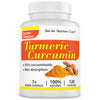
If the checklist above left you wondering where to start, our Turmeric Curcumin formula is built around the same transparency standard: a clearly labeled curcuminoid dose on the Supplement Facts panel, not a vague turmeric weight that leaves you guessing.
- Clear, standardized curcuminoid dosing on the label, no hidden proprietary blend.
- Formulated using the kind of practitioner-informed approach we apply across our full line, including our Longevity Blood Pressure Formula.
- Current prices are available on the pricing page.
Readers exploring complementary, non-pharmacologic approaches to joint discomfort alongside a supplement routine may also find red light therapy for arthritis and bone health worth a look. Check out our full product catalog to see how our formulas fit your specific health goals.
This article is general information, not a substitute for advice from a qualified doctor. Consult a qualified healthcare professional about your own circumstances before acting on anything here.
FAQ
What vitamins cannot be taken with turmeric?
Turmeric itself doesn’t broadly block vitamins, but it can interact with certain medications, including blood thinners and diabetes drugs, more than with vitamins specifically. If you take any vitamin K antagonist or supplement that also affects blood clotting, review your full regimen with a pharmacist, since herb-drug interactions are possible even among seemingly unrelated products.
What helps turmeric absorption?
Piperine, the compound found in black pepper, is the most studied absorption enhancer and can substantially increase how much curcumin your body takes up, according to pharmacokinetic research. Taking turmeric with a fat-containing meal also helps, since curcumin is fat-soluble.
What are the benefits of combining turmeric and black pepper?
Combining turmeric with black pepper, specifically its piperine content, significantly increases curcumin absorption compared to turmeric alone. This combination is one of the most common and lowest-cost bioavailability strategies used in consumer supplements today.
When should I take turmeric capsules?
Most trial protocols had participants take curcumin with meals, since absorption improves with dietary fat, and many split the daily dose into two servings. Consistency matters more than exact timing. Follow the dose and duration reflected in the research, generally weeks to a few months, rather than an indefinite daily habit without a plan.
Sources
- Effects of curcumin on serum inflammatory biomarkers in patients with knee osteoarthritis: a systematic review and meta-analysis of randomized controlled trials — PubMed
- Effect of turmeric products on knee osteoarthritis: a systematic review and network meta-analysis — PubMed
- Turmeric benefits: a look at the evidence — Harvard Health
- Turmeric: Usefulness and safety — NCCIH
- Curcumin and multiple health outcomes: critical umbrella review of intervention meta-analyses — Frontiers