





Supplement Smarts: How to Read Labels, Judge Quality and Use Supplements Safely
Testing seals, FDA rules, the Supplement Facts panel, storage, travel, medicine safety, and plain answers about buying from Longevity Premier
At a glance. A good supplement starts with a clear label and a careful maker. This guide explains what the seals mean, what FDA does and does not do, how to read every line of a label, and how to fit supplements safely around your medicines, meals and travel.
Third-party testing marks: USP, NSF, ConsumerLab and Informed Choice
A seal from an outside lab tells you someone other than the maker checked the product. Each program tests different things.
| Seal | Run by | What it checks |
|---|---|---|
| USP Verified | U.S. Pharmacopeia, a nonprofit standards group | That the label matches what is inside, limits on harmful contaminants, that tablets break down properly, and the maker's quality practices |
| NSF Contents Certified | NSF, a public health standards group | Label accuracy and contaminants, plus facility audits |
| NSF Certified for Sport | NSF | All of the above, plus screening for substances banned in sports |
| ConsumerLab Approved Quality | ConsumerLab, a private testing company | Products it buys or that makers submit, tested for identity, strength and purity |
| Informed Choice and Informed Sport | LGC, a UK science company | Screening for banned substances, plus quality audits |
A seal applies to a specific product, not to every product a brand sells. Check the program's website to confirm a listing.
Buying from Longevity Premier: recurring delivery, discounts and returns
How does recurring delivery work? Choose a subscription on the product page and pick how often you want it. Subscribers pay less than the one-time price, with no extra fees, and earn reward points toward free products. You can skip a shipment, change it or cancel any time by logging in to your account. Changes take effect right away.
How fast is shipping? Orders are usually processed in under 24 hours. Free domestic economy shipping goes by USPS and averages about 3 days. International economy shipping usually takes 5 to 21 business days.
Can I return a product? U.S. orders placed on longevitypremier.com can be returned within the window stated in the Return Policy, after you receive a Return Authorization. A single opened bottle qualifies if less than half has been used. Gift cards, final-sale items, bulk orders and ebooks are not eligible. You pay return shipping unless the return is due to an error on our part.
How do I reach you? Email cs@LongevityPremier.com or call or text 1-877-628-1688, Monday to Friday, 9 a.m. to 5 p.m. Eastern.
Are supplements FDA approved? What the label disclaimer means
No. FDA does not approve dietary supplements before they are sold. Under a 1994 law (the Dietary Supplement Health and Education Act), the company is responsible for making sure its product is safe and its label is truthful.
FDA still oversees the industry. Makers must follow FDA manufacturing rules, called current good manufacturing practices (cGMP). New ingredients introduced after 1994 need advance notice to FDA. Companies must report serious side effects they learn about. FDA can inspect facilities, send warning letters and remove unsafe products. The FTC polices advertising.
When a label says a product "supports" a body function, it must carry this notice: "These statements have not been evaluated by the Food and Drug Administration. This product is not intended to diagnose, treat, cure, or prevent any disease." The notice means FDA has not reviewed the wording. It is required by law, so its presence is a sign the company is following the rules.
"FDA registered" means a facility is on FDA's list. It does not mean FDA has approved the product.
How to read a Supplement Facts panel

- Serving size: everything below it is per serving, which may be 1, 2 or 3 capsules.
- Servings per container: divide the price by this to get cost per serving.
- Amount per serving: in mg, mcg or IU.
- % Daily Value: how much of a day's need one serving supplies. An asterisk means no Daily Value exists, which is normal for herbs.
- Plant part and form: such as "root extract" or "as magnesium citrate."
- Proprietary blend: a total weight, with ingredients listed from most to least.
- Other ingredients: capsule shell, fillers and flow agents.
- Allergen statement, warnings, lot number and best-by date.
Do supplements expire? Best-by dates and storage
FDA does not require an expiration date on supplements. If a company prints one, FDA expects stability testing to back it up. After that date, a product usually is not harmful, but it may be weaker. Vitamin C, probiotics and fish oil lose strength fastest, and fish oil can turn rancid.
Store supplements in a cool, dry place with the lid tight. The bathroom and the shelf above the stove are the worst spots. Refrigerate only if the label says to. Use a drug take-back site for old bottles, or mix pills with coffee grounds in a sealed bag before putting them in the trash.
Supplements and your medicines: questions to ask
Many older adults take prescription medicines and supplements together. Most combinations are fine. A few are not. These are the ones pharmacists flag most often:
| Supplement | Medicines to ask about |
|---|---|
| Vitamin K, green leafy extracts, ginkgo, garlic, fish oil, turmeric, nattokinase | Warfarin and other blood thinners |
| St. John's wort | Blood thinners, birth control, heart, transplant and HIV medicines, antidepressants |
| Calcium, iron, magnesium, zinc | Thyroid medicine and some antibiotics: take them hours apart |
| Potassium, salt substitutes | Some blood pressure pills and "water pills" |
| Licorice root | Blood pressure medicines, digoxin, diuretics |
| 5-HTP, L-tryptophan | Antidepressants, triptans, tramadol |
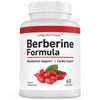
| Berberine, cinnamon, bitter melon | Blood sugar medicines |
Bring all your bottles to a "brown bag" review with your pharmacist once a year. MedlinePlus and the NIH Office of Dietary Supplements also list known interactions.
How our formulas are developed and tested
Longevity Premier began with a family medical tradition that reaches back more than a century. A third-generation physician and his wife, a pharmacist, brought that tradition to this country, and the fourth generation runs the company today.
We start by listening. Formula ideas come from real questions from real people, followed by research and careful study. Our guiding principle: respect the body, respect nature, respect science, and never forget the individual person behind every health decision.
Proprietary blends: what the label tells you and what it does not
FDA rules allow a proprietary blend to list its total weight and its ingredients in order from most to least, without the amount of each one. Companies use blends to protect a formula that took years to develop.
The trade-off is that you cannot see exactly how much of each ingredient you get. Use the order of the list as a guide. If an ingredient matters to you, for medical or budget reasons, ask the company for more detail. Many will share what they can.
Standardized extract or whole herb powder: reading "10:1" and percent actives
Whole herb powder is the dried plant, ground up. It contains everything in the plant, at nature's strength.
A ratio such as "10:1" means about 10 kilograms of plant went into 1 kilogram of extract. It tells you how concentrated the extract is overall. It does not tell you how much of any key compound is inside.
"Standardized to 95% curcuminoids" or "80% silymarin" tells you the amount of a marker compound, measured by testing. That makes one batch more like the next.
The best choice is usually the form and amount used in research for that herb.
cGMP, "made in USA" and certificates of analysis
cGMP is FDA's manufacturing rule for supplements, found in 21 CFR Part 111. It requires, among other things, identity testing of every dietary ingredient, written specifications, a record for every batch, and a system for handling complaints.
"Made in USA" on a label must mean that all or virtually all of the product was made here, under Federal Trade Commission rules. Many products say "Made in USA with domestic and imported ingredients," which is more precise, since many herbs only grow overseas.
A certificate of analysis (COA) is a lab report for one batch. It lists the tests, the limits and the results. Ask for the COA that matches the lot number on your bottle.
Supplements before surgery: what to tell your surgical team
Tell your surgeon, anesthesia team and dentist about every supplement, even teas. Many teams ask patients to stop herbal supplements about 2 weeks before surgery, but follow your own team's instructions.
Supplements they ask about most:
- Bleeding: fish oil, vitamin E, garlic, ginkgo, ginger, turmeric, nattokinase.
- Anesthesia and sedation: St. John's wort, kava, valerian.
- Blood sugar: berberine, ginseng, cinnamon.
- Blood pressure: licorice, high-caffeine products.
Questions to ask: Which of my supplements should I stop, and when? When can I restart? Should I stop any prescription medicines? Never stop a prescription on your own.
With food or on an empty stomach? A quick guide
| Take with a meal that has some fat | Take with any meal | Take on an empty stomach if you can |
|---|---|---|
| Vitamins A, D, E and K | B vitamins, multivitamins | Iron (with vitamin C), unless it upsets your stomach |
| CoQ10, fish oil, astaxanthin | Calcium carbonate | Some probiotics (follow the label) |
| Turmeric and curcumin | Magnesium (less likely to loosen stools) | |
| Green tea extract | Berberine, digestive enzymes |
Always follow your label. Take psyllium and other fiber 2 hours apart from medicines. Take thyroid medicine alone, at least 4 hours apart from calcium, iron and magnesium.
Can you take these together?
Turmeric and ginger: yes, they are often combined. Both may add to the effect of blood thinners.
Vitamin D and K2: yes, they are a natural pair. Do not add vitamin K if you take warfarin without your prescriber's okay.
Probiotics and fiber: yes. Prebiotic fiber feeds helpful bacteria. Start slowly to avoid gas.
Calcium and iron: better apart. They compete for absorption, so take them at different meals.
Zinc and copper: very high zinc taken for months can use up copper. Many formulas add a little copper for balance.
How to organize vitamins and supplements at home
- Keep a master list: the name, amount, time of day, reason, and who suggested it. Bring it to every appointment.
- Use a weekly pill organizer with morning and evening rows. Fill it on the same day each week.
- Keep the original bottles for the label, lot number and best-by date.
- Store everything in a cool, dry cabinet away from the stove and sink, and out of reach of grandchildren.
- Set phone or smart speaker reminders.
- Every few months, toss anything expired or that you no longer take.
Flying with supplements: carry-on rules and time zones
Pills, capsules and gummies are allowed in carry-on and checked bags with no quantity limit, according to TSA. Liquid supplements in your carry-on must be 3.4 ounces or less, unless they are medically necessary and you declare them at screening. Pack a few days extra in your carry-on in case your luggage is delayed. Original bottles make questions easier.
Check rules before flying abroad. Some countries restrict ingredients that are common here, such as melatonin. For time zones, keep about the same spacing between doses and shift gradually over a day or two.
Supplement glossary A to Z
- Adaptogen: a plant traditionally used to help the body handle stress.
- Bioavailability: how much of a nutrient your body absorbs and uses.
- CFU: colony-forming units, the count of live microbes in a probiotic.
- cGMP: FDA's manufacturing rules for supplements.
- COA: certificate of analysis, a lab report for one batch.
- Daily Value (DV): the reference amount used for the % DV on labels.
- Excipient: an inactive ingredient, such as a filler or capsule shell.
- Extract ratio: plant weight compared with extract weight, such as 10:1.
- IU: International Unit, an older measure for vitamins A, D and E.
- mcg: microgram, one-thousandth of a milligram.
- Proprietary blend: a mix listed by total weight only.
- Standardized: tested to contain a set amount of a marker compound.
- Structure/function claim: a statement about supporting normal body function.
- UL: Tolerable Upper Intake Level, the highest daily amount likely to be safe for most adults.
Capsule, softgel, powder, tea or gummy: choosing a form
| Form | Good for | Watch for |
|---|---|---|
| Capsule | Exact amounts, few additives | Can be large to swallow |
| Softgel | Oils such as CoQ10 and fish oil | Shell is often gelatin |
| Tablet | Many nutrients in one pill | Binders; some are hard to swallow |
| Powder | Large amounts, such as fiber or creatine | Needs mixing and measuring |
| Tea | Ritual, hydration, gentle herbs | Strength varies with steeping |
| Gummy | Easy to take | Added sugar, less room for active ingredients |
If swallowing is hard, ask whether a capsule can be opened. Do not crush or open anything labeled "extended release" or "enteric coated."
Vegetarian, vegan, halal, kosher and allergen questions
Capsule shells are either gelatin (from beef or pork) or plant-based, usually HPMC made from cellulose. Many Longevity products use vegetable capsules. Softgels are often gelatin.
Vitamin D3 often comes from lanolin, from sheep's wool, which is vegetarian but not vegan. Lichen-based D3 is vegan.
Halal and kosher status requires certification by a recognized agency, shown by a symbol on the label.
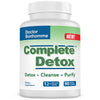
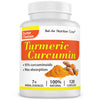
U.S. law names nine major food allergens: milk, eggs, fish, shellfish, tree nuts, peanuts, wheat, soybeans and sesame. Some products contain less obvious ones. Complete Detox PM and Bel-Air Turmeric Curcumin, for example, contain oyster extract, a shellfish.
These statements have not been evaluated by the Food and Drug Administration. This product is not intended to diagnose, treat, cure, or prevent any disease.
Sources
- Longevity Premier Return Policy, Subscription Policy, FAQ and About pages, read November 24, 2026.
- USP, NSF, ConsumerLab and LGC program descriptions. usp.org, nsf.org, consumerlab.com, wetestyoutrust.com
- FDA. Dietary supplements: questions and answers; Structure/function claims; 21 CFR Part 111 small entity compliance guide. fda.gov
- 21 CFR 101.36 (Supplement Facts labeling).
- FTC. Made in USA Labeling Rule, 2021. ftc.gov
- TSA. What can I bring? Medications and vitamins. tsa.gov
- FDA. Food Allergy Safety, Treatment, Education, and Research (FASTER) Act: sesame as the ninth major allergen, 2023.
- NIH ODS and MedlinePlus. Herbs and supplements interaction resources.
This guide is for general education and is not medical advice. Talk with your doctor, pharmacist or other healthcare professional about your own health, medicines and supplements.
Last updated: November 24, 2026.